Each of us in our Oblate community comes to a Lectio Divina discussion from our personal experience of the Divine. The beauty of Lectio is that the reading, insights, and discussion fall differently on each of our hearts. When we practice Lectio Divina, we learn from each other by sharing a word or phrase that resonates. We see a deeper meaning to the reading with each contribution as we “listen with the ear of the heart.” (RB Prologue) What resonated with our group:
“The crowd was pressing in…put out a short distance from the shore.” Sometimes what we bear seems so much. Perhaps we could break our feelings, responsibilities, or worries into smaller pieces. Jesus only asks us to go a short distance–taking on only what we need to while trusting that when we go into deeper waters, God will be with us. Even Jesus sat down for a bit to continue his teaching. We learn from his example: our work sometimes requires distance and healthy boundaries from others. We must listen and discern.
“We have worked hard all night.” In times of weariness, feeling overworked, defeated, or unsuccessful, we must carefully listen for the hopeful words of Jesus. The first word in the Rule of St. Benedict is “Listen”—he knew that we cannot go out into deep waters alone. We find encouragement in pausing, resting, and receiving help from others.
The soulful ritual of asking for a word of the year never fails to bring new ways of seeing. What I learn from pondering one word could fill a library of books; synchronicity is my teacher. Last year I wrote, “I trust that the word, as it settles in my heart, will be a guiding light for months to come—challenging, inspiring, and transforming me.”
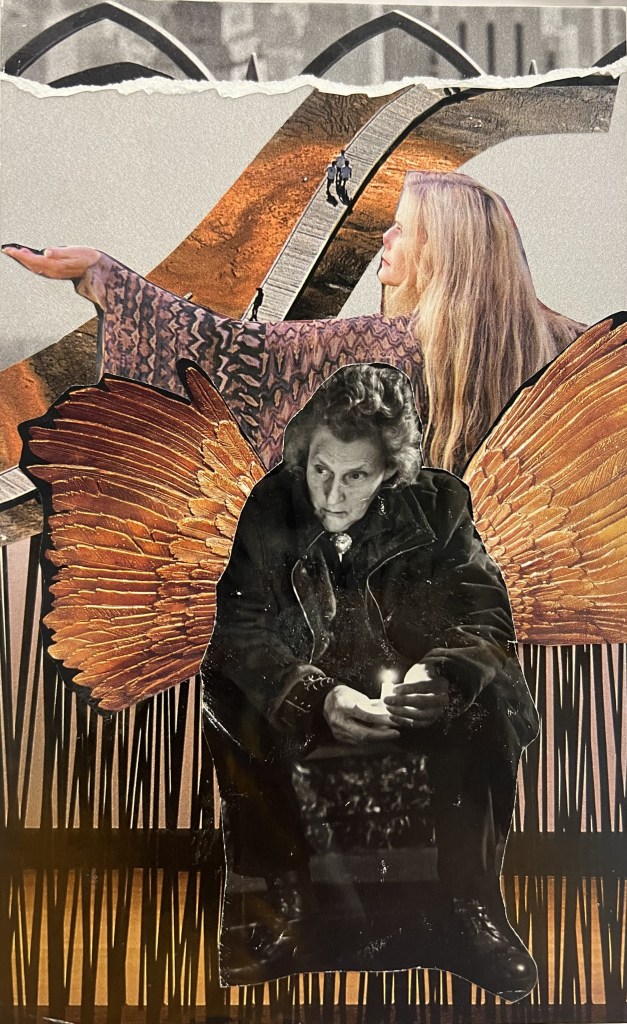
This ancient spiritual practice invites attentive listening. Around the beginning of December, my word-of-the-year radar activates as I await a word that shimmers with possibility. I had considered peace or hope, as I long for both. While on retreat, images came together into a SoulCollage® card I titled Hope: Rest in the Light.
Perhaps LIGHT I wondered, but I was skeptical it could be the “guiding light” I wrote of, as cliché and overused it is. Light at the end of the tunnel. Light of my life. Out like a light. Come to the light. Go to the light. In light of. See the light. Shed a little light. Taken lightly. Shine your light. Light a fire under your… and so on.
I reflect on the card, listening for the wisdom it holds. It is our journey to carry the light. We are embodied with Christ-light. Rest in the light. Patiently wait. Holding the light is sharing the light. Words and phrases that resonate come together in the following poem.
Wisdom I received from the card: It is our journey to carry the light. We are embodied with Christ light. Rest in the light. Patiently wait. Holding the light is sharing the light.
Hope: Rest in the Light The Divine dwells within Safeguard the light Wait expectantly, keep watch Shimmer like silver and gold.
Safeguard the light Angel wings whisper hope Shimmer like silver and gold Light-bearer.
The circular rhythm of the pantoum poem provides a roadmap for hope. It begins and ends with the reminder that the Divine dwells within me; I am a light-bearer. Knowing there is more to unpack from the card and poem, LIGHT finds a resting place as my 2025 word of the year.
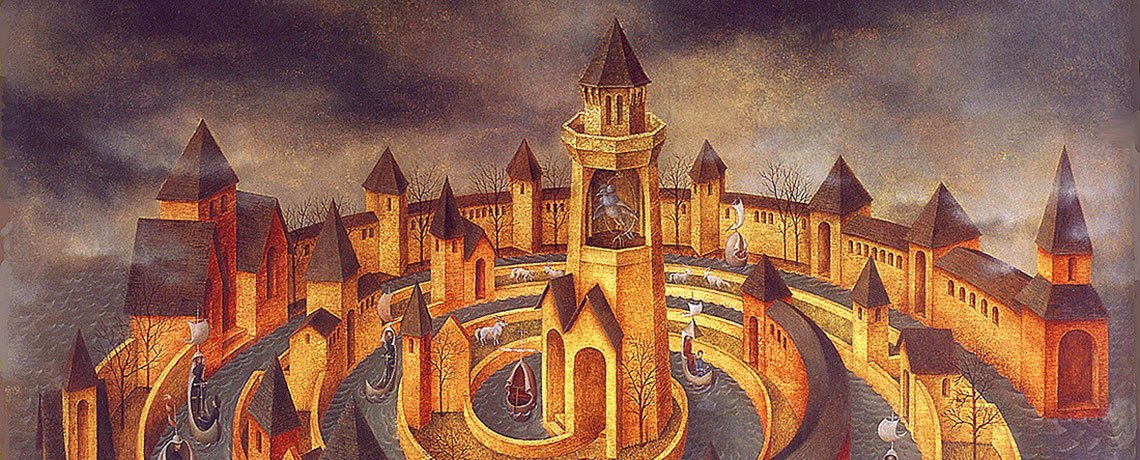
You are the Light In a recent study of The Interior Castle, written by Teresa of Avila, I was struck with awe by the commentary of the castle as the dwelling place for God. “We are structured in such a way that God lives in his own dwelling place with us, more so than he does in the whole cosmos….We are not merely sparks of God, but God actually lives in us and makes us beautiful by his light.” (The Interior Castle, Study Edition, Kieren Kavanaugh)
Joan Chittister writes, “…we are the stardust of the Creator and we are made to burn and light, to sparkle and shine, to be warmth and fearlessness as tonight fades into all the tomorrows of our lives.” We are made of stardust; we are meant to shine, to bring light, hope, love and courage to those we encounter.
Be the Light We are born for each other—to reflect the loving-kindness and compassion we have received in our moments of darkness. I will never forget the seemingly small gestures, the gentle wiping of a tear or the squeeze of a hand or encouraging words that helped me glimpse enough light to carry on. We can be the light for others.
Lectio Divina—Rule of St. Benedict, Chapter 72, The Good Zeal of Monks
In the 1500-year-old Rule of St. Benedict, monks who live in a monastic community are presented with a choice to guide their relationships—to embrace good zeal which monks should foster with fervent love rather than the zeal of bitterness. This choice is a call to holiness and contributes to an atmosphere of separation or togetherness in the community.
Benedict is clear—if monks choose to respond to their brothers with bitterness, they cultivate an environment of separateness. They become distant from God and the community. But if monks choose to foster enthusiasm for loving their brother, Benedict writes that it will “bring us all together to everlasting life.”
Love is the antidote to separation and bitterness. Benedict encourages enthusiasm and eagerness when expressing our fervent love to God, one’s abbot (or leader), and one’s brothers. He also provides an action plan to demonstrate love.
Chapter 72 begins and ends in love—what is hoped for (” a good zeal which separates from evil and leads to God and everlasting life) and what is the promised outcome ( to “bring us all together in everlasting life.”) The specific instructions to demonstrate “fervent love” are to show respect to others; be patient with other’s weaknesses; practice active listening; and to consider the best interest of others, not just our own.
God’s work and desire is to “bring us all together” through our acts of love. We must consciously choose between holding onto bitterness, which separates us from God and from others. We must be committed to this goal to keep a community, family, organization, or friendship from growing apart through conflict, misunderstandings, and the bitterness that might result. This can be hard, there is no denying it.
We demonstrate our preference for “nothing whatever but Christ” when we see and treat others as Christ. Christ dwells within us, defining who we are. Christ, then, is active in creating togetherness in the community.
In a community, each one matters. We cannot become holy without the other; we are responsible for co-creating and honoring connections with others. We live in context with everyone as a member of the body of Christ. God works in us as we work together. The whole thing falls apart when we do not consider the bigger picture.
The Rule is relevant today for Benedictine oblates, lay associates of a monastery, and those who find wisdom in the spiritual insights of St. Benedict to learn how to live in connectedness with family, friends, coworkers, team members, and in all our relationships. We have much to learn.
May today there be peace within.May you trust God that you are exactly where you are meant to be.May you not forget the infinite possibilities that are born of faith.May you use those gifts that you have received, and pass on the love that has been given to you.May you be content knowing you are a child of God.Let this presence settle into your bones, and allow your soul the freedom to sing, dance, praise and love. It is there for each and every one of us. ―Saint Terese of Lisieux
During a season of uncertainty and anxiety, I typed out the prayer above, laminated it, taped it to my desk at school, and posted it in the bathroom I got ready in every day. While waiting for additional tests after receiving a cancer diagnosis, this prayer brought peace that excessive research and reason could not. What soothed my soul was a daily routine of silent meditation and praying the words written by Saint Thérèse of Lisieux (1873-1897), also known as the “Little Flower” whose Feast Day we observe on October 1. As with Lectio Divina, one word or phrase might speak to me differently, and I could carry it throughout the day. This practice helped me keep my sanity when literally nothing else helped.
Twelve years have passed since I was diagnosed with chronic lymphocytic leukemia (CLL). Thankfully, medical treatment has not been required, and if I continue to be symptom-free, I only need to visit my oncologist every six months. As healthy months turn into years, I think about my diagnosis less. There are periods when I even forget that I have CLL, but the diagnosis changed my life forever. I am deeply intentional about living Soulfully; living with purpose, on purpose; being attentive to the present moment; practicing gratitude; making good choices and having no regrets; keeping “death daily before your eyes,” as St. Benedict writes; and leaving something beautiful from a life well-lived. But somewhere along the way, I stopped reading this prayer every day.
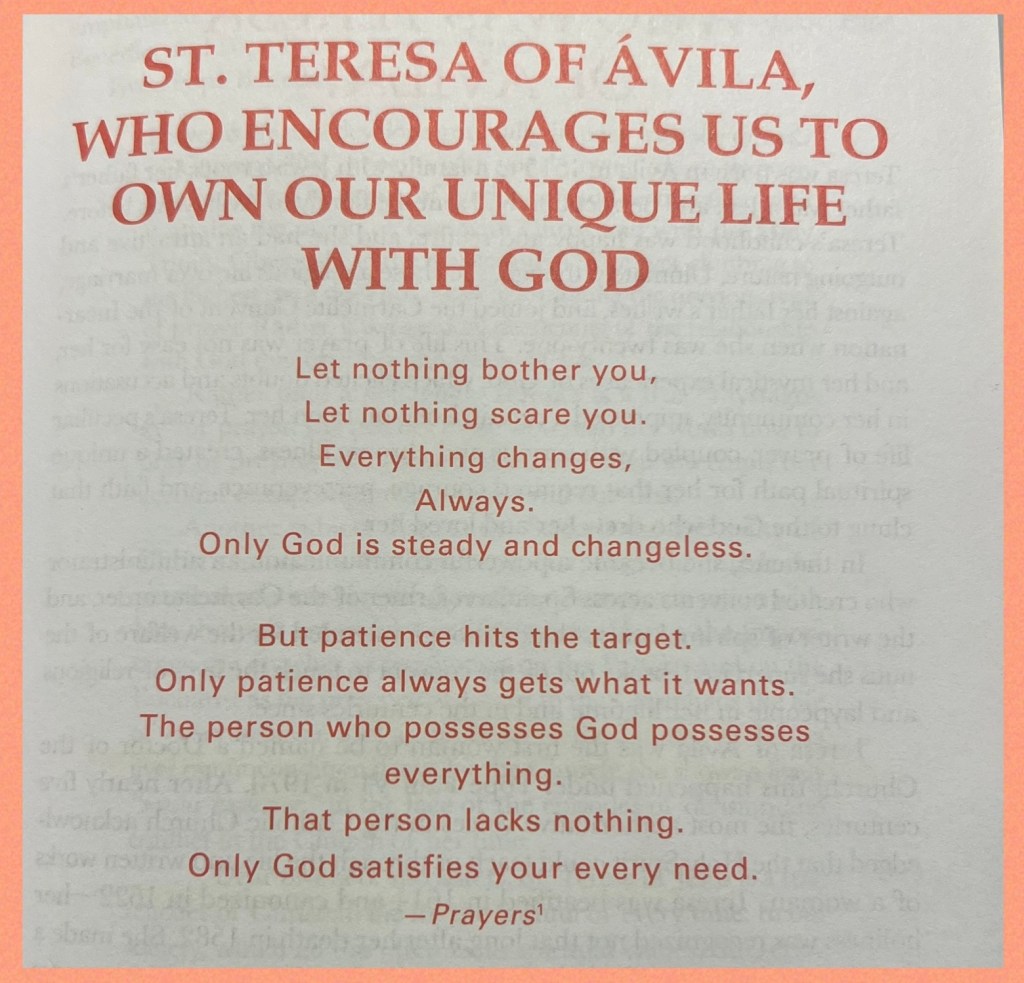
Set The World On Fire by Vinita Hampton Wright; translation of prayer by Carmen Acevedo Butcher. Original: Let nothing disturb you, Let nothing frighten you, All things are passing away: God never changes. Patience obtains all things Whoever has God lacks nothing; God alone suffices.
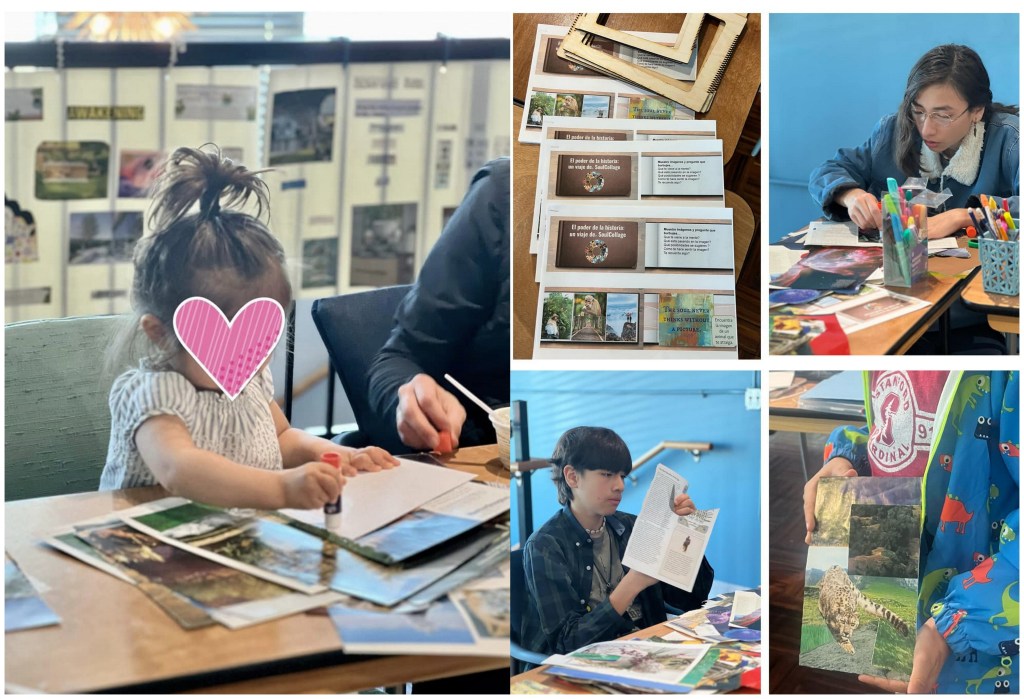
ECHO Collective connects and empowers refugee and immigrant women providing opportunities for personal growth and cross-cultural relationships. With a grant from the Nebraska Arts Council, ECHO is offering a weaving class to women and children using SoulCollage® as a springboard for a tapestry design. In the first session, we explored the power of their unique stories, reflected with images to create a SoulCollage card, and discussed how weaving their stories together can bring healing. Mothers, teens, and young children participated, including my youngest ever–a two-year-old sweet girl particularly attracted to images of white bunnies. Participants will learn weaving techniques for several weeks to create their own and a community tapestry.
“The promise of peace comes through story. When we are willing to bear witness to one another, to take other’s and joy seriously, to listen deeply, with full attention, to tell other’s stories over–we reweave the bonds of civil society.“- Rabbi Dr. Ariel Burger
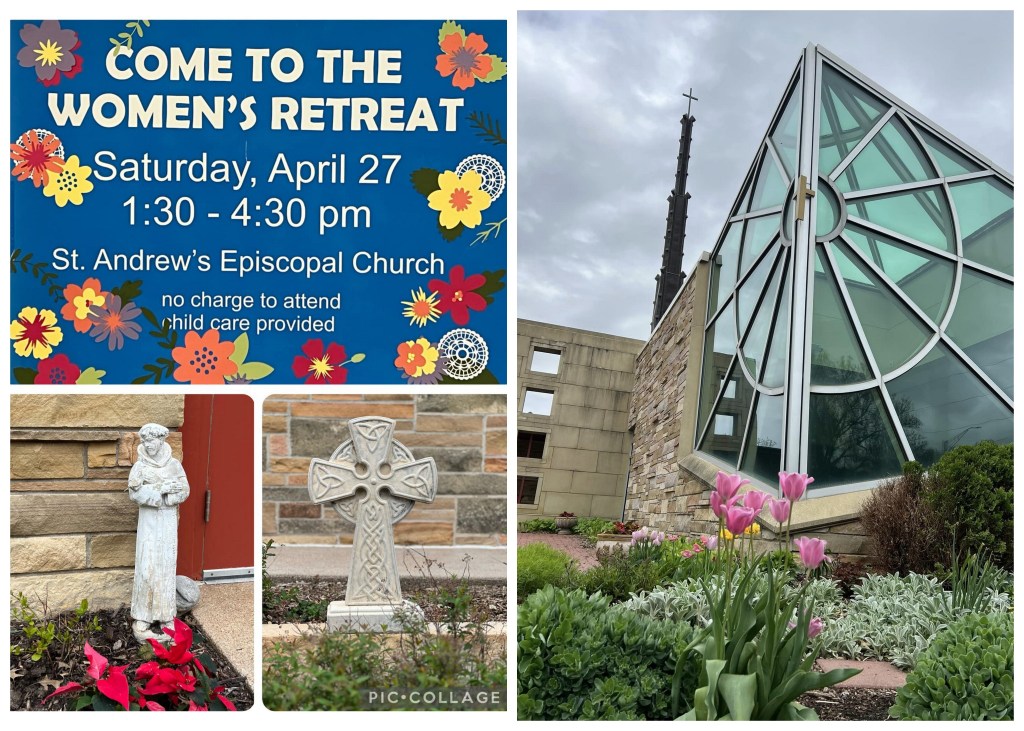
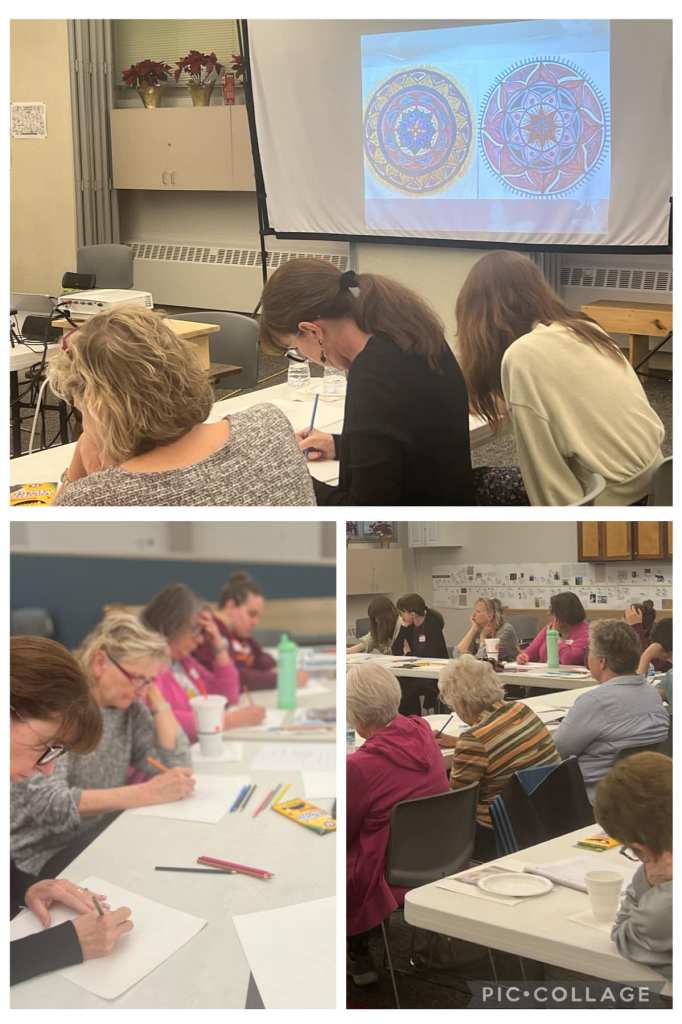
St. Andrew’s Episcopal Church hosted a women’s retreat titled “SoulFully You: Many Ways to Pray” that focused on finding God in music, movement, nature, words, and creativity. Richard Rohr writes, “We are already in the presence of God. What is absent is our awareness.” Twenty participants practiced Lectio Divina with the poem I Happened to Be Standing by Mary Oliver and learned how to create mandalas. Group discussions, journaling, and prayerful activities highlighted the wisdom of Simone Weil, that “pure attention is prayer.”
If you begin to live life looking for the God that is all around you every moment becomes a prayer.” -Frank Bianco
For more information about SoulFully You retreats, see upcoming retreats held at St. Benedict Center and possible retreat themes here. If you are interested in having a retreat or workshop created for your organization, church, or special interest group, contact me here.
It’s the night before the first day of school and it is debatable who might be more nervous—my freshman students beginning their high school experience tomorrow or me, a 21-year veteran teacher.
I love starting a school year for lots of reasons—“Every day is an opportunity to embrace “newness”—new technology, new family and social dynamics, new attitudes, new behaviors, new teaching strategies, new curriculum. I am a teacher with experience, and yet I still have so much to learn. I dance between both realms.” (excerpt from “Why I Teach”)
SoulCollage® card: My vision of what teaching would be like, in my idealistic naiveté, is represented by the black and white, old-fashioned image—students with smiles on their faces, eagerly waiting to learn; happy, compliant, and respectful, mesmerized by every word I said. The reality is that teaching is a more “colorful” role than I had expected.
It’s the “so much to learn” part that makes me anxious. Each school year, there is the nervousness that goes with meeting new students. But this school year, I move into a new classroom with brand-spanking new computers to teach a new Digital Design class. I will need to learn Adobe software programs throughout the semester, often just a day or two before I teach my students. I am also cooperating with a new student teacher as she begins a career in education.
“Embracing newness” feels a little scary right now and, truth be told, I’m afraid that I won’t be able to answer student questions, that there will be problems I cannot solve, that I won’t be knowledgeable enough, that I won’t look and feel like a good teacher. Continue reading “Foolish Fears of The Night Before The First Day of School”→
“O God, who are moved by acts of humility and respond with forgiveness to works of penance, lend your merciful ear to our prayers.” These lines in the Catholic Prayer for Blessing and Distribution of Ashes resonated with me during Ash Wednesday Mass, especially after a recent oblate discussion.
This prayer suggests our Creator is moved by what we do, by our acts of humility. The Latin word for “are moved” is flectaris, meaning to bend down. God bends down to us, moves to us, is moved by us. In our humility, we become vulnerable and open ourselves for a deeper connection with God. Continue reading “O God, Who Are Moved By Acts of Humility”→
You know how spiritual gurus encourage you to pick a word of the year, something profound and inspirational to help you navigate a new year? Well, I found mine the other day. I had contemplated some lofty sounding words, but I don’t even remember them now because when this word fell on me, I knew it was the one.
My word for the year is going to be cushion.
When I have a lot of activity then I need to cushion it with some non-activity, some silence and solitude. When I have a lot of sitting, I need to cushion it with more standing and walking around (this I’ve learned from my back injury.) I love the “vorfreude”, the anticipation of travel, but my adventures need to be cushioned with the feeling of contentment when arriving home, sweet home. And the times when I think I can pour just a bit more information into my brain by reading one more article or one more chapter, I shall give myself a cushion, the needed space for new thoughts and ideas to bubble up. Continue reading “2018 Word of the Year….drumroll, please”→
Homily for the Easter Vigil 2017 at Christ the King Priory/St. Benedict Center, Prior Fr. Joel Macul OSB
Vigil readings: Gn 1:–2:2 • Gn 22:1–18 • Ex 14:15–15:1 • Is 54:5–14 • Is 55:1–11 • Bar 3:9–15 • Ez 36:16–28 • Rom 6:3–11 • Mt 28:1–10
Earthquake! Earthquake and Easter go together today. Most of us could probably use a little earthquake right now to wake us up and get our attention. We have been sitting and listening for a long time. ….God is so full of surprises. Dawn comes, a new day and what do we feel? An earthquake. Everything is splitting open, the old is collapsing, and the new is stepping out. The sound of the earthquake and stones rolling away, that is the announcement of Easter this year. But it is a new day, a new creation, the old has passed. After the earthquake, we cannot go back. Life is not the same, for Jesus, for the women, for disciples. Dare I say, for us also?
The readings we have just heard are like photos in a family or community album. Each year on this night we gather to sit down and look at these pictures. We gather here to listen to the stories and poems about God’s ways in our faith community’s story. We sit and listen to the stories and words of the prophets and apostles. Every time we look at a family or community photo album, the pictures remind someone of another story, of another member of the family and community. Sometimes the stories are the same, sometimes they are not. A new memory is added. It is like that with the words and rituals of this Easter Vigil. Each year the same words are read but each year they sound new and different. Something in them is heard for the first time. Why? Because each year we have grown and experienced another piece of life since the hearing last Easter. This year a particular word hits us; it makes sense, more sense than ever before. God is penetrating into our hearts ever more deeply. Each year we hear these words and each year we become these words more and more. Or so we hope.









 what do we feel? An earthquake. Everything is splitting open, the old is collapsing, and the new is stepping out. The sound of the earthquake and stones rolling away, that is the announcement of Easter this year. But it is a new day, a new creation, the old has passed. After the earthquake, we cannot go back. Life is not the same, for Jesus, for the women, for disciples. Dare I say, for us also?


 Being Benedictine