Search

Being Benedictine

Living SoulFully as an Oblate of St. Benedict

Tag

listen

International Women’s Day & A Prayer of Longing

“Lord our God, hear my prayer, the prayer of my heart. Bless the largeness inside me, no matter how I fear it. Bless my reed pens and my inks. Bless the words I write. May they be beautiful in your sight. May they be visible to eyes not yet born. When I am dust, sing these words over my bones: she was a voice.” –Ana, The Book of Longings

In The Book of Longings by Sue Monk Kidd, Ana writes this prayer of longing on the incantation bowl her aunt Yaltha has gifted her. 

“Do you know what an incantation bowl is?” Yaltha asked. “In Alexandria we women pray with them. We write our most secret prayer inside them…Every day we sign the prayer. As we do, we turn the bowl in slow circles and the words wriggle to life and spin off toward heaven.”

On International Women’s Day, we celebrate the social, economic, cultural, and political achievements of women. We honor the women who have a “secret prayer inside them” to improve the quality of life for women, to raise awareness of discriminatory treatment, and to seek inclusiveness and equality for future generations.

In The Book of Longings, Sue Monk Kidd, one of my favorite writers, shared that she wanted “to write a story that encouraged us to follow our longings and bring forth the largeness inside ourselves…to portray how much women’s voices and stories matter.”

Ana’s prayer of longing is to have a voice, to be heard, and truly listened to. Ana lives during the time of Jesus when women’s stories were not valued or heard, often intentionally silenced and oppressed. Like Ana, we long for our authentic selves to be seen and heard. When we are listened to, we know that we are loved.

“All my life, longings lived inside me, rising up like nocturnes to wail and sing through the night. That my husband bent his heart to mine on our thin straw mat and listened was the kindness I most loved in him. What he heard was my life begging to be born.”-Ana, The Book of Longings

Listening is an important theme in The Book of Longings. St. Benedict thought it was so important to listen that it is the first word in the Rule. “Listen carefully, my son, to the master’s instructions, and attend to them with the ear of your heart.” John McQuiston II, in Always We Begin Again, The Benedictine Way of Living, paraphrases, “Listen with the heart and mind.” These instructions to listen to God extend to the many ways God may speak to us—through our daily circumstances, unique situations, the people in our lives, and in our hearts and minds through the voice of truth within us.

Continue reading “International Women’s Day & A Prayer of Longing”

Everyone Deserves To Be Heard

Everyone deserves to be heard.

I realized this most profoundly when I was the one who felt unheard. Perhaps you, too, have had a moment like this when you felt no one was listening—a meaningful, traumatic, challenging, or gratifying experience that needed to be shared fell on deaf ears.

I have written about the Benedictine promises of obedience and the importance of listening to God and others as part of one’s spiritual growth. “Listening requires us to pause, to have silence, and to be open to seeing in a new way. Listening can lead to a shift in perspective, a flash of insight, a new understanding. When you listen closely to another, it is an expression of love,” I shared in a recent reflection.

It is just as crucial to examine the impact it has on others when we are forgetful about listening—understandably, we get busy, or miss clues that others need our ear. Indeed, there are times when others may not realize how important it is (these slights may be easily forgiven), but there may be other times when you or another is summarily dismissed. The message is loud and clear—either you or what you have to say is not valued. It feels hurtful, as if you don’t matter, as if you are insignificant. Being intentionally rejected for your thoughts, ideas, feelings, and experiences leaves a wound, a hole in one’s heart, a sense of being rejected or abandoned.

For me, the experience of not being heard came during a traumatic time for women who had been sexually harassed, abused, or assaulted. I felt my trauma, but also the suffering of so many beyond me. It was a profound compassion, sharing the wound. It came to me then, weeping, that this is what it might feel like for those who have spent their entire lives not feeling listened to, of all those who have been unheard throughout our history, from the enslaved, defeated, oppressed, and marginalized—those who have no one to listen to or validate their pain. They had a story in their heart that needed to be heard, then and now.

Compassion asks us to go where it hurts, to enter places of pain, to share in brokenness, fear, confusion, and anguish. Compassion challenges us to cry out with those in misery, to mourn with those who are lonely, to weep with those in tears… Compassion means full immersion in the condition of being human.” –Donald McNeill, Douglas Morrison, and Henri Nouwen (quoted in Boundless Compassion by Joyce Rupp)

My heart felt broken—not just for me, but for the lack of compassion I may have shown others. Simultaneously wounded and regretful, a part of me died while something else was taking root—a desire to listen to those who feel unheard, to offer acceptance where there might not be, to advocate for those marginalized.  I felt pierced entirely with compassion. Tears flow often now for the suffering that, perhaps, I had not noticed before, the pain that I may have caused others, and the pain that continues to go unnoticed or even flatly denied.

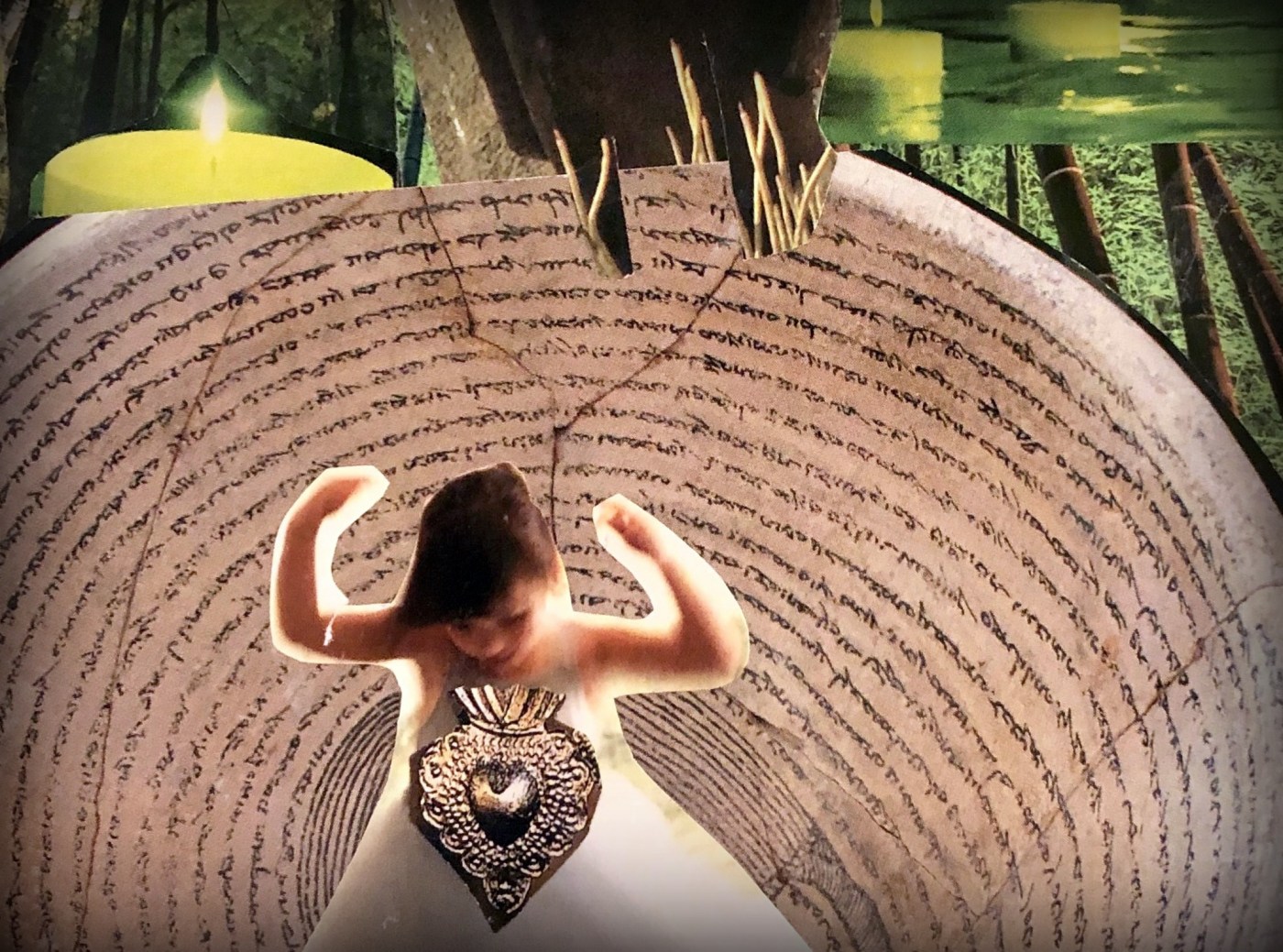
I created a SoulCollage® card shortly after this eye-opening, traumatic experience. Consider the image and the following questions.

“The eyes of the Lord are toward the righteous and his ears toward their cry”. -Psalm 34:15

Questions for reflection:

Do you have a story you would like to share with someone? Have you been able to share it with another or write about it? If so, how did it make you feel to be heard? Does it inspire you to listen to the pain and suffering of the world?

Can there be some healing for your wound by expressing it to God if there is no one to share it with? Are you available for others to share their story with you? What is the consequence for a loved one if their story isn’t shared? Is there a person or marginalized group of people that you may listen to more closely than you have?

May our prayers be heard for all those suffering, and for those who have shared their stories but not been heard. May we listen with “the ear of our hearts,” as Benedict instructs. May we be moved to tears. Amen.


© Jodi Blazek Gehr, Being Benedictine Blogger


The Sound of Silence

December 2023 Oblate Reflections

Source: The Oblate Life, edited by Gervase Holdaway, OSB, 2008

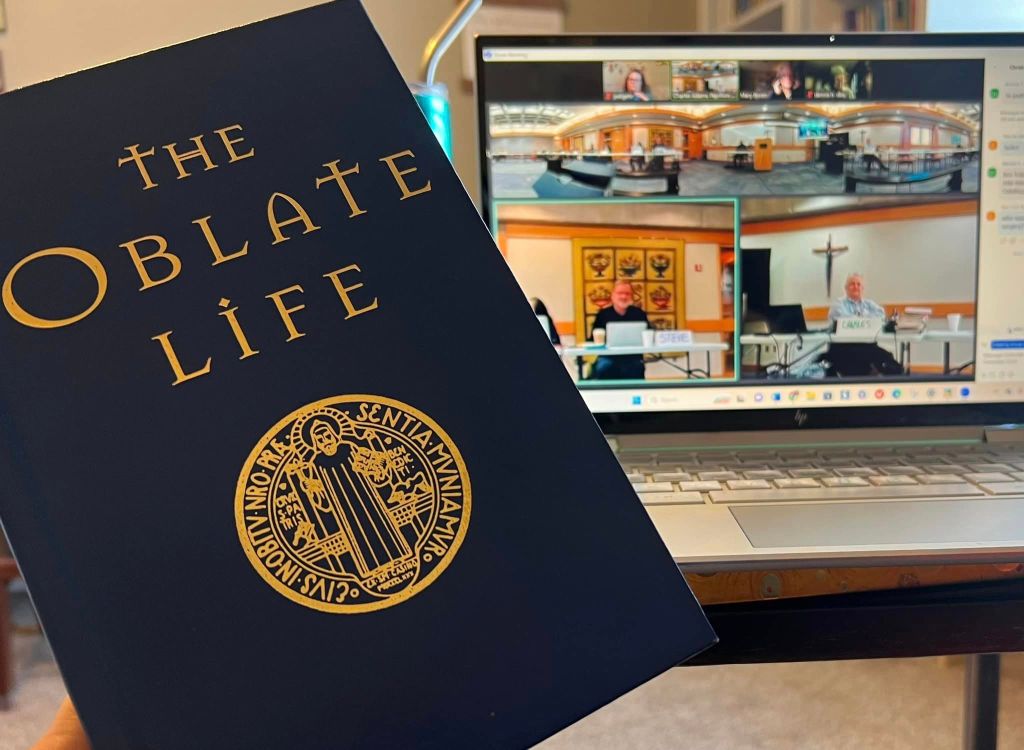
Men and women who have made monastic vows, called monks, practice stability by committing to a specific monastery. “The monk is an archetype, whether we live in a monastery or not, we have a sense of what it means to be a monk. We long to be together with God in solitude.” (Fr. Mauritius Wilde, OSB)

Being Benedictine as an oblate is making a commitment to a monastery, living the core values of obedience, conversion of life, and stability while following the Rule of St. Benedict as monks “in the world,” meeting monthly to practice Lectio Divina and discussing a spiritual reading. In the age of Zoom meetings (in which I, gratefully, participated this month), it is a good reminder that it is the monastery that I am drawn to—to the sacred rhythm of prayer and respect for silence, the theme of our discussion (December 2023.)

Grateful for the option of Zooming in to Oblate meetings, but it’s never quite the same. I love to go to our monastery and retreat center.

“If we are to learn about silence and cultivate its art form, the monastery is the first place to visit, for it is within the ancient tradition of monasticism, that we can begin to understand the relevance and the need for silence as a discipline, and a way of life. It is highly relevant that the very first word of the rule of Saint Benedict is listen.”—Susie Hayward, Silence, The Oblate Life

In silence, we can be transformed. “We will begin to see the ‘world’ differently, our breathing will become more rhythmical, surrounding color will intensify and brighten and our eyes will see more clearly and with greater perception.” (Hayward) We become more attentive. We notice the details around us, and we notice what is happening within us.

I had this experience during a contemplative prayer retreat over 20 years ago, my first visit to the monastery and retreat center that has become such an important part of my life. Even during our meals, we sat in silence, which contributed to a heightening of my senses—the quiet and stillness provided a backdrop through which I appreciated the color and tastes of ordinary foods—lettuce, tomatoes, bread, pasta, butter, milk.  It was pure ecstasy to look, touch, and taste—to interact with my food.  This sentiment—the sensitivity to physical, tangible cues—carried over into watching fish swim in the pond, grasshoppers jump from one station of the cross to the next, a candle flickering.  All things seemed to be created for me.  Every movement, color, taste, and sensation seemed special, whereas just days before it was ordinary.

Silence magnifies an experience. The practice of silence helps cultivate attentiveness to others and to how God is working in our lives. Thomas Merton writes, “By learning to listen… we can find ourself engulfed in such happiness that it cannot be explained: the happiness of being at one with everything in that hidden ground of Love for which there can be no explanations.” This type of interior silence must be cultivated. Visiting a monastery where there is silence can help, but one can create physical spaces in our own homes to remind us that times of silence are needed.

Hayward writes that “without silence, God has no voice.” No doubt silencing the noise of our daily lives can help us be more aware of the divine—in creation, in others, in words we read, in the thoughts that run through our mind, and in the story we tell ourselves. Indeed, silence allows us to experience the sacred, but many of us have felt God working, “God’s voice,” through the written or spoken words of others. In discussion, we wonder—do we really need absolute silence to hear God?

Perhaps Hayward means that we need to silence ourselves—to shut our mouths, to let go of thoughts and stories, and to be truly present wherever we find ourselves. If we are in conversation with another, there is sound, not silence, but we can practice interior silence by deeply listening to the other and standing witness to another’s story. It is important to remember that the first word in the Rule of St. Benedict is “Listen.” We must practice silence, both in words and thoughts, in the presence of the divine, including others.

Hayward writes about “the experience of feeling the total ‘presence’ of another person, in such a profound way that ‘in that moment’ we will have felt absolutely heard, totally cared for and completely understood.” What a gift to be heard and to hear others without the noise in our heads! She continues, “Listening reflectively in this attentive and empathic way allows each person to respond to the other fruitfully.”

God is working in this ‘total presence,’ the compassionate listening to another’s story. May we practice silence, to listen, see, and fully experience the humility of unknowing all that we think we know, to experience a oneness with our Creator, with creation, and with all those whom we share both.  

© Jodi Blazek Gehr, Being Benedictine Blogger

He Appeared In Another Form

April 2021 Lectio Divina and Oblate Reflections

SourcesLectio Divina, Mark 16: 9-15, “Go into the whole world and proclaim the Gospel to every creature.”

Book Discussion, Always We Begin Again by John McQuiston II

It was the first time in over a year that many of our oblates met in person. All of those present were fully vaccinated, thank God!

We begin our Oblate Meeting with Lectio Divina practice reading Mark 16: 9-15:

9 When Jesus had risen, early on the first day of the week, he appeared first to Mary Magdalene, out of whom he had driven seven demons.

10 She went and told his companions who were mourning and weeping.

11 When they heard that he was alive and had been seen by her, they did not believe.

12 After this he appeared in another form to two of them walking along on their way to the country.

13 They returned and told the others; but they did not believe them either.

14 But later, as the Eleven were at table, he appeared to them and rebuked them for their unbelief and hardness of heart because they had not believed those who saw him after he had been raised.

15 He said to them, “Go into the whole world and proclaim the Gospel to every creature.”

Words or phrases that resonated:

Continue reading “He Appeared In Another Form”

The Book of Longings

“Lord our God, hear my prayer, the prayer of my heart. Bless the largeness inside me, no matter how I fear it. Bless my reed pens and my inks. Bless the words I write. May they be beautiful in your sight. May they be visible to eyes not yet born. When I am dust, sing these words over my bones: she was a voice.”

Ana, The Book of Longings

In The Book of Longings by Sue Monk Kidd, Ana writes this prayer of longing on the incantation bowl her aunt Yaltha has gifted her. “Do you know what an incantation bowl is?” Yaltha asked. “In Alexandria we women pray with them. We write our most secret prayer inside them…Every day we sign the prayer. As we do, we turn the bowl in slow circles and the words wriggle to life and spin off toward heaven.”

Continue reading “The Book of Longings”

We Are The World, We Are The Children

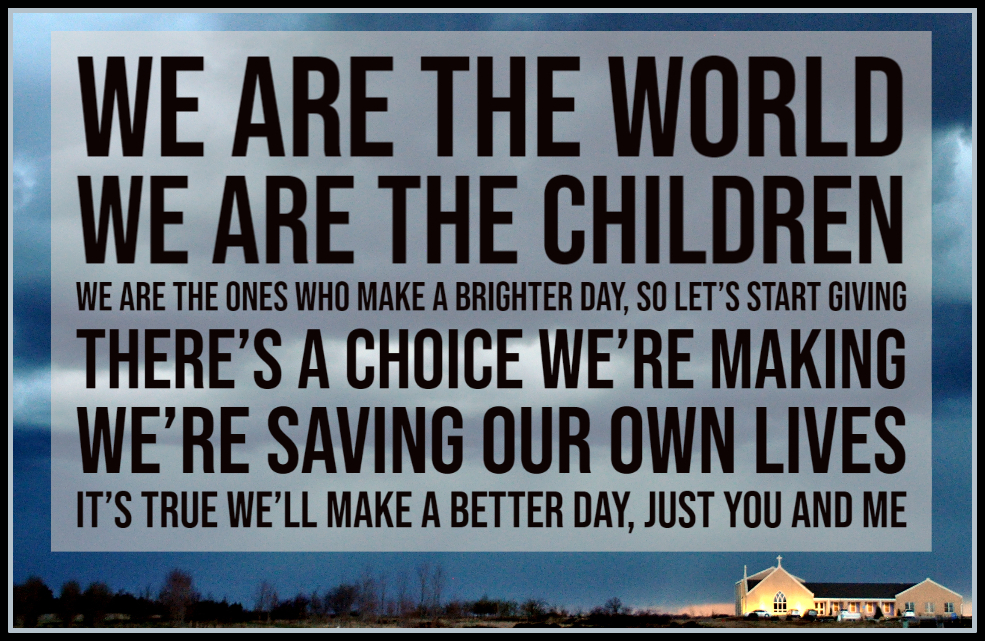
The award-winning song We Are The World, written by Michael Jackson and Lionel Richie, is an anthem for our time. On January 21, 1985, the most well-known artists in the music industry, under the direction of Quincy Jones, came together to support USA for Africa, bringing awareness and financial relief to the famine in Africa. It was a gesture of solidarity that is a reminder for us now and always. Listen here:

(First verse)
“There comes a time
When we heed a certain call
When the world must come together as one.”

 I have friends or family living in many countries–Germany, Italy, Switzerland, Austria, Czechia, Belgium, Spain, Canada, Argentina, Australia—and in all regions of the United States from California to New York, Washington to Arkansas. Being Benedictine has followers and visitors from over 75 countries. In the Benedictine Confederation, there are hundreds of monasteries and thousands of monks, nuns, sisters, and oblates in every part of the world.

No matter where we call home, we are connecting with each other on social media, Zoom, Skype and Facetime to check in with each other, to ask how it’s going, to send a word of encouragement, to offer help. Never have we ALL been in such shared circumstances like this.

together

(First verse continued)
“There are people dying.”

An inevitability, St. Benedict reminds us to keep death daily before our eyes. But even that advice feels different now. The pandemic underscores our connectedness that we don’t take stock of regularly. Collectively we are staring death in the eyes. Depending on where we live, we are on varying points of “the curve” with differing strategies from our governments and medical professionals to “flatten the curve.” Continue reading “We Are The World, We Are The Children”

Life Lectio—Just Float, Move Slowly

Listen carefully, my son, to the master’s instructions, and attend to them with the ear of your heart.  -Rule of St. Benedict, Prologue 

Listen—the first word in the Rule of St. Benedict. Listening is the essence of Benedictine spirituality and the inimitable path to unity with God.

listen

Lectio Divina, translated as divine reading, is a Benedictine practice of seeking deeper meaning in words and stories. It is listening to what lies beneath the words.

The practice of Visio Divina another kind of listening using art or images can help one intuit spiritual guidance from the still, small voice of inner wisdom. One can use sacred Scriptures, spiritual reading, song lyrics, icons, art, and collage to listen “with the ear of your heart.”

I am still learning. -Michaelangelo

Life, itself, is a listening practice. In our daily living, we can practice divine seeing. I find myself circling back to life lessons, sort of a “life lectio.” Over time there are new revelations and epiphanies —I am still learning. The miracle is that when one looks, there is seeing. When one asks, there are answers. Here is one such experience.

“If you know and have been affected by your dreams you will feel in yourself a thread of meaning and purpose that is part of something much bigger than yourself. This is the faith that lives in me.”–John A. Sanford, Dreams: God’s Forgotten Language

Several years ago, in a dream, the words “Just float” and an image came to me. I had been experiencing many worries and concerns and it was a comforting message. My dreaming self was telling me to release my anxiety, or at least to just let it lie for a while. But it’s not easy to “just float” when one is resistant, when one wants to manage, to fix, to control. Continue reading “Life Lectio—Just Float, Move Slowly”

Blog at WordPress.com.

Up ↑