Search

Being Benedictine

Living SoulFully as an Oblate of St. Benedict

Author

Jodi Blazek Gehr

SoulCollage® Facilitator, Benedictine Oblate of Christ the King Priory, Retreat Leader at St. Benedict Center, Blogger at Being Benedictine and SoulFully You, Teacher, Mother, Wife, Friend, Lover of learning, reading, creativity and spirituality.

Wonder Begins in the Present Moment

Our being is often crowded out by our doing. Each day we are summoned to be creators of the present moment. Artists know the value of white space. Sometimes what isn’t there enables us to see what is.

Macrina Weiderkehr

In art and design, white space, also called negative space, is the area of a page without images or text. It is the space between lines, margins, graphics, and other design elements. Without white space a reader would be terribly distracted, having difficulty understanding the message or determining what is most important to see.

So, too, with our lives. Our moments can be filled with distractions, both in our thinking and in the many daily responsibilities we have. Macrina Wiederkehr, Benedictine sister, suggests that we are the creators of our present moment. We must, as the artists of our life, create our own white space—perhaps in simply being rather than doing, taking moments of silence to pause between activities, or practicing creativity or contemplation. It is when we create white space in our lives that we see differently, appreciating the wonder of an ordinary day.  

Recently I guided a retreat called “The Grandeur of God: Living Life with Wonder and Awe.” Taking a retreat, time away from ordinary life, can be the “white space” that one needs to relax, rejuvenate, and refocus. When we look at our life as a means to an end, something to endure until things get better, we steal opportunities to live a life with wonder and awe.

It is not always possible to leave our homes, families, or places of employment, but science and religion unequivocally agree on the importance of creating white space in our daily life to experience wonder and awe. Experiences of awe, what C.S. Lewis calls “golden moments,” can reduce stress, loneliness, and physical distress, and bring one a sense of expanded time, perspective, and connection.

Continue reading “Wonder Begins in the Present Moment”

The way and the truth and the life

July 2023 Lectio Divina and Oblate Reflections

Sources

Lectio Divina—I am the way and the truth and the life, John 14:1-12

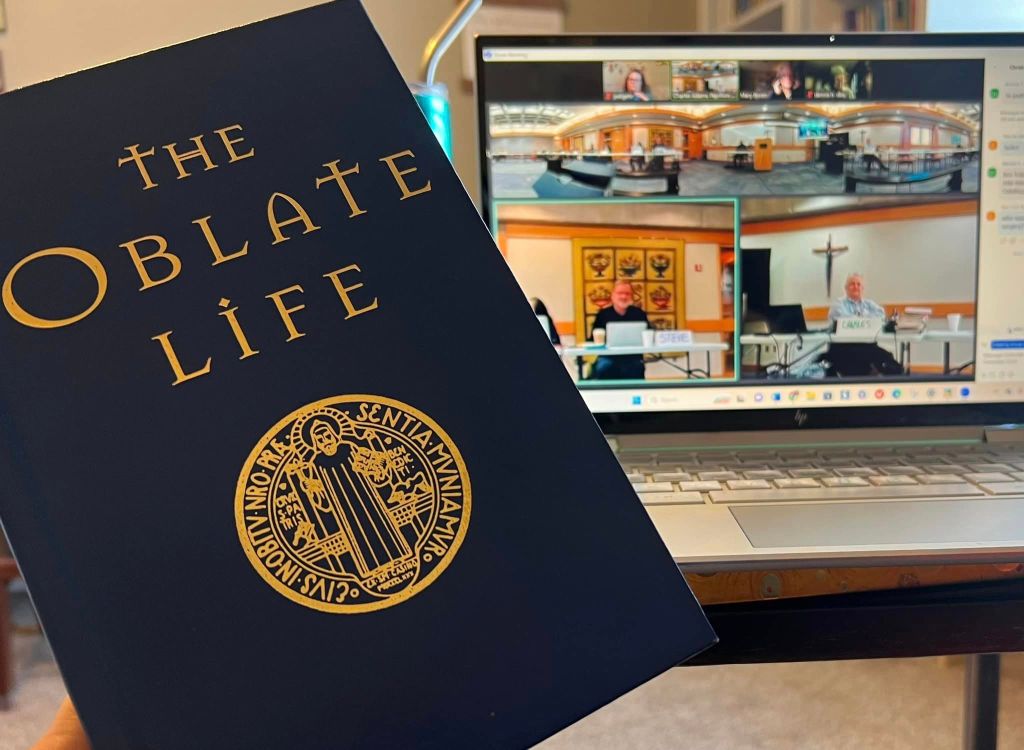
Book DiscussionThe Oblate Life, edited by Gervase Holdaway, OSB, 2008

Disclaimer:

I cannot claim to have captured all of the wisdom shared in our monthly oblate discussions or that I represent all oblates in attendance. The group discussion is a starting point for this reflection, but it is my interpretation of what I heard and what resonated with me. There could easily be as many different blog posts or reflections as oblates. Each of us comes to Lectio from our personal experience of God at that moment and we receive what we need in that moment as well. The beauty of Lectio Divina is that the reading, insights, and discussion may fall differently on each of our hearts. How blessed we are that there are “many dwelling places” (John 14:2)” and we are all invited to “listen with the ear of the heart.” (RB Prologue)

“Just as the word ‘oblate’ comes from a root word denoting the offering of a gift, each oblate’s life is an offering to God and a gift to the Benedictine community, which is enriched by the oblate’s presence and prayer…. A Benedictine way is not to be harsh or burdensome but is offered to those who seek God and the sweetness of God’s voice.”

The Oblate Life

Do not let your hearts be troubled

The opening verse of John 14:1-12 implies that we can let or NOT let our hearts be troubled. We have agency–we can choose or not to follow the way Jesus shares with his disciples. This way, having faith in God, will relieve us of our troubles. 

In my Father’s house, there are many dwelling places. If there were not, would I have told you that I am going to prepare a place for you?” Jesus asks. As a personal offer, he tells them “I will come back again and take you to myself, so that where I am you also may be.” 

Continue reading “The way and the truth and the life”

The Awe of Moral Beauty: The Story of Regina & Achim

Life is difficult. The first three words in M. Scott Peck’s classic The Road Less Traveled, which I read in my early twenties, left me feeling both comforted and troubled. Oh, thank God, I’m not the only one going through hard things; this is normal…but oh my God, is life really this hard? As I “grew up”, I learned that despite the challenges of life there are plenty of opportunities to practice gratitude and seek joy and wonder.

I am inspired, and filled with awe, by those who meet challenges and overcome obstacles with resilience, courage, kindness, and positivity. In Awe: The New Science of Everyday Wonder and How It Can Transform Your Life, author Dacher Keltner outlines eight wonders of life that bring us a sense of awe and wonder. Music, nature, spiritual practices, and more influence us, but “we are most likely to feel awe when moved by moral beauty…in fact, it was other people’s courage, kindness, strength, or overcoming” that inspire us most.

This leads me to the story of Regina and Achim—I am inspired by them both. Regina met the challenge of a life-threatening illness with humor, positivity, faith, and courage. Achim showed selfless kindness and generosity by becoming Regina’s lifeline.

Continue reading “The Awe of Moral Beauty: The Story of Regina & Achim”

I Wonder About Hildegard and A Spoiler Alert

I wonder about Hildegard.

Recently I shared this image and quote attributed to St. Hildegard of Bingen:

The quote and image so resonated with me, that I shared it on my Being Benedictine Facebook page. Just as I was posting it, two finches, as seen in the image, landed just a few feet away near the birdfeeder I received as a Mother’s Day gift, hung just the day before.  (For more on my love of birdwatching, see Birds Are Still My Prayer.)

I love synchronicities like this, little holy surprises—the same birds, the same colors, the same postures, at the same moment I shared the image. It’s a whoa, you-need-to-pay-attention kind of moment. Curious, I began a deeper dive into what context Hildegard had made the statement.

I love Hildegard. I was enthralled with my visit to the Abbey of St. Hildegardin Germany on pilgrimage in 2019. I love that she was a 12th-century mover and shaker, truly a woman who used her voice. Hildegard, a German Benedictine nun, was a mystic and theologian, prophet and artist, poet, playwright and composer, healer, naturalist, and pharmacist. She became a Benedictine abbess, was both challenged and received affirmation from church clergy, bishops, and popes, moved her monastery of sisters to be independent of the male monastery, and, throughout her life, had visions of the Divine that she was reluctant, but ultimately encouraged, to share in writing.

But spoiler alert: The quote in the image is NOT a direct quote from St. Hildegard. It is from an article written ABOUT Hildegard. Here is some context I discovered that contains (closely) the quote from the shared image:

“We often look to someone like Hildegard or to other great people throughout the ages as if what they have is not ours to have; we admire them, honor them, study them. We want to make use of them, and we allow them to consummate our inner light for us. We allow them to be the still point of our turning world. We feel incapable, yet the world wants to infuse us and to be infused by us. At that point no one can help us, not angels, not men, not Hildegard, not Jung, not Rilke. We cannot live securely in a world which is not our own, in a world which is interpreted for us by others. An interpreted world is not a home. Part of the terror is to take back our own listening, to put our ears to our own inner voices, to see our own light, which is our birthright, and comes to us in silence.” (Source: Hildegard of Bingen, Warrior of Light, Elaine Bellezza, Gnosis magazine, vol 21, 1991)

The quote, incorrectly attributed to Hildegard of Bingen in sermons, social media posts, and even books, has been widely shared. There is no doubt that the image and quote need to be attributed correctly—to Elaine Bellezza not Hildegard of Bingen.  

Continue reading “I Wonder About Hildegard and A Spoiler Alert”

From Dumpsite to Daffodils

One of my favorite places to visit is a former dump site. 

Despite its location on the corner of a very busy intersection in Lincoln, a former landfill is now a sanctuary with thousands of flowers planted on its one-and-a-half acres. The iconic Sunken Gardens, perfect for wandering, contemplation, and enjoying the beauty of nature, has a healing garden, stunning sculptures, a cascading fountain, and open lawn spaces. Through the years, the gardens have been a special venue for weddings (although brides and grooms must be prepared for cars honking as they drive by), art shows, family picnics, contemplative walks, a quiet place to read, photography, or friendly conversations.

On one of our many sightseeing or historical tours of Lincoln as a child, my dad shared that the gardens had originally been a dump. Amazed, I couldn’t imagine how that kind of transformation could take place. In 1930, as part of a depression-era city program to help unemployed men earn a little cash, the idea of Sunken Gardens was birthed. Crew members worked eight-hour shifts, two days a week for a total of $6.40 per week. Through the years, the gardens have been improved and renovated, most recently in 2005 with a $1.7 million fundraising campaign. I am so grateful for that vision and the continued effort of volunteers to create something of such beauty from trash. 

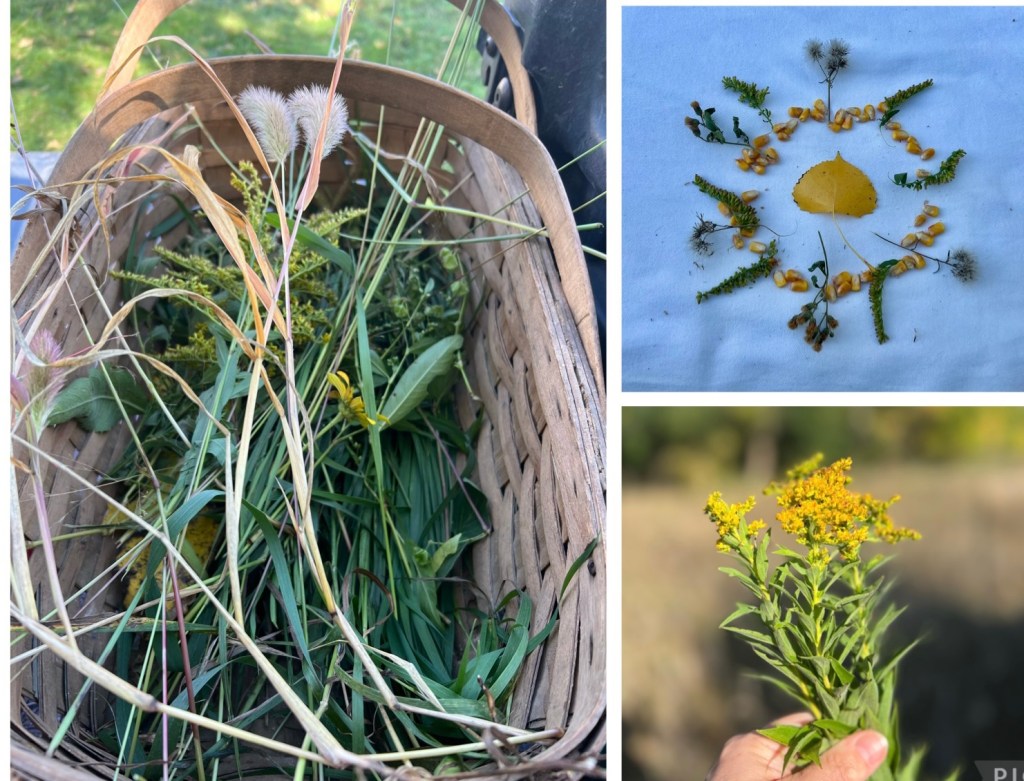
Sunken Gardens is often a specific destination for me but if I happen to be driving nearby, I might make a spontaneous visit. Recently, I had a few minutes after an appointment, and knowing the tulips and other bulb flowers wouldn’t last much longer, I drove a little out of my way to visit. It was a soulful, wonder-full fifteen minutes of enjoying the fleeting blooms. Finding wonder in nature is a path to practicing contemplation and observing silence. 

St. Benedict invites us to “listen with the ear of the heart” (Rule of St. Benedict, Prologue:1).

“This calls for a contemplative stance, an ability to experience wonder and joy in nature. It can also prompt me to ask: when was the last time I really saw the swift flight of a bird, the delicate beauty of rose petals?? Rather than trying to fill every moment with sound and distraction, the Benedictine way of life is characterized by peace and silence. Benedict instructs his followers to “diligently cultivate silence” (Rule of St. Benedict, 42:1)

Common threads: Francis’ encyclical and Benedict’s rule, By Mary McDonald SGS

I considered this dump-turned-garden as the ultimate metaphor for transformation. Truly, all things can be transformed, and have the potential to be created anew, in our planet, in ourselves, and in relationships.

God did not create creation light years ago, he continually maintains it in existence. God is constantly in the very act of creating. He fills us with his Spirit of creativity so that we can transform the world according to his creative will. Anselm Grün OSB, Benedict and Creation

To be Benedictine is to be open to conversion within ourselves, with people we might disagree with, or in protecting our environment. We allow for the possibility of reconciliation, and restoration of how things could be at their fullest potential. Just as creation is constantly creating and evolving, so must we. We must adapt and change to the environment we are living in by not taking too much or giving too little. Enjoying nature, being in the present moment, and nurturing silence that brings creative thought is the call of Being Benedictine.

© Jodi Blazek Gehr, Being Benedictine Blogger

The Wonder of a Broken Arm

WONDER sees the everyday as sacred.

Living with a sense of wonder, my word for 2023, is my intention. Being open to surprises, having a sense of curiosity, and having the desire to learn is important to my spiritual practice of “being Benedictine.” Wonder sees the sacred in the ordinary and is a doorway to gratitude, but seeing with eyes of wonder is a much easier proposition when our daily life is comfortable. My sense of comfort was recently challenged.

On a cold, windy February morning, my little dog Bailey did not want to do her business outside. Fourteen degrees in Nebraska, who can blame her? Worried about potentially icy roads and getting myself to school in time, I hurriedly picked up my little dog and headed out to accompany her on a potty trip. After stepping down onto our (apparently icy) landing, my feet slipped out from underneath me. It happened so fast yet every second my body met the icy ground, pain pierced through me–first on my bottom, then as I slid to my left side hitting my elbow sharply. I felt several crunches on my arm as I continued sliding on the pavement finally stopping several feet away. 

I knew immediately I had broken my arm, and later it was confirmed–a fractured ulna and a chipped elbow. The entire event was captured on our doorbell video. I watched it only one time to see if it was as I had remembered. Seeing myself fall has ruined me forever from watching America’s Funniest Home Videos again. Falls that used to crack me up (no pun intended) seem not so funny anymore. 

Wonder is the doorway to gratitude.

Making meaning out of life’s experiences and practicing gratitude is foundational to my spirituality, but much of my broken arm experience (7 weeks to date) has been spent feeling like I am not being very Benedictine. I am grateful for much, but I have also been so tired, irritable, and moody. It has been more traumatic for my body, mind, and spirit than I could have imagined. 

Despite my general crabbiness, I know my injury could have been worse–for that I am grateful. Thank God I hadn’t hit my head and been knocked unconscious. I am grateful that it was my left arm that was broken, and not my dominant right. After a week of wearing a splint, I was grateful to learn that the fractured pieces of my ulna had, amazingly, stayed in alignment. I would not need surgery and instead of needing a cast, I would wear a brace that I could easily remove to shower. A welcome reprieve from the confinement of a splint, there would be enough space to wiggle a pencil through to scratch my arm. (More things to be grateful for at the end of this post.)

Gratitude is an emotion that reflects our deep appreciation for what we value, what brings meaning to our lives, and what makes us feel connected to ourselves and others.

Atlas of the Heart, Brene Brown

I thought my attitude of gratitude would carry me through the weeks of convalescence in front of me, but I underestimated the many conflicting emotions I would have–frustration, overwhelm, disappointment, empathy, compassion, and wonder, just to mention a few. Out of 87 identified emotions (and experiences or thoughts that can lead to emotions) in Atlas of the Heart by Brene Brown, I have felt no less than 40 of them since I fell. 

Early on I had decided I would be a resilient, strong, and compliant patient. I would remain calm in the face of discomfort or pain, knowing “this too shall pass.” Spoiler alert: I have grown weary, increasingly frustrated, and borderline hysterical from the discomfort and/or pain. Betty the brace–named after my strong, steady, prayerful oblate friend, Betty–has been called many other names besides Betty (Betty, the friend, took no offense.) 

Continue reading “The Wonder of a Broken Arm”

Abbey of the Arts: Monk in the World Guest Post

I have been so inspired by the writing and work of Christine Valters Painter, a Benedictine oblate, author, and online abbess of Abbey of the Arts. The Abbey is a virtual global online monastery offering pilgrimages, online classes & retreats, reflections, and resources which integrate contemplative spiritual practice and creative expression with monastic spirituality. They provide support and resources in becoming a monk in the world and an artist in everyday life.

Learning from members of the community in the Monk in the World Guest Post series has been a source of affirmation that, indeed, one can live according to the Rule of St. Benedict not only in the monastery but in the life one chooses to lead.

I am so honored to have my blog post shared on Abbey of the Arts on the Feast of St. Benedict! The full text is below or at Abbey of the Arts.

“I am delighted to share another beautiful submission to the Monk in the World guest post series. Read on for Jodi Blazek Gehr’s reflection on being a Benedictine oblate.

St. Benedict is special to me for a few reasons. First, we share a birthday. I admit I was disappointed when I first discovered this. My parents had given me an illustrated book of the “Lives of the Saints” to commemorate my Confirmation. As any nine-year-old would do, I immediately looked to see who the saint was for July 11, my birthday. Perhaps Elizabeth, Mary, or Theresa would be my special saint.

Instead, I see an illustration of a man with a dark hood, a scary-looking bird, a crooked cane, and an unusual name I had only associated with Benedict Arnold. July 11, St. Benedict, Abbot, it said. I had never heard of him and surely did not know what an Abbot was. Through the years, I returned to this image of St. Benedict, thinking that I should have some connection with my patron saint.

Fast forward 26 years. With a full and busy life—married with a young daughter, a career as a high school teacher and club sponsor—I felt a deep longing for times of silence. I answered the call of my heart and responded to an advertisement for a silent contemplative prayer retreat. I discovered an oasis of peace just a few hours from home in the cornfields of Nebraska…called St. Benedict Center.

Continue reading “Abbey of the Arts: Monk in the World Guest Post”

Lectio and Visio Divina during Lent

I am always amazed at new understanding and insight that come through meditative reading and discussion. St. Benedict Center is hosting a five-week Zoom retreat called Lent: Lectio and Visio Divina led by Steven Blum, PhD. to provide an opportunity to gain new understanding of often-heard Scripture.

During the first week’s session, we connect with over 140 participants to learn about the ancient practices of Lectio Divina (sacred reading) and Visio Divina (sacred seeing) using the Gospel reading, Mark 4: 13–20 and the Sower illumination from The Saint John’s Bible.

There are four phases of Lectio Divina. The movement through the steps of these practices engages the heart, mind, and spirit, as we sit together in periods of silence, reading, gazing, reflecting, prayer, and contemplation. We seek to have the Lord awaken “the ears and eyes of our hearts.”

In practicing Lectio Divina, after reading the Scripture out loud, we contemplate, consider and reflect on what we have heard. The Scripture is read again, and perhaps again for a third time. After some time of silence, we are welcomed to share or journal a word or phrase that speaks to us.

Continue reading “Lectio and Visio Divina during Lent”

The Gift of Curiosity: There is no such thing as wasted learning!


Curiosity is the dawn of potential–a desire to learn something new, grow in awareness, and become more than we could be on our own. Curiosity, the birthplace of our becoming, is embodied in WONDER, my 2023 Word of the Year.

I think, at a child’s birth, if a mother could ask a fairy godmother to endow it with the most useful gift, that gift would be curiosity.

Eleanor Roosevelt

Surely my dad was blessed by a fairy godmother, endowed with the gift of curiosity, and he passed that down to me. Many Saturday mornings in my childhood, my dad would take my brother and me to local historical attractions and museums, and tell us stories about the “old days.” In retirement, my dad is passionate about learning history, particularly about his hometown of Valparaiso, compiling several books with the research he has done. His hobby and passion started with curiosity.

There are many similarities between my dad and me, even though how we have arrived at our curiosity and love of learning is different. I enjoyed the traditional school setting, spent many hours “playing school,” and was naturally drawn to becoming a teacher. He had an aversion to school and could not wait to get out. But, we both share a passion for gathering information, learning, and, then, sharing what we learn with others. It is an attitude of wonder and the love of storytelling that motivates us.

Wonder, the mental state of openness, questioning, curiosity, and embracing mystery, arises out of experiences of awe.

Dacher Keltner, Awe: The New Science of Everyday Wonder and How It Can Transform Your Life

WONDER opens our eyes to synchronicity.

WONDER leaves room for the unexpected, for learning something new.

Curiosity led to an unexpected experience of “teachable moments” on a recent trip to Breckenridge, Colorado. My husband and a few family members took to the ski slopes, while my brother-in-law, Mark, and I did some sightseeing and enjoyed the mountain vistas. 

A day for wandering, we visited the Breckenridge International Snow Sculpture Championships and enjoyed a scenic gondola ride to the base of Peak 8. We sauntered by dozens of buildings listed on the National Register of Historic Places and stumbled upon a local church where a couple invited us in, sharing the building history and pointing out the original fixtures that shined the first electric lights in Breckenridge. We ambled into souvenir shops with coffee mugs, hats, and shirts–anything that a mountain logo could be printed on–and we walked past the Barney Ford House Museum. I had done plenty of research before this trip (of course), but I hadn’t planned to visit this museum. 

But now I wondered who Barney was and why he had a museum in his honor. With one more day to wander, I sought more information. With an internet search for the Barney Ford House Museum, I learned Barney is a pretty big deal in Breckenridge, that a PBS documentary had been recently filmed about him, and that the following day, February 1, was the first day of Black History Month AND Barney Ford Day in Colorado. Astonished by the synchronicity of learning about Ford just a day before this important date, I spent an hour watching the documentary. I was stunned by what I learned–the story of an enslaved man who, against all odds, becomes a successful entrepreneur. I teach an Entrepreneurship class, so I was already making plans to share Barney’s story with my students.

Continue reading “The Gift of Curiosity: There is no such thing as wasted learning!”

Blog at WordPress.com.

Up ↑