Search

Being Benedictine

Living SoulFully as an Oblate of St. Benedict

Category

Benedictine Spirituality

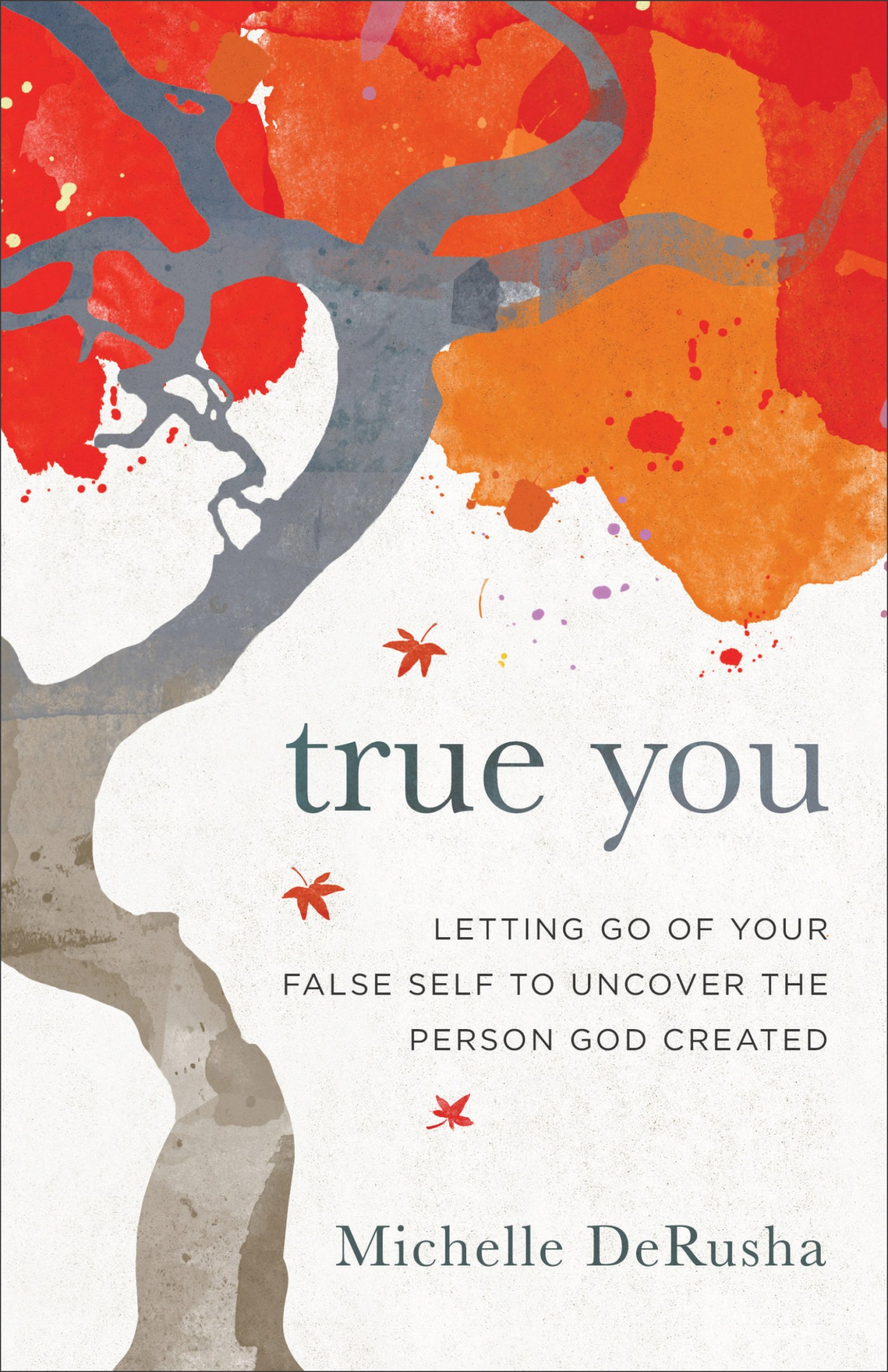
True You: Becoming Your Truest Self

315488_TrueYouDeRusha_WhatOurSoulKnows

The Benedictine path calls us to solitude, prayer, balance and listening with the ear of our heart.  In the spirit of Benedictine hospitality, I share a guest post from Massachusetts MDeRusha_OfficeHoriznative, Michelle DeRusha. Michelle moved to Nebraska (where our paths have crossed) in 2001, is the wife of an English professor and mom to two teenage boys.

Michelle’s newest book, True You, releasing January 1, guides readers on a journey toward letting go in order to uncover their true God-created selves. True You captures Michelle’s experience of becoming her truest self by honoring time and space for authentic reflection.

I am delighted to be reading an advanced copy of True You from Michelle’s publisher to share my impressions with you. I am doing much reflection and writing over my Christmas break and will share more in upcoming blog posts. For now, I share an excerpt of the book here: Continue reading “True You: Becoming Your Truest Self”

Sobriety: The Nature of our Need

Fr. Mauritius Wilde, Prior of Sant’ Anselmo in Rome, has a new podcast series on the Benedictine understanding of sobriety.

Can you get caught up in the swirl and chaos of fear, violence, and anger assaulting our world today? Practicing soberness means being detached from emotions, both overly negative or positive feelings. It is not good to be “drunk” on either extreme.

Soberness is taking just what we need. What do I take with me? What do I take in? What do I consume? How much wine, money, noise, whatever? Is it too much? The journey of soberness is to become more aware of whether there was too much.

But soberness is more than an absence of something—there is its own positive quality. The absence of the noise of tv is more than just turning off the tv. We begin to discover how beautiful silence is. Once you taste it, you want to have more of it.

Capture


Thanksgiving: A Ritual of Gratitude

Preparing for the Thanksgiving holiday can be a sacred ritual. Weeks in advance several family members begin planning the menu for our Thanksgiving dinner. Of course, there is little variation from year to year—turkey, dressing, dumplings, sweet potatoes, green bean casserole, pies, dinner rolls, and so on—but an afternoon of list-making, guest-counting, and recipe-searching ensues. Some years, even a second planning session is required—to count plates and chairs, to create a map of the food line, or to scour advertisements for butter sales. The planning sessions have become part of the practice of Thanksgiving.

The Thanksgiving planning sessions and meals that immediately followed the passing of each of Joe’s parents was bittersweet. We missed their presence. But the ritual itself, while grounding us in the present, was a reminder to be grateful even in our sadness and grief. Continue reading “Thanksgiving: A Ritual of Gratitude”

Flood the World with Love

Weekend mornings are made for slowing down—for sipping coffee crowned in frothy milk, catching up on reading, and listening to some of my favorite music. This morning my meditation consisted of listening countless times to “I Heard an Owl” by Carrie Newcomer, much-loved folk singer and spiritual teacher, and accidentally reading 1 Corinthians 13:4-6.

Both song and scripture are a meditation of love, peace and courage—and a good reminder of how to be a living light in the world. As the antidote to confusion, fear, hatred, and darkness, we must flood the world with love. Continue reading “Flood the World with Love”

The Future Is The Spirit’s Work

Benedictine Oblates have a commitment to a specific monastery to live out their spirituality in the world according to the Rule of St. Benedict. But what is the future of Benedictine monasticism?  As monastic vocations decrease, monasteries have been forced to consider their future, either merging with other monasteries or closing altogether. How might Oblates respond to this uncertain future?

future of the order.jpg

Sister Joan Chittister addressed this theme at the World Congress of Benedictine Oblates in Rome in November 2017. She asks, “The question of the day is a simple one but potentially life-changing one: the question is why would anyone even bother to get attached to a Benedictine monastery?”

Fr. Joel Macul, Prior of Christ the King Priory, also addressed the future of Benedictine Oblates at the Benedictine Oblates Regional Conference at St. Benedict Center held in September 2018.

He begins: “We can ask ourselves why we are raising this question or topic in the first place. What prompts us to raise it? It is certainly not because the Oblate community is diminishing! Is it because the some of the communities to which Oblates belong are diminishing and Oblates might be left high and dry? Or perhaps it is a concern about Oblate communities in lands where Benedictine life is new, communities are young and the Oblate experience has no precedence? Or is there something about our culture, our American culture that makes the question of the future so important?

Joels message spirit.JPG

While I do not consider myself a prophet in the sense of predicting a future for Benedictine life let alone Oblate life, I can fall back on the Prophet Joel.  The best future I can invite you to consider is to listen to the word of God through the prophet Joel who simply says: “It shall come to pass (code words for the future) I will pour out my spirit on all flesh…” It is clear enough. The future lies with the Spirit and our willingness and readiness to recognize its presence. According to the prophet, old and young, sons and daughters, male and female, servants and slaves will receive this gift of the spirit. The Spirit is God’s future or plan. When we can trust that Spirit, we are standing in God. And being in God is the future for ourselves, as well as humanity and our created world. If we co-opt God’s Spirit or start writing God’s plan, then theologically, we have no future. Any threads of the future will have to have the deep and inexhaustible richness of color of the Spirit. The future of anything Christian, including the Benedictine monastic way, lies with the Spirit. It is assumed that the Benedictine way is itself a gift of the Spirit and so holds within it the Spirit’s creative power. Continue reading “The Future Is The Spirit’s Work”

Community: To Be Fashioned and Tried

June 2018 Oblate Lectio Divina and Discussion

Topic: Community

We continued our discussion on Community from the Rule of St. Benedict, Chapter 72 using 1 Corinthians 12: 12-30 for Lectio Divina.

christs body

Words and phrases that resonated with oblates became the springboard for our discussion—

  • seem to be weaker are all the more necessary
  • God placed the parts…as he intended
  • if one part suffers, all parts suffer with it
  • baptized in one body
  • there may be no division in the body
  • all given to drink of one spirit
  • now you are Christ’s body and individually parts of it
  • many are one body
  • our less presentable parts are treated w/ greater propriety
  • eye to hand—I do not need you
  • if one part is honored, all the parts share its joy

From the very first book of the Bible, we hear it is not good for us to live alone. One of the Ten Commandments, “Thou shalt not kill” could be understood metaphorically—that when we cut someone out of our community, we are killing that person’s role. There is a loss when we don’t honor each person in the community—we need all the parts.

When we judge that someone (a part) is unimportant and exclude them, we miss part of our body. Consider the marginalized in our society—the elderly, the poor, and the immigrant, among others—who are seen as less honorable or less presentable to the group. With our own perception and judgment, we kill off segments of the population that are the body of Christ.

Each of us has a special place in the body for our own community. But, still, we ask ourselves, in frustration—do I really need others? Do they really need me? But, yes, we are made to live together; no man is an island. We need others to realize our own weaknesses and strengths. For example, each of us in our oblate group has a role. We complement each other with our individual talents—we cannot all be the arm; we need the whole body to work together. Our group grows in relationship when we honor the talents of others and work together. Continue reading “Community: To Be Fashioned and Tried”

Living in Community: Where we are is Where we grow

May 2018 Oblate Lectio Divina and Discussion

Topic: Community

IMG_0667

“Just as there is a wicked zeal of bitterness which separates from God and leads to hell, so there is a good zeal which separates from evil and leads to God and everlasting life. This, then is the good zeal which monks must foster with fervent love: They should each try to be the first to show respect to the other (Rom 12:10) supporting with the greatest patience one another’s weaknesses of body or behavior, and earnestly competing in obedience to one another.” (RB:72)

Learning to live well in community is the foundation of Benedictine spirituality and the topic of Chapter 72 in the Rule of St. Benedict.  “A person living in solitary retirement will not readily discern his own defects, since he has no one to admonish and correct him with mildness and compassion.” (Beil, Study Guide) Continue reading “Living in Community: Where we are is Where we grow”

Let all guests who arrive be received as Christ: Hospitality and The Holy Trinity

In the name of the Father, and of the Son, and of the Holy Spirit,” he began, as we made the Sign of the Cross.

A few months after we had moved into our new home, one of my favorite monks, Fr. Thomas Leitner joined us for a special dinner and house blessing. After the introductory prayers and Scripture readings, Fr. Thomas sprinkled Holy Water that had been blessed at the Easter Vigil in each of our rooms—the living room, bedrooms, kitchen, upstairs, downstairs and even next door at Al and Beth’s house, our townhouse roofmates—and a little extra splash for our loyal Dachsy-Poo, Bailey. Our daughter, who was finishing her last year in college, would spend a few months living in our new home, but mostly it would become our empty nest. This blessing for our home was also a blessing for the next chapter in our lives.

Building Hacienda Drive.jpg

Fr. Thomas also gave us a special gift, a replica of Andrei Rublev’s Holy Trinity Icon. An icon, an image or religious picture, communicates a deeper spiritual meaning often used in prayer and meditation for Christians throughout the world. It was a special image for him, used as the holy card for his ordination and First Mass in 1992.*  He enthusiastically shared with us why he also felt it represented how we would welcome those who entered as guests and the hospitality we would extend in our new home. Continue reading “Let all guests who arrive be received as Christ: Hospitality and The Holy Trinity”

O Holy Spirit, You are the Mighty Way

O Holy Spirit, you are the mighty way in which everything that is in the heavens, on the Earth, and under the Earth, is penetrated with connectedness, penetrated with relatedness. -St. Hildegard of Bingen

holy spirit

“When the day of Pentecost had come, they were all together in one place….All of them were filled with the Holy Spirit and began to speak in other languages.”—Acts 2:1

They came from many different places and, yet, they understood each other. They were connected as one in Spirit, united in understanding by the One and Holy Life-Giving Breath of God. Despite their diversity, each person had a uniquely mystical experience. Their different languages were not erased, yet unity was accomplished.

It’s as if for this one day, in this one place, God blessed our diversity and showed that our differences need not divide.  It’s as if for this one day, in this one place, it was “on earth as it is in heaven.” All people understood what the other said. They saw themselves as a part of the whole, that their God—the Giver of Life, the Great Communicator and Unifier—resides in them and the other. Continue reading “O Holy Spirit, You are the Mighty Way”

Blog at WordPress.com.

Up ↑