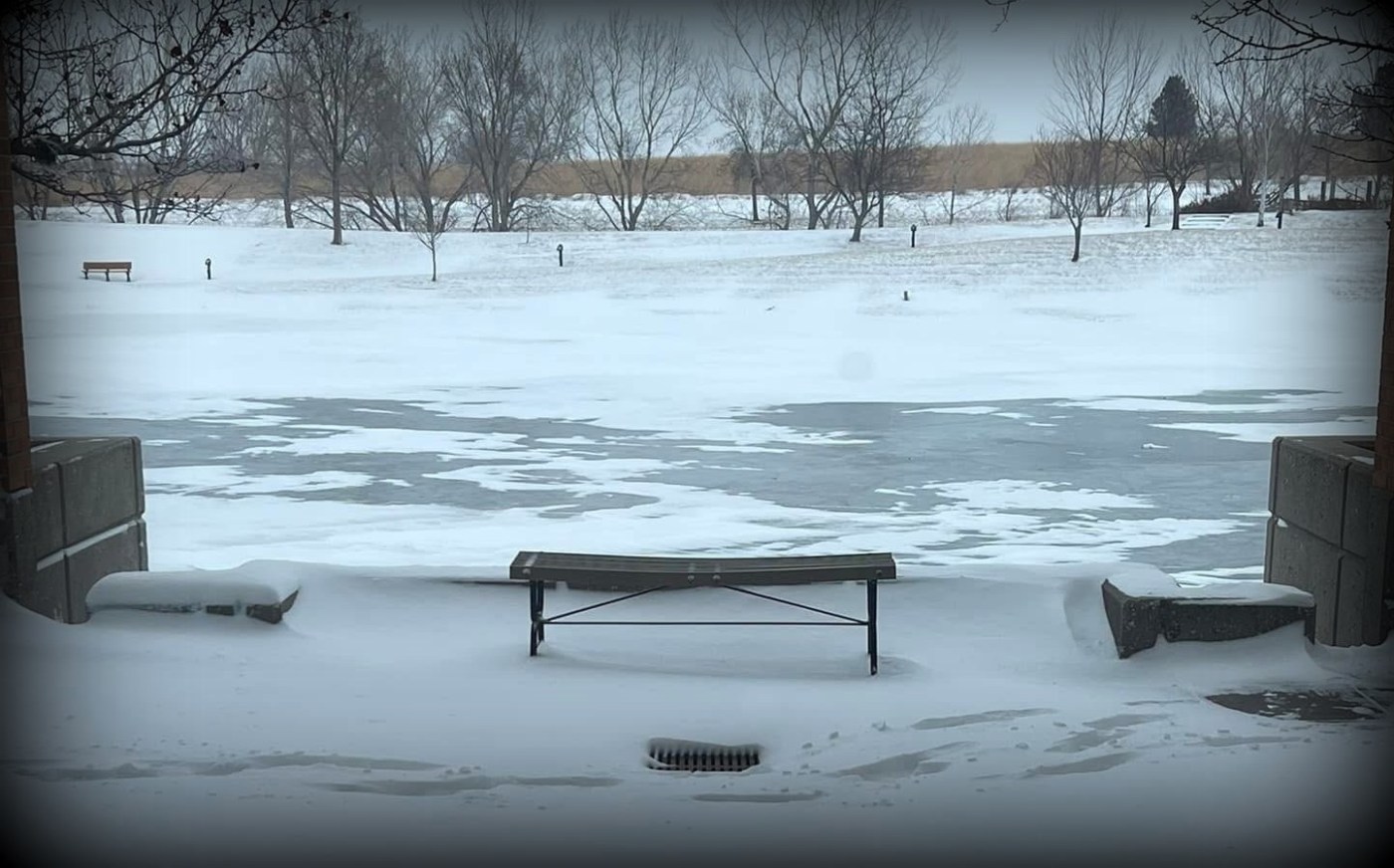
I do not bear discomfort well, I said, half-seriously, half-jokingly, to my son-in-law, John, the other day, as I took a little longer to get out of the car than the rest of the family. We both laughed as John noted that his wife shares this same trait at times. Like mother, like daughter.
It was a cold day in Nebraska, so we had to bundle up to go out, but once we were in the car, and the heat kicked in, I broke out into a sweat. Struggling in the back seat, off comes the coat. Two minutes later, we arrived at our destination. I wrestled my coat back on to re-enter the frigid temperatures. (An aside: Nebraska weather is a burden of extremes, from hot to cold. Our low temperature today is 12 degrees; on Saturday, 89 degrees is forecasted—how is one to cope?)
To add to my discomfort, several weeks ago, I sprained the peroneal tendons in my right foot. I will spare you the details, but it is reminiscent of the broken arm I experienced three years ago. Let’s just say—it adds to my discomfort, and I repeat, I don’t bear discomfort well. I feel a little guilty (and more discomfort) about admitting this out loud to John and writing it now. There are so many people suffering throughout the world—from war, displacement, poverty, hunger, trauma, poor health, grief, and every imaginable and unimaginable discomfort.
It is a lot for each of us to bear—our own discomfort and the wounds of the world that we also carry in our thoughts, physical bodies, emotional responses, and spirits. So much discomfort, uncertainty, ambiguity, and waiting can make us irritable and impatient—and there is so much to activate our discontent these days.
Recently, on my Being Benedictine Facebook page, I shared some wisdom from Pierre Teilhard de Chardin. Within 24 hours, the post had 130 times the average likes, comments, and views of a typical post.
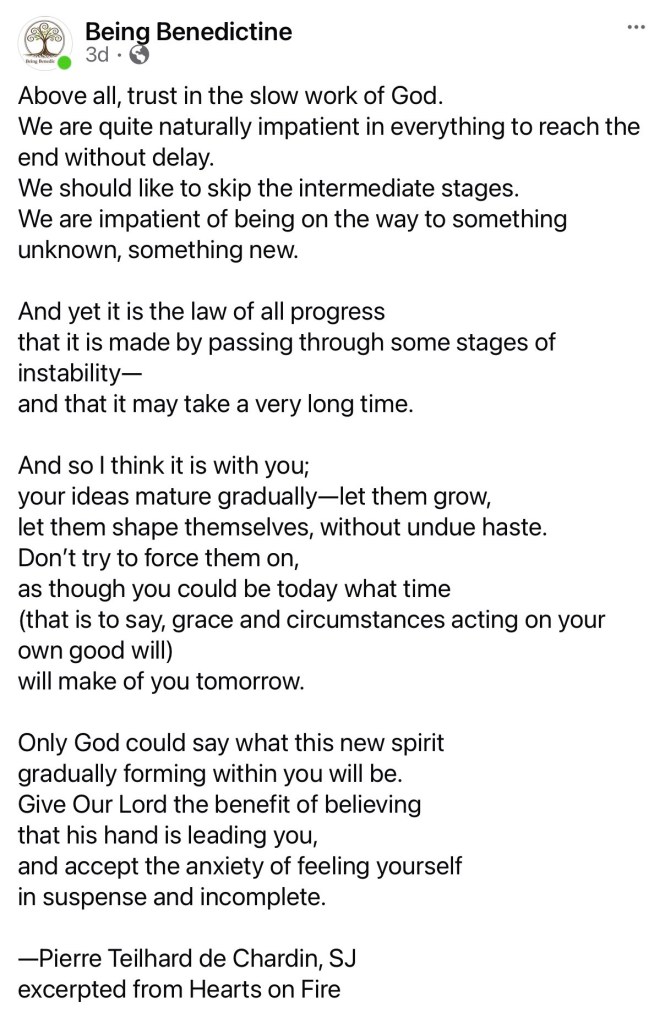
This idea of waiting, and the discomfort that results, seems to resonate with many these days. It is increasingly challenging to “trust in the slow work of God,” and we need constant reminders that this is how we must cope.
We are indeed “quite naturally impatient in everything”—or at least, I am. “Being on the way to something unknown” sparks discomfort, and yet, as de Chardin alluded, “stages of instability…may take a very long time.” A long time? How do we bear this? Again, how do we cope?
It seems the answer provided is “to accept the anxiety of feeling yourself in suspense and incomplete.” It is an inside job of patience—an acceptance that time is needed for growth, maturation, shaping—that will create a new spirit within you. Believing that God is with us during our discomfort is a starting point.
I return to a reflection I wrote during my broken-arm convalescence, The Wonder of a Broken Arm:
“Despite my preoccupation with my own discomfort, I was humbled knowing my suffering is so small compared to others. Feeling the weight of the world, I wonder how those who have great suffering hold it together? I feel guilty about my own temporary suffering, thinking of those who have permanent limitations to their abilities, who can’t find solutions to their pain, or who lack adequate funds or health care to get help. My heart is pierced with compassion for those who are lonely and need others’ help. Who is there for them? Where can they turn for help?
The few times my discomfort wasn’t acknowledged by a loved one made me think about what it might be like to never be seen or heard, or, worse, to be disqualified as a worthy human. Our response to those who suffer matters…It is a good reminder to be compassionate to all, for we never know what others may be going through. Standing in solidarity with so many people who suffer, who are sad, hurting, or ignored, is our Christ calling.”
Our discomfort is a call to action within and among, an opportunity to practice the Benedictine vows of obedience and stability. “The slow work of God” requires that we be part of the plan for ourselves and others—listening, practicing compassion, working for justice, giving comfort, and being patient. In St. Benedict’s Toolbox, Jane Tomain writes, “The call to obedience often comes in the interruptions to our plans and our days.” Accepting the disappointments of my own unmet expectations and desires requires humility. I cannot think myself to wellness or solve the problems that create discomfort. Tomain recommends practicing stability, “Remain where you are in mind and body, not fleeing physically or mentally.”
Prayer and work are a way of life for being Benedictine. There are periods when we may need to extend ourselves to others, but also times when we must attend to our interiority, our own spiritual well-being. My mantra for 2026, “Let it Be,” is an attitude of trust and patience I must dust off and wear through the discomforts of the day, accepting there may be no quick remedy. Being patient with ourselves does us good, and when we are naturally impatient, accepting ourselves where we are may be the most significant cooperation with the work of God we can muster.
Inaction is doing something as well. Perhaps pulling back from the darkness of the news cycle, of personal expectations and measures of performance is the temporary antidote to discomfort. “Patience is an active stance. In scripture we read examples of patience as a conscious choice to remain steadfast and calm when navigating situations. Practicing patience is about being long-tempered and even exercising courageous perseverance as we seek to continue to listen for God’s work in our lives. Patience allows us to be present without jumping to the answer,” writes Kimberly Porter, OSB of St. Walburg Monastery.
How can we bear discomfort well? Perhaps there is not one best answer for all situations, for every person. We must practice obedience, listening to what we need in moments of anxiety, suspense, and incompleteness. Perhaps, then answers will bring enough light to carry us into the next day.
“Be patient toward all that is unsolved in your heart and try to love the questions themselves.” –Rainer Maria Rilke


 Being Benedictine
Leave a comment