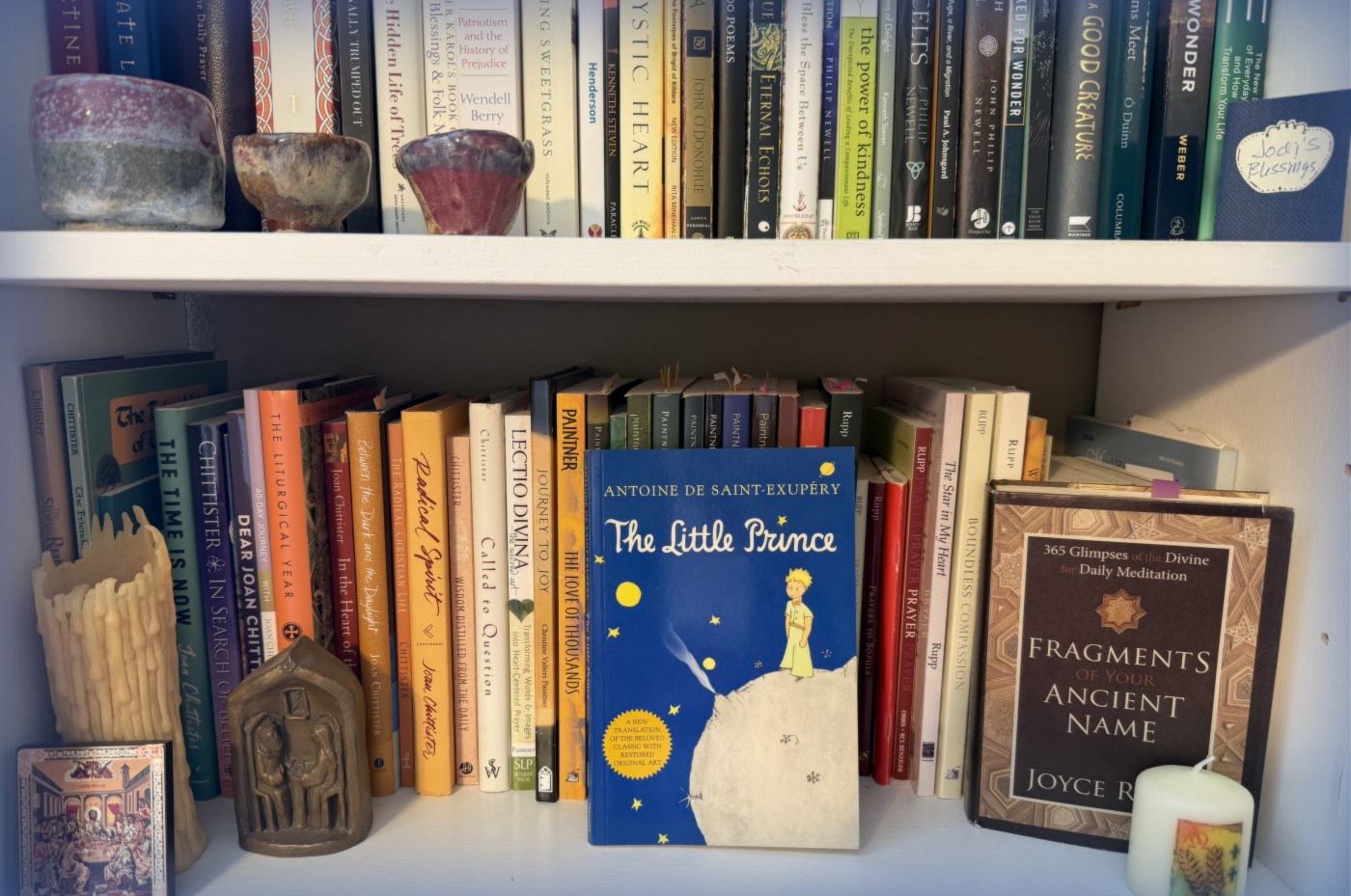
It has been several years since I spent time with “Le Petit Prince” and the young pilot, but when I read that it was the 80th anniversary of The Little Prince, a novella written and illustrated by French aviator Antoine de Saint-Exupéry, I immediately ran to my bookshelf, pulling the slim blue volume from my cherished re-reads shelf.
Each time I read it, I glean something new—a spiritual lesson, an insight about what is essential, a new way to think about time, friendship, life, and death. The Little Prince is a treasure to many. Over 300 million copies have been sold worldwide, making it one of the best-selling and most widely read books in history. It has been translated into 600 different languages and dialects worldwide, second only to the Bible. There is something very special, mystical even, about this story that transcends age, culture, religion, or language.
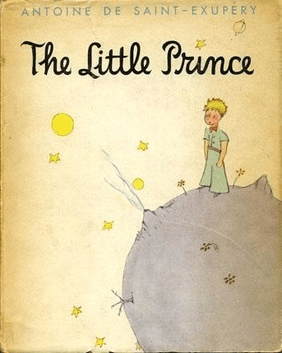
It took less than an hour (in real life) to take the transcendent journey with the six-year-old pilot who had “flown almost everywhere in the world,” and the Little Prince who traveled from his home asteroid B-612, “where everything is very small.” They meet in the Sahara Desert, “in the face of an overpowering mystery,” where the pilot has crash-landed, and the prince has been on a voyage to other planets.
As the pilot and the prince share the journeys that brought them together, I am in awe of the impact that great literature and storytelling can have on a reader, offering so many spiritual lessons. As if through the lens of a kaleidoscope, with each turning, one sees a little different story, a new perspective. Rotate it towards the light, and yet another image is revealed. This is the mystery of sacred reading, or Lectio Divina. For me, this turn of the kaleidoscope captured the importance of living life more soulfully with childlike wonder and joy, a reminder that my worth cannot be counted.
How Grown-Ups See The World
In The Little Prince, we see, for instance, that the way grown-ups see the world is less than ideal. Consumed with facts, tasks to be completed, and accumulating possessions, grown-ups with heightened self-importance are more concerned with financial value, usefulness, meeting expectations, and making sure their expectations are met.
The Little Prince had encountered many grown-ups on his voyage, each inhabiting their own planet —a king, a vain man, a drunkard, a businessman, a lamplighter, and a geographer—until he finally reached the seventh planet, Earth, where he meets the young pilot. He learns from these grown-ups that time is viewed as scarce, a means to an end, that there is no time for creativity, only productivity. “I have seen them at close range…which hasn’t much improved my opinion of them,” the Little Prince tells the pilot.
“Grown-ups like numbers. When you tell them about a new friend, they never ask questions about what really matters. They never ask: “What does his voice sound like?” “What games does he like best?” “Does he collect butterflies?” They ask: “How old is he?” “How many brothers does he have?” “How much does he weigh?” “How much money does his father make?” Only then do they think they know him,” the Little Prince shared.
All the while the Little Prince is sharing his stories, the young pilot is distracted by fixing his airplane. The prince, frustrated that he is not paying sufficient attention, exclaimed, “You talk like the grown-ups!… I know a planet inhabited by a red-faced gentleman. He’s never smelled a flower. He’s never looked at a star. He’s never loved anyone. He’s never done anything except add up numbers.”
It became clear to the pilot (what some of us grown-ups refer to as a wake-up call) when the Little Prince began sobbing. “What did I care about my hammer, about my bolt, about thirst and death? There was, on one star, on one planet, on mine, the Earth, a little prince to be consoled! I took him in my arms.”
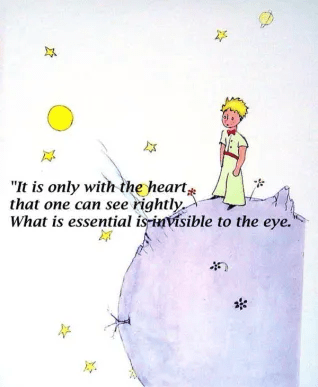
He was then truly present for his new friend, open to hearing more from the prince and the other characters he encountered. He learns a secret from the fox: “One sees clearly only with the heart. Anything essential is invisible to the eyes.” In other words, what is important cannot be accumulated, counted, possessed, or any other grown-up stuff.
How Children See The World
Rather, the life of a child is full of imagination, wonder, vulnerability, purpose, and depth. A child seeks and needs love, tenderness, and connection, and they take as much time as needed to know themselves, others, and creation. There is no rush. The child loves to learn, is curious, and is not afraid to ask questions. “Only the children are pressing their noses against the windowpanes … Only the children know what they’re looking for,” the switchman said.
Children are creative, easily delighted, and not afraid to laugh or cry. They see possibilities, like an imagined sheep through the side of a crate in a child’s drawing. They recognize the possibility of invisible treasure. They take pleasure in watching sunsets, smelling flowers, and stargazing.
In scripture, we hear: “Truly I tell you, unless you change and become like children, you will never enter the kingdom of heaven.” (Matthew 18: 3)
Sacred Reading and The Little Prince
The Little Prince can be read in the spirit of Lectio Divina, a practice of sacred reading that engages the heart, mind, and spirit. Each character, conversation, or chapter can be culled for deeper insights. Consider what it looks like for you to become like a child, to be a little less grown-up. How can we “rejoice in the ephemeral”, see what is essential, and embrace the invisible?
For a monastic perspective, Encountering Foreign Worlds with The Little Prince with Fr. Mauritius Wilde O.S.B. – Discerning Hearts Podcast is insightful. Fr. Mauritius’ message, through the story of The Little Prince, meets us right where we are with our inadequacies and imperfections, the expectations that we put on ourselves and others, and our heartfelt desire for authenticity. If you haven’t read The Little Prince, no worries. It’s helpful, but not necessary, to benefit from the lessons of Antoine de Saint-Exupéry’s classic. You can find the book and chapter summaries HERE. The Little Prince movie is also worth an evening on the couch with popcorn. More information about the 2015 animated movie HERE.
Fr. Mauritius Wilde was the prior at Christ the King monastery in Schuyler, Nebraska, where I am an oblate. His journey has taken him to Rome, Italy, as Prior of Sant’ Anselmo, the headquarters of the Benedictine Confederation, and, most recently, back to his home country, Germany, as Abbot of Maria Laach Abbey. He has written several books including Be Yourself: The Call of a Christian (Paulist). We collaborated on a 2025 retreat titled “To Love and Be Loved” at St. Benedict Center.
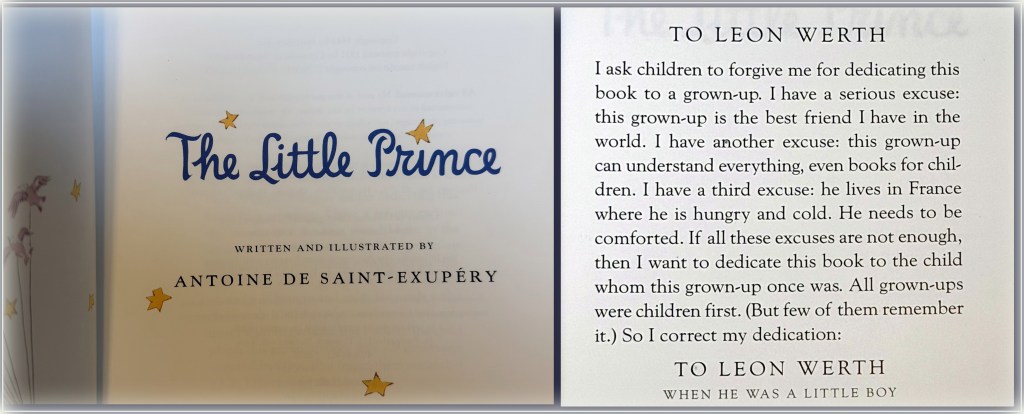
May your reading and reflection give you a glimpse into the child within. So important this was to de Saint-Exupéry that he dedicated The Little Prince to his best friend. “I want to dedicate this book to the child whom this grown-up once was. All grown-ups were children first. (But few of them remember it.)” May your remember.
Other reflections on spiritual insights from movies, books, music, and other social/cultural experiences and living a life of childlike wonder:
PlayFULLY You: Pixie Dust and the Pink Motel
Wonder: The Dance and The Sweet Spot
The Gift of Curiosity: There is no such thing as wasted learning!
Mystery and History: Holy Days and Crane Calling
© Jodi Blazek Gehr, Being Benedictine Blogger
“It’s madness
to hate all roses
because you got scratched with one thorn,
to give up all dreams
because one of them didn’t come true,
to give up all attempts
because one of them failed.
It’s folly to condemn all your friends
because one has betrayed you,
to no longer believe in love
just because someone was unfaithful
or didn’t love you back,
to throw away all your chances to be happy
because something went wrong.
There will always be another opportunity,
another friend,
another love,
a new strength.
For every end,
there is always a new beginning…..
And now here is my secret,
a very simple secret:
It is only with the heart
that one can see rightly;
what is essential is invisible to the eye.”
~ Antoine de Saint-Exupéry,
The Little Prince


 Being Benedictine
Leave a comment