Search

Being Benedictine

Living SoulFully as an Oblate of St. Benedict

Tag

Oblate

Pray without Ceasing: A Way of Being

Being a Benedictine oblate is a way of life. Oblates desire to live as monks in the world, seeking God by recognizing the sacred in their everyday life, in their family, and in their workplace. Being part of a community of monks and oblates is a source of learning and support for our spiritual journey.

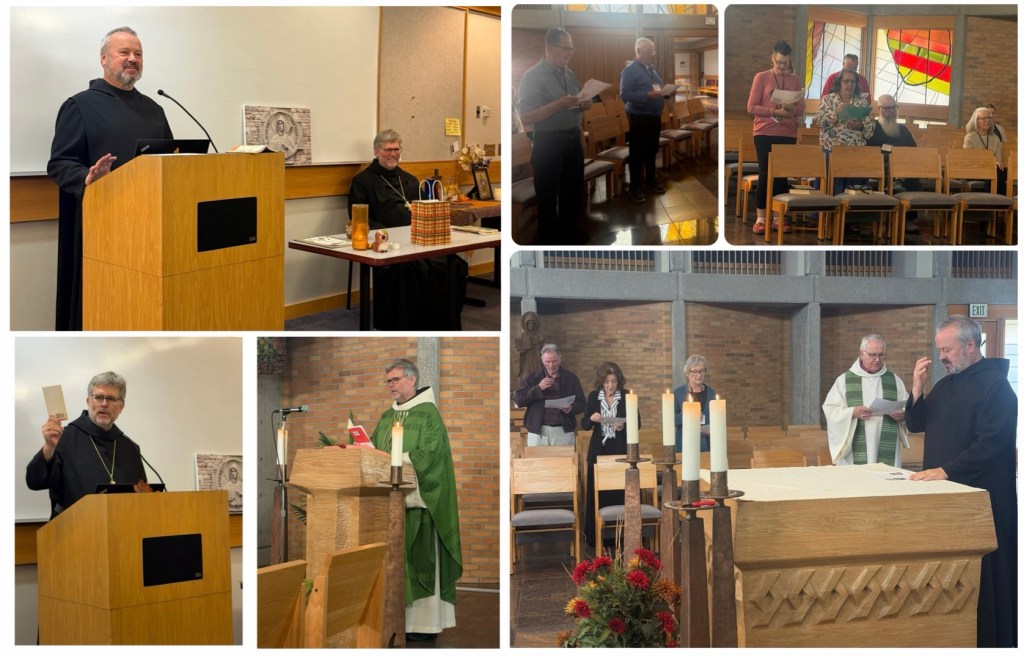
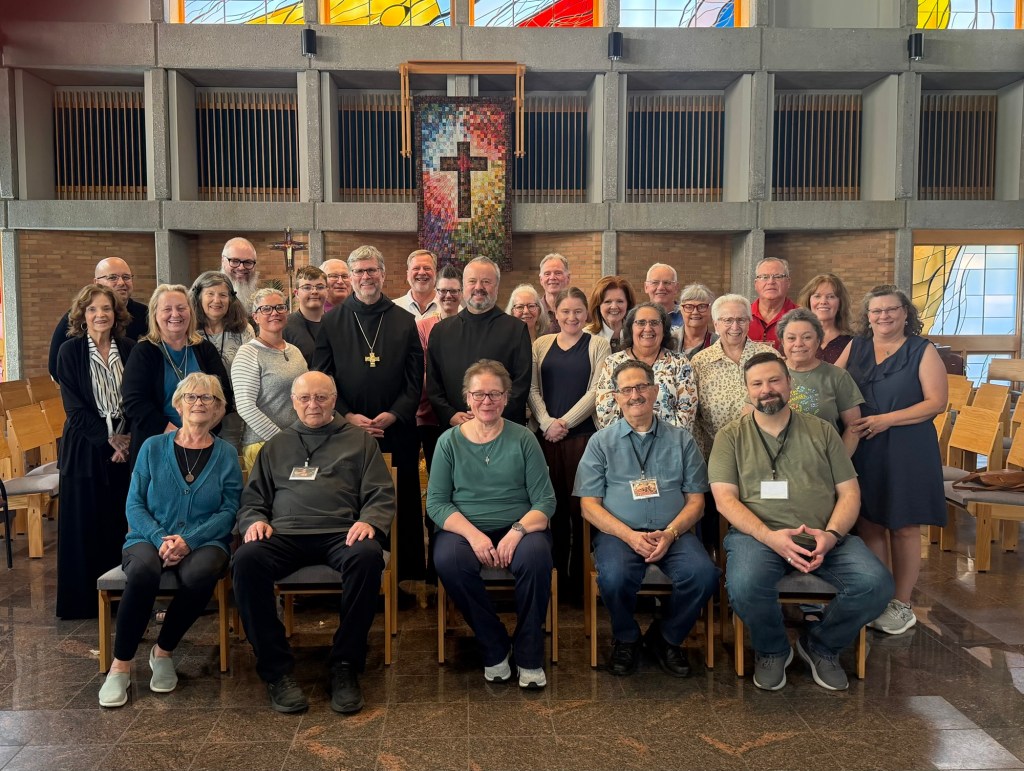
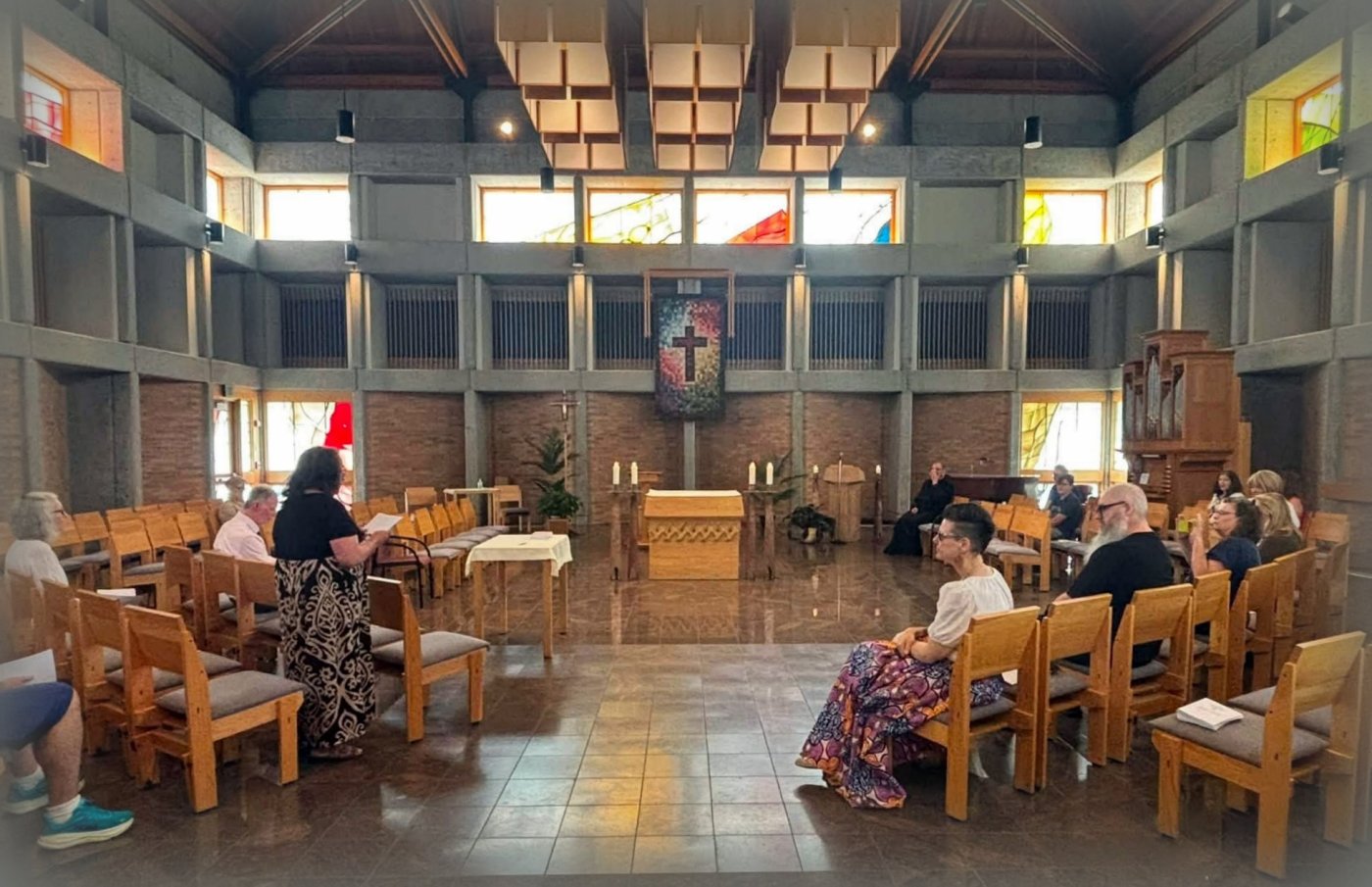
On the second Saturday of each month, the oblates of Christ the King Priory, the monastery I am an oblate of, gather to learn more about the Rule of St. Benedict. Our day includes morning prayer, monastery news, Lectio Divina, Mass, midday prayer, lunch, reading the Rule of St. Benedict, and small-group discussions of a selected book.

Prayer is the foundation of Benedictine spirituality. In August, we focused on Ways to Pray (Chapter 5) in the book Saint Benedict on the Freeway: A Rule of Life for the 21st Century by Corinne Ware. Benedict wrote in the Prologue of the Rule— “First of all, every time you begin a good work, you must pray to him most earnestly to bring it to perfection.” In the Apostle Paul’s letter to Thessalonica, he instructed the new church community to “Pray without ceasing.” (1 Thessalonians 5:17)

But what is prayer? And how is it possible to always be praying?

A friend recently asked me how I prayed, especially for others. So often we think that prayer means choosing the right words to speak to God, and that somehow, if we find those magic words, prayer might work “better”. We will get what we prayed for. Many believe that the purpose of prayer is to express what we desire—and that the right words might bring about the reality we hope for. But prayer is i much more than words or being attached to a specific, longed-for outcome.

The definition of prayer must be reimagined. There are many ways to pray, and it is possible to pray without ceasing. “Prayer is not so much our words to God as our life in God.” (Unknown author quoted by Caroline Myss) Reflecting on the chapter, I created a list of what prayer is:

Continue reading “Pray without Ceasing: A Way of Being”

Announcing an International Traveling Benedictine Art Exhibit

“Looking at art is one way of listening to God.”

Sister Wendy Beckett, A Child’s Book of Prayer in Art

Listen, the first word in the Rule of St. Benedict, is the source of all creativity. Before the first word of a poem or essay can be written or a stroke of a paintbrush can be made, one must listen to self, soul, and the Divine. From listening, a flash of insight may strike, an idea bubbles up…

Life Through A Different Lens, an international traveling Benedictine art exhibit, is an idea that came from the deep soul-listening of Benedictine Oblates Linda Mingos (Benedictine Sisters of Virginia) and Kent Onah (Ewu Monastery, Nigeria).

The vision of Life Through a Different Lens is to celebrate “the light and grace of God, alive in the Rule of St. Benedict, illuminated through time, and reflected in every race and culture throughout the world today.”  Our hope is to communicate the importance of Benedictine spirituality and monasticism through art and creativity.

Each creative piece in the traveling exhibit—a reflection, poem, or visual art—will reflect the Benedictine way of life through the charisms of the Rule of Benedict within the artist’s current culture and society. Visual art, poems, reflections, and more can illuminate the values of hospitality, community, justice, listening, humility, silence, prayer, and work, to name a few.

We are seeking individuals who create (artists and writers), monasteries in the United States and Africa, where the artwork can reside for three months before it moves to its next location, and financial sponsors, to help make all this happen in 2027. An exhibit catalog of all art and creative work, and a companion study guide for personal reflection or small-group discussion, will accompany the traveling exhibit.

Capturing our creativity through art is both prayer and work. And for those who will see it, like viewing art in a museum or reading a good book, listening to the message or intent of the artist can be a spiritual practice. Both creativity and listening are ways to pray.  

Our first planned exhibition site and opening ceremony will be held at the Ewu Monastery in Nigeria, the birthplace of monasticism in the prayer and work of desert mothers and fathers of the desert of Africa. If you would like to be a part of Life Through A Different Lens, we would love to hear from you.

“All art is a terrific bridge…Music, paintings, words, they really do speak to the soul, to the heart, to the spirit…” 

-Julia Cameron

Artwork will be juried for admission into the exhibit. See submission examples below. If you would like to learn more about this project, please email mingoslindaj@gmail.com. Your response should include: your name, email address, the name of your monastery, the country in which you live, and the language you speak.

Some guidelines:

  • Artwork size 2’ x 3’ minimum, 3’x 4’ maximum, shipped ready to hang.
  • Written work should not exceed 500 words single-spaced or 250-300 words double-spaced, 12 pt font, 1” margins.
  • Submissions accepted from committed or professed Benedictines, monks or oblates.

Submission Examples

Reflection Submission—From Cave to Community by Linda Land-Closson, Oblate Benet Hill Monastery, Colorado Springs, Colorado

Benedict of Nursia: born in Rome four short years after the fall of the western roman empire, an aristocrat in a crumbling world. so much to lose. more to fear. yet tethered to Scholastica, the one with whom he shared a womb.

He fled that world at 20 or so and retreated to a cave. I get that. In my bones. I get that urge to escape what a collapsing empire feels like: the power-grabbing, the unfettered egos, the lies, manipulation, violence. the fear-based finger pointing, gaslighting, and scapegoating: all slung about as distractions, magic sleight-of-hand, them-Them-THEM…not-us. I’d return to the womb if I could. a cave—any cave—will do.

Run away. oh, how I want to run away! how I want to lock myself in a room and have a Veruca-Salt-sized temper tantrum: “I want the world to go away, Daddy, and I want that now!”

Three years of solitude sounds about right. three years of praying, of silence, of only-enough-human-contact-to-resupply and nothing more. Three years of not listening to news and fake news and fake news about fake news, of not hearing the voices of those with the power to be heard above the din of oppression and social decay. Maybe it will all be over in three years.

Three years did something for Benedict. He came out of his cave, out of his solitude, and he wrote about community. He wrote for community because community becomes resistance when the Sirens of despair call. Who knows what Benedict riddled for three years, but he realized community was the answer, the answer to power-over, the answer to ego and to malaise, the answer to anger, the answer to our feigned independence. His life began by sharing the most intimate of spaces with another person, after all.

Community is the Way, Love-centered, God-centered community. This is where we find forgiveness-grace-mercy, sometimes for the first time. Where we find ourselves, usually for the first time. and somewhere, sometime, somehow, this is where we find forgiveness-grace-mercy for the Other. over and over, knitted into benign and seemingly meaningless moments, words, and actions. Community finds us and we find the Other. We find that both—that all—contain the divine spark.

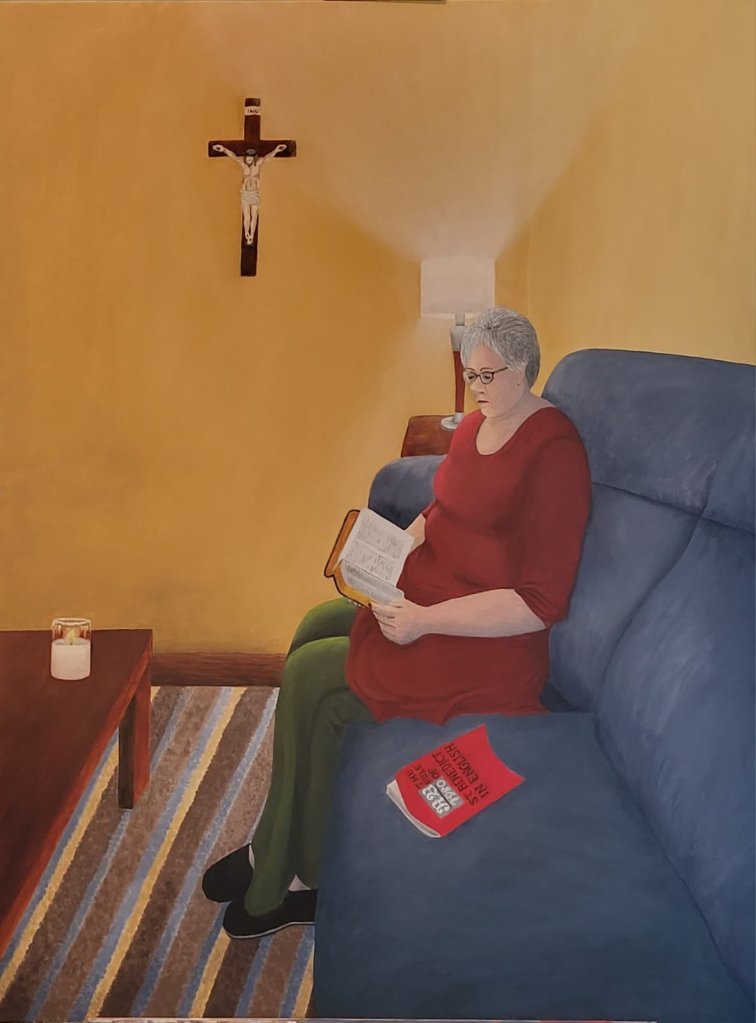
Visual Art SubmissionOil on Canvas by Linda Mingos, Oblate, Benedictine Sisters of Virginia, Bristow, Virginia

Poetry Submission—The Smiling Heart Serves by Mike Gurak, Benedictine Sisters of Virginia, Bristow, Virginia

© Jodi Blazek Gehr, Being Benedictine Blogger
July 11–My Birthday & The Feast of St. Benedict

St. Benedict is pretty special to me for a few reasons.

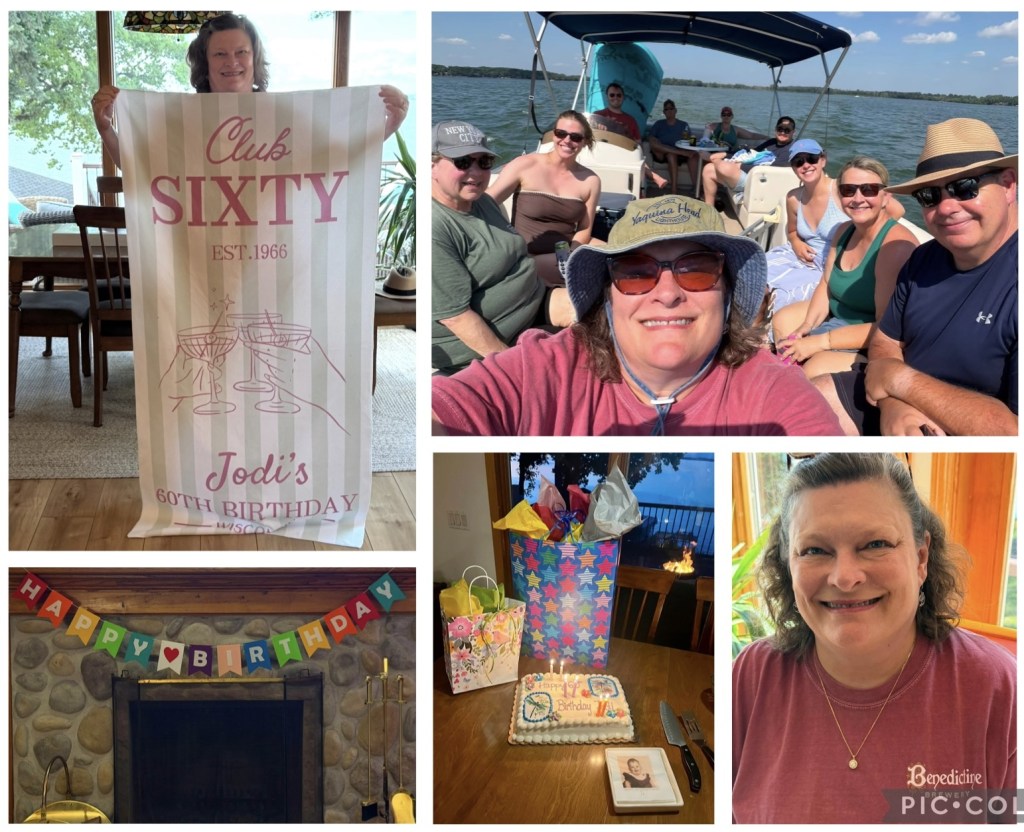
July 11, the Feast of St. Benedict, is also my birthday. (And oops, I was having so much fun celebrating my 60th birthday that I forgot to share this post.) Although I could not be more delighted to have St. Benedict as my patron saint, I must admit that I was pretty disappointed when I first discovered it.

I believe in birthday weeks, celebrations, having fun, and the Rule of St. Benedict!

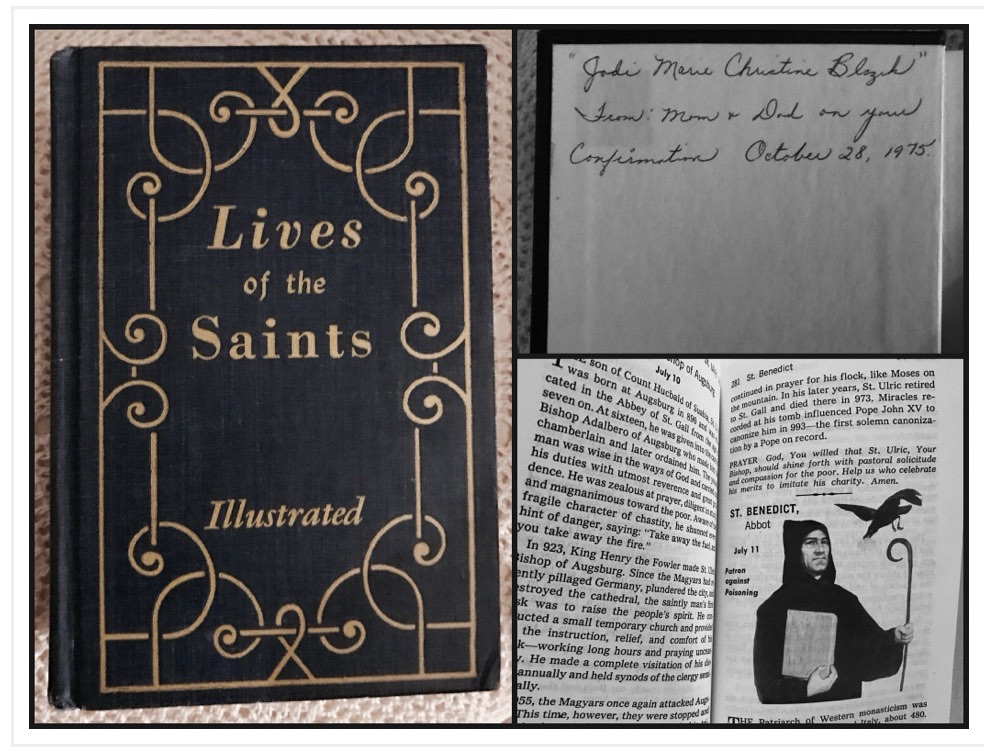
My parents had given me an illustrated book of the “Lives of the Saints” for my Confirmation. As any nine-year-old would do, I immediately looked to see who the saint was for July 11, my birthday. A lovely woman saint with a beautiful name, I had hoped. Perhaps Elizabeth or Mary, Theresa or Christine (my confirmation name) would be my special saint.

Instead, I saw an illustration of a man with a dark hood, a scary-looking bird, some sort of walking cane, and an unusual name that I had only associated with Benedict Arnold, a famous American traitor.

July 11, St. Benedict, Abbot, it said.

I had never heard of St. Benedict and surely did not know what an Abbot was. Through the years, I returned to these pages often, thinking that I should have some connection with this man, my patron saint.

Fast forward 26 years. Married, a mother of a seven-year-old daughter, a high school teacher, and a club sponsor, I had a full, busy, and satisfying life, yet also a longing for silence. An advertisement for a contemplative prayer retreat in our local newspaper caught my eye. It promised an “oasis of peace” at a retreat house in the cornfields of Nebraska called St. Benedict Center.

And then I remember St. Benedict. My saint.

Continue reading “July 11–My Birthday & The Feast of St. Benedict”

A Journey with The Little Prince

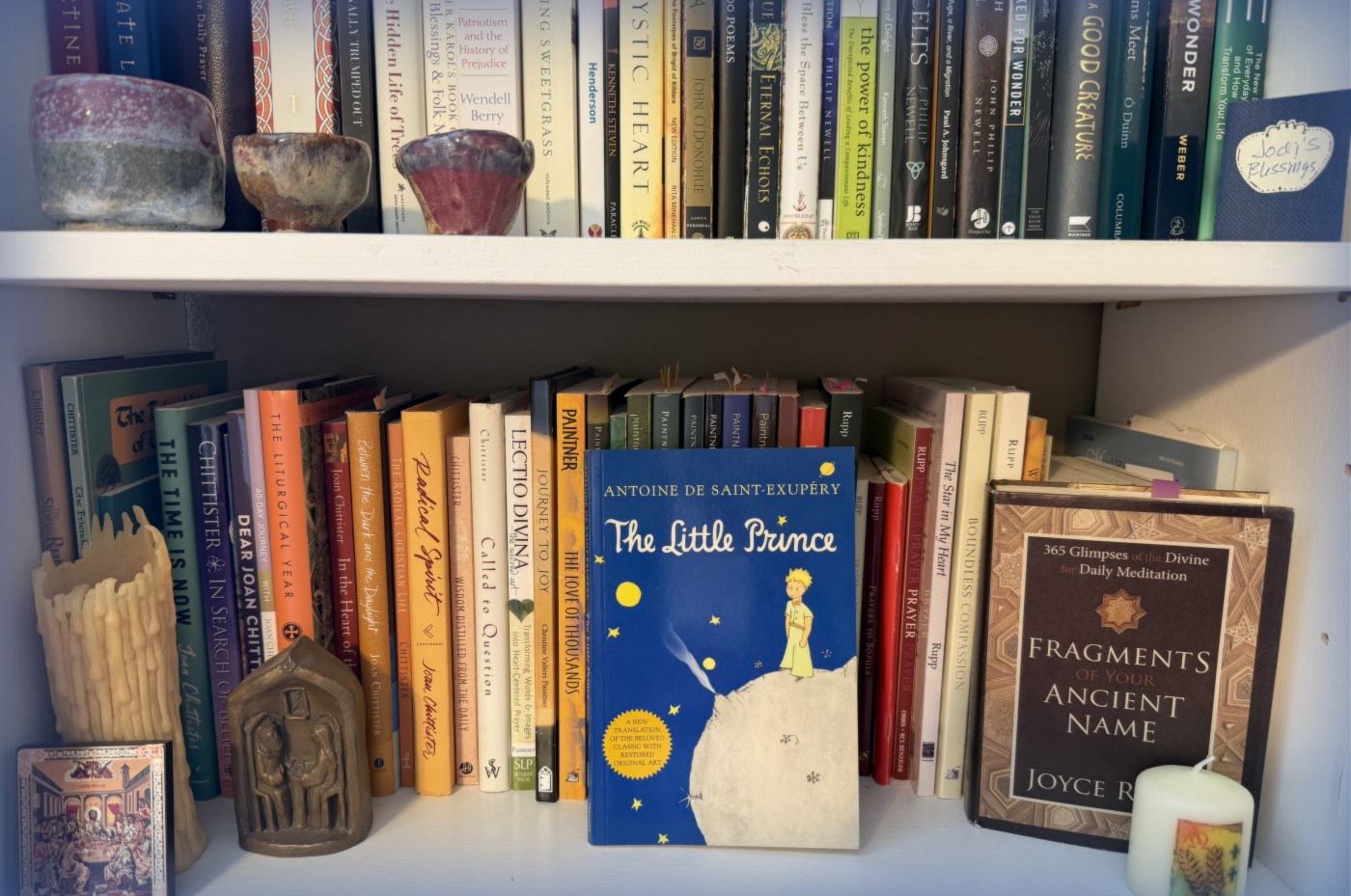
It has been several years since I spent time with “Le Petit Prince” and the young pilot, but when I read that it was the 80th anniversary of The Little Prince, a novella written and illustrated by French aviator Antoine de Saint-Exupéry, I immediately ran to my bookshelf, pulling the slim blue volume from my cherished re-reads shelf.

Each time I read it, I glean something new—a spiritual lesson, an insight about what is essential, a new way to think about time, friendship, life, and death. The Little Prince is a treasure to many. Over 300 million copies have been sold worldwide, making it one of the best-selling and most widely read books in history.  It has been translated into 600 different languages and dialects worldwide, second only to the Bible. There is something very special, mystical even, about this story that transcends age, culture, religion, or language.

It took less than an hour (in real life) to take the transcendent journey with the six-year-old pilot who had “flown almost everywhere in the world,” and the Little Prince who traveled from his home asteroid B-612, “where everything is very small.” They meet in the Sahara Desert, “in the face of an overpowering mystery,” where the pilot has crash-landed, and the prince has been on a voyage to other planets.

As the pilot and the prince share the journeys that brought them together, I am in awe of the impact that great literature and storytelling can have on a reader, offering so many spiritual lessons. As if through the lens of a kaleidoscope, with each turning, one sees a little different story, a new perspective. Rotate it towards the light, and yet another image is revealed. This is the mystery of sacred reading, or Lectio Divina. For me, this turn of the kaleidoscope captured the importance of living life more soulfully with childlike wonder and joy, a reminder that my worth cannot be counted.

How Grown-Ups See The World

In The Little Prince, we see, for instance, that the way grown-ups see the world is less than ideal. Consumed with facts, tasks to be completed, and accumulating possessions, grown-ups with heightened self-importance are more concerned with financial value, usefulness, meeting expectations, and making sure their expectations are met.

Continue reading “A Journey with The Little Prince”

Naming the Darkness Within: An Advent Reflection

December 2025 Oblate Reflections

Presentation Leader: Fr. Jim Secora – Advent “He is Coming”

“The people who walked in darkness have seen a great light.” (Isaiah 9:2)

We seek the light. In total darkness, our eyes can see a single point of light up to 5 miles away. This is the lesson of Advent, shared by Fr. Jim Secora, a retired priest and Benedictine oblate. We must accept the darkness, become comfortable with it, and not run from it. We must confront the darkness in the world and from within.

We live in a generation of darkness, as many generations before us have. There is much suffering—with refugees, immigrants, those lacking good health care, those who cannot afford necessities, who are sick, or have personal suffering. Advent calls us to confront the darkness. We cannot appreciate the light around us until we do.

Gaudete Sunday, the third Sunday of Advent, is a reminder of the joy we have and of the joy to come. The light of Christ is here and is coming—both are true. Miracles happen every day when we pay attention.

The fear of uncertainty, the unknown, leads to personal darkness. Even Jesus felt it. And he faced it head-on. We must practice trusting, letting go, and sitting in discomfort. If we don’t have an opportunity to see the need for light in our lives, why do we need Christmas? Fr. Jim suggests.

In small groups, we shared our personal experiences in response to the following questions—

1. Name the experiences of darkness that you find in the world, the church, the lives of people, and if only if you are comfortable, any area of darkness that you have or are experiencing. Where or when have you experienced light piercing the darkness?

2. The people of Israel sought out John because he offered them a vision of salvation. Where in the life of the world do you see the need for a savior? Where in my life, do I need to experience a rebirth of Jesus and his gift of salvation?

3. What is the star you are following now? And where is that star in its present radiance in your life leading you?

Much of our personal darkness comes from a feeling of helplessness. We want our discomfort relieved, our problems fixed. We live in a cloud of doubt and uncertainty, where we can’t “fix it” and no one else can “fix it” for us either. We forget that often the fear of the unknown may be worse than the reality that may be to come. But this presents the question: What do we trust in?

During my greatest fear, waiting for a life-changing health diagnosis, I experienced this desperation. And the only answer, the only peace is to trust in the breath of the Divine. Taking one deep breath at a time, I was more aware of the connection to the greater Source of peace. The breath prayer is the start of a surrendering practice, a continual turning it over to God, a reminder that we cannot assume to know how things will turn out or that we know what is best. This spiritual practice is impossible without humility.

“We have made ourselves the love of our lives and found little to adore at the altar of our egos. We have made ourselves our own gods and have forgotten God in the process…Joy, the deep-down awareness of what it means to live well, to live productively, to live righteously, is made out of self-giving, simplicity, and other-centeredness…Joy is not about what happens to us, the manger indicates. It is the meaning we give to what we do that determines the nature, the quality of the lives we live.”

-Joan Chittister, The Liturgical Year

It takes humility to surrender our “me” to “we.” We need a redemption of me. The stars we can follow are trust, acceptance, joy, and peace. Practicing gratitude for the present moment, finding peace, joy, and strength in whatever situation we are in, not wishing that we were somewhere else. Our star is directly above our present moment.

More reflections on Advent.

The Light Shines in the Darkness

Holy Darkness: An Advent Meditation

You Are A Sanctuary for the Divine ~ Sprigs of Rosemary Online Advent Retreat

An Advent Call of Humility: Mary and Zechariah

Flood the World with Love: An Antidote to Darkness

© Jodi Blazek Gehr, Being Benedictine Blogger
Gratitude or Grumbling: A Thanksgiving Choice

November 2025 Oblate Reflections

“Do not grumble or think ill of others.” (Rule of St. Benedict Ch. 4:39)

What is the key to practicing gratitude rather than grumbling? How can we live a grateful life in the midst of pain and suffering, our own, that of others, and that of the world around us? Is it possible to be thankful for challenging experiences?

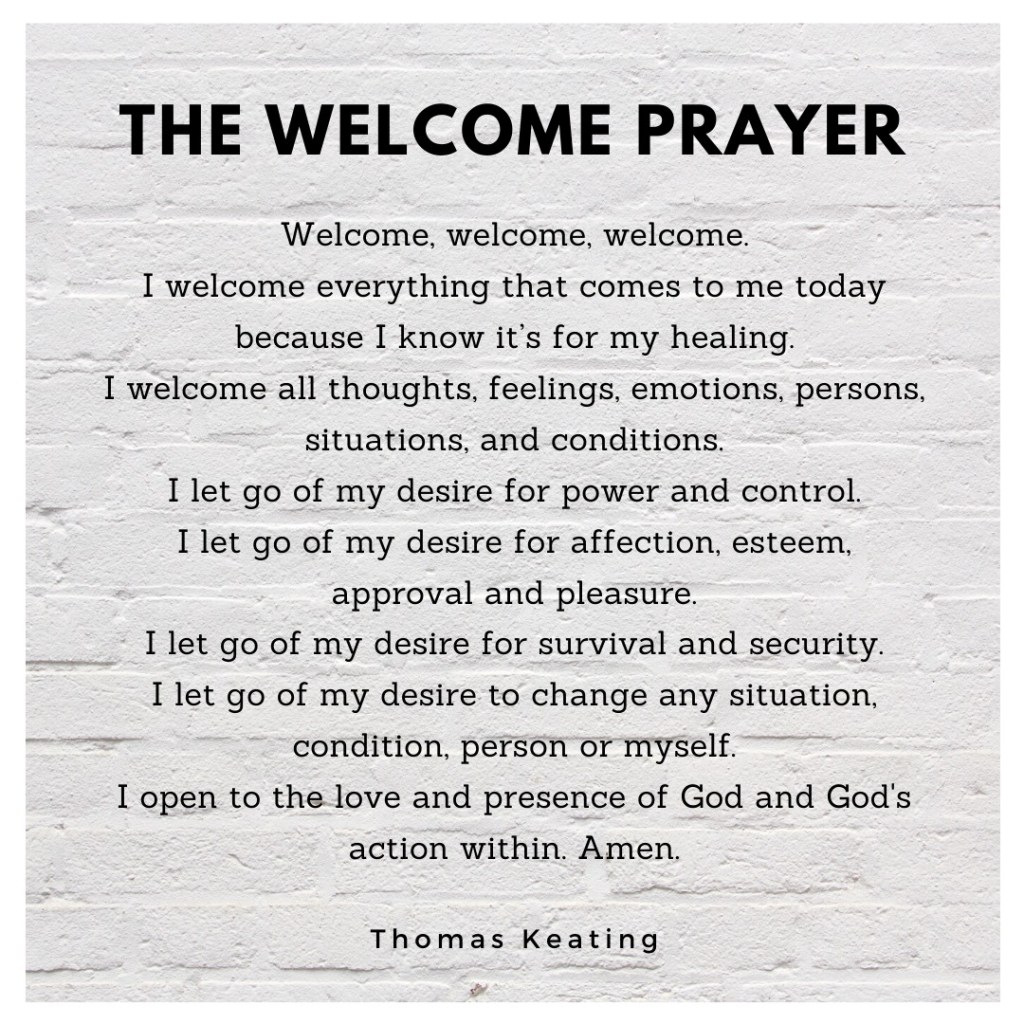
We use the Rule of St. Benedict and Scripture to address these questions at our November oblate meeting. We opened our meeting with the Welcome Prayer written by Fr. Thomas Keating).

If we truly practice this prayer to welcome all of the above, we find that the benefit of grumbling is minimal. In fact, grumbling is self-sabotage. The benefit of welcoming everything is that through the moments of distress, unease, discomfort, or suffering, we learn that another way could be a blessing. What can be difficult about the Welcome Prayer is the “letting go” of our control—and oh my, how much we prefer when things go our way.

St. Benedict has a few things to say about grumbling, a form of letting go of our own gripes, opinions, and negativity for the greater good of the community and ultimately our own selves. He encourages his monks to cultivate humility, patience, and a joyful acceptance of their station in life. It requires a surrender of pride to be content even when it is challenging to be.

We read the following excerpts and practice Lectio Divina as a group, sharing the insights we gained.

Continue reading “Gratitude or Grumbling: A Thanksgiving Choice”

10 Reasons Benedictines Love Silence

I carefully consider everything that I write and share here, especially the more personal or contentious reflections. I rarely write and post on the same day. Not so with my speech. I find myself saying often enough, “Did I just say that out loud?” Words fly out of my mouth much faster than they flow from my pen or keyboard.

 Perhaps this is why I enjoy journaling and writing so much. It slows my mind down. In silence, I can be more deliberate, careful, and organized in what I share. A healthy respect for silence could save me some angst in times when my mouth works faster than my mind.

At our annual oblate retreat, with the theme “Building Community Through Our Oblate Promises,” the importance of silence was the topic of the opening session led by Fr. Thomas Leitner, the administrator of St. Benedict Center and a monk who lives at the monastery across the road. Throughout the weekend, we would learn about and practice silence.

Why is silence so fundamental to Benedictine spirituality?

Silence is the way to self-knowledge. A discipline of silence confronts us with ourselves. “Silence is a way for us to put up with ourselves the way we are. Not everything that comes to mind at times of silence is pleasant. Repressed needs and wishes may come up, repressed anger, and perhaps missed opportunities,” Fr. Thomas shared. Silence gives our wounds space to surface, allowing us time to wrestle with and soothe our pain in healthy ways. Silence allows us to see ourselves unfiltered without the influence of others.

In The Interior Castle, St. Teresa of Avila uses imagery of a castle for our soul, emphasizing “how necessary this room (of self-knowledge) is…we shall never completely know ourselves if we don’t strive to know God.” She writes that God dwells within us, and to know God, we must first know ourselves. Hard, but necessary, work to “know thyself,” as the ancient Greek maxim suggests.

Silence connects us to the Divine. Seventh-century bishop and theologian, St. Isaac of Syria, writes:

We enter this “treasure house,” our very soul, through the practice of prayer. Some of us may be conditioned to think of prayer as a transactional bubble-gum-machine approach to asking God for what we want. We put in a coin; God supplies the big gumball. Our prayers are “answered.” Yet this is not the kind of prayer that leads to self-knowledge or to a connection with God. Consider a poem by the 19th-century Danish theologian Søren Kierkegaard that points to a different kind of prayer.

Silence builds confidence and leads to self-respect.

“As my prayer became more and more devout and interior,” I come to know myself with greater depth. This knowing builds my confidence: I have been created just as I am, in the image of God. I forgive myself for weaknesses and celebrate my gifts. I seek less approval from others. I have “less and less” to say to justify, convince, or plead my case of worthiness to myself or others.

Teacher, writer, and friend, Parker Palmer, writes,One of our most debilitating illusions (is) that the answer to our problems is always ‘out there’ somewhere, never ‘in here.’ It’s an illusion that’s constantly reinforced by educational and religious institutions that make us dependent on “experts” and “authorities.” We need not look for knowledge in others; we can trust our own interiority, the Divine Expert Within. I can grow in self-respect, knowing God is within me, intimately speaking to me when I am silent long enough.

Continue reading “10 Reasons Benedictines Love Silence”

Our Ruby Anniversary: 40 Years of Marriage

“I promise to be true to you in good times and in bad, in sickness and in health. I will love you and honor you all the days of my life.”

Forty year ago, my husband, Joe, and I made our marriage vows on August 17, 1985. As a 19-year-old bride, I had little understanding of what those words meant or would require. I imagine it is the same for many. We have hopes and expectations, albeit idealistic or romanticized. We may also have a good idea of what we hope our marriage will NOT be like. Surely, it’s a good place to start, but it is then that the real work of love begins.

Stability, a Benedictine value, is what is promised in marriage when we vow, “all the days of my life.”  We promise to stay, to not run away from challenges or difficulties; instead, we remain present to the relationship, to see what we discover about each other. After writing seventy-two chapters in The Rule, Benedict titles his last chapter,This rule only a beginning of perfection.” In other words, marriage, or any commitment we make, requires practice—making mistakes, forgiveness, and always beginning again.

To love is a decision. A marriage is not made, once and for all, when the I-dos are exchanged. A marriage is constantly being recreated; it is always in the process of becoming. A marriage is made of moments. Moments we would like to forget, moments we must forgive, and moments that help us become more fully who we are. There are moments of joy, adventure, contentment, and the making of beautiful memories. When you string them all together, you get a picture of a life built together.

I love that the ruby, a precious gem, second only to the diamond in toughness and durability, is the traditional symbol for a 40th wedding anniversary. Throughout history, many cultures and religions have associated the ruby with mystical or spiritual qualities, representing love, passion, protection, vitality, and wealth. (Ruby Symbolism and Legends)

The word “ruby” comes from the Latin word “ruber,” meaning red. The red heart of Valentine’s Day reminds us of a desire for passion and romantic love. One also thinks of the redness of blood, which carries oxygen to all parts of the body, giving life.

Joe and I have experienced this “ruby” nature, not all in one day, month, or year, but over time and as a way of life. The ruby’s “inner glow” led to beliefs that it contained an inner fire or “an inextinguishable flame”. This inner glow, with a playful spirit and sense of humor, has fueled our commitment to protect our marriage, to be resilient, to learn, grow and change. We are wealthy in countless ways—a beautiful daughter and son-in-law, great friends and family connections, opportunities for travel, hobbies, personal interests, and, now, more time for together.

Our new season of retirement. After lengthy careers in law enforcement and education, both Joe and I have retired—letting go of our careers, but not what was at the heart of our vocation. We continue to work in other ways: I lead SoulFully You retreats and workshops on creativity and the spiritual life, write essays for Being Benedictine, and belong to a variety of book/study groups, including oblates. Joe drives senior citizens to recreational activities and appointments, enjoys travel with his siblings, meeting with friends, and cultivating his bourbon collection. We have time to slow down, take a nap when we want, read, and binge-watch TV shows, travel more, and enjoy spontaneous trips to be with our daughter Jessica and her husband, John.

Continue reading “Our Ruby Anniversary: 40 Years of Marriage”

The Good Zeal of Monks

December 2024 Oblate Reflections

Lectio Divina—Rule of St. Benedict, Chapter 72, The Good Zeal of Monks

In the 1500-year-old Rule of St. Benedict, monks who live in a monastic community are presented with a choice to guide their relationships—to embrace good zeal which monks should foster with fervent love rather than the zeal of bitterness. This choice is a call to holiness and contributes to an atmosphere of separation or togetherness in the community.

Benedict is clear—if monks choose to respond to their brothers with bitterness, they cultivate an environment of separateness. They become distant from God and the community. But if monks choose to foster enthusiasm for loving their brother, Benedict writes that it will “bring us all together to everlasting life.”

Love is the antidote to separation and bitterness. Benedict encourages enthusiasm and eagerness when expressing our fervent love to God, one’s abbot (or leader), and one’s brothers. He also provides an action plan to demonstrate love.

Chapter 72 begins and ends in love—what is hoped for (” a good zeal which separates from evil and leads to God and everlasting life) and what is the promised outcome ( to “bring us all together in everlasting life.”) The specific instructions to demonstrate “fervent love” are to show respect to others; be patient with other’s weaknesses; practice active listening; and to consider the best interest of others, not just our own.

God’s work and desire is to “bring us all together” through our acts of love. We must consciously choose between holding onto bitterness, which separates us from God and from others. We must be committed to this goal to keep a community, family, organization, or friendship from growing apart through conflict, misunderstandings, and the bitterness that might result. This can be hard, there is no denying it.

We demonstrate our preference for “nothing whatever but Christ” when we see and treat others as Christ. Christ dwells within us, defining who we are. Christ, then, is active in creating togetherness in the community.

In a community, each one matters. We cannot become holy without the other; we are responsible for co-creating and honoring connections with others. We live in context with everyone as a member of the body of Christ. God works in us as we work together. The whole thing falls apart when we do not consider the bigger picture.

The Rule is relevant today for Benedictine oblates, lay associates of a monastery, and those who find wisdom in the spiritual insights of St. Benedict to learn how to live in connectedness with family, friends, coworkers, team members, and in all our relationships. We have much to learn.

Blog at WordPress.com.

Up ↑