Rituals are a reminder of our values, an expression of our longing for connection and community. Rituals are an anchor to ground us in our beliefs and ideals, practices to guide us in becoming our best self. We can create or honor rituals in our daily lives—at work, in our morning routine, around the dinner table as a family, attending a religious service or celebrating on special holidays like Independence Day or Thanksgiving Day. Rituals are everywhere.
History tells us that the first Thanksgiving, in 1621, commemorated the Pilgrims’ gratitude for a bountiful harvest. This is a simplistic and perhaps mythical snapshot, but it is where the ritual of giving thanks begins for many Americans. Thanksgiving is celebrated in many other countries as well for a variety of historical, religious, and secular reasons.
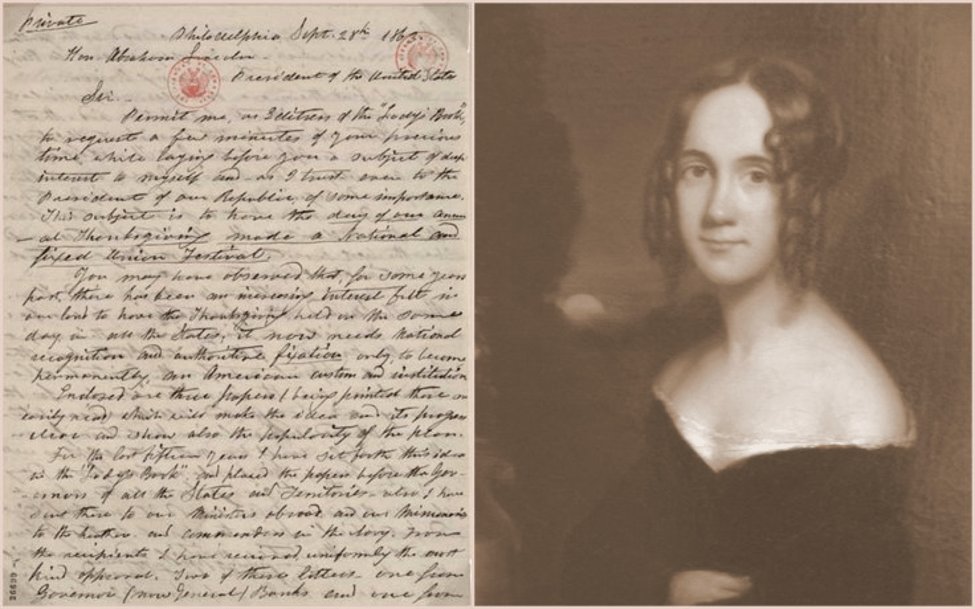
Primarily, Thanksgiving is about just that—giving thanks. Thanksgiving is remembering to be grateful—even in times of division, darkness, or despair. Thanksgiving, as a legally observed holiday in the United States, was championed by Sarah Josepha Hale (October 24, 1788 – April 30, 1879), an American writer and author of the infamous nursery rhyme “Mary Had a Little Lamb“. Sarah, fortunate that her parents believed in education for girls, was home-schooled and eventually became a teacher herself and, later, an advocate of higher education and workplace rights for women. When Sarah was 34 years old, her husband died of a stroke—her oldest child was 7, and the youngest was born two weeks after her husband’s death.
It’s hard to imagine the sadness, grief, and dark days that Sarah Josepha Hale endured. So many in our time experience health care issues, financial struggles, estrangement or distance from loved ones, and grief and disappointments of all kinds. There is no one person, or period in history, who has exclusive claim on hard times. It is a universal experience. And yet Sarah believed in Thanksgiving. She wrote: “There is a deep moral influence in these periodical seasons of rejoicing, in which a whole community participate. They bring out, and together, as it were, the best sympathies of our nature…because all are privileged to be happy in their own way.”
While Sarah firmly opposed slavery, still she longed for reconciliation between the North and the South. Over three decades, she wrote countless letters urging American presidents, from Taylor to Lincoln, to proclaim Thanksgiving a national holiday: “We are already spread and mingled over the Union. Each year, by bringing us oftener together, releases us from the estrangement and coolness consequent on distance and political alienations; each year multiplies our ties of relationship and friendship. How can we hate our Mississippi brother-in-law?”