Search

Being Benedictine

Living SoulFully as an Oblate of St. Benedict

Tag

Catholic

Announcing an International Traveling Benedictine Art Exhibit

“Looking at art is one way of listening to God.”

Sister Wendy Beckett, A Child’s Book of Prayer in Art

Listen, the first word in the Rule of St. Benedict, is the source of all creativity. Before the first word of a poem or essay can be written or a stroke of a paintbrush can be made, one must listen to self, soul, and the Divine. From listening, a flash of insight may strike, an idea bubbles up…

Life Through A Different Lens, an international traveling Benedictine art exhibit, is an idea that came from the deep soul-listening of Benedictine Oblates Linda Mingos (Benedictine Sisters of Virginia) and Kent Onah (Ewu Monastery, Nigeria).

The vision of Life Through a Different Lens is to celebrate “the light and grace of God, alive in the Rule of St. Benedict, illuminated through time, and reflected in every race and culture throughout the world today.”  Our hope is to communicate the importance of Benedictine spirituality and monasticism through art and creativity.

Each creative piece in the traveling exhibit—a reflection, poem, or visual art—will reflect the Benedictine way of life through the charisms of the Rule of Benedict within the artist’s current culture and society. Visual art, poems, reflections, and more can illuminate the values of hospitality, community, justice, listening, humility, silence, prayer, and work, to name a few.

We are seeking individuals who create (artists and writers), monasteries in the United States and Africa, where the artwork can reside for three months before it moves to its next location, and financial sponsors, to help make all this happen in 2027. An exhibit catalog of all art and creative work, and a companion study guide for personal reflection or small-group discussion, will accompany the traveling exhibit.

Capturing our creativity through art is both prayer and work. And for those who will see it, like viewing art in a museum or reading a good book, listening to the message or intent of the artist can be a spiritual practice. Both creativity and listening are ways to pray.  

Our first planned exhibition site and opening ceremony will be held at the Ewu Monastery in Nigeria, the birthplace of monasticism in the prayer and work of desert mothers and fathers of the desert of Africa. If you would like to be a part of Life Through A Different Lens, we would love to hear from you.

“All art is a terrific bridge…Music, paintings, words, they really do speak to the soul, to the heart, to the spirit…” 

-Julia Cameron

Artwork will be juried for admission into the exhibit. See submission examples below. If you would like to learn more about this project, please email mingoslindaj@gmail.com. Your response should include: your name, email address, the name of your monastery, the country in which you live, and the language you speak.

Some guidelines:

  • Artwork size 2’ x 3’ minimum, 3’x 4’ maximum, shipped ready to hang.
  • Written work should not exceed 500 words single-spaced or 250-300 words double-spaced, 12 pt font, 1” margins.
  • Submissions accepted from committed or professed Benedictines, monks or oblates.

Submission Examples

Reflection Submission—From Cave to Community by Linda Land-Closson, Oblate Benet Hill Monastery, Colorado Springs, Colorado

Benedict of Nursia: born in Rome four short years after the fall of the western roman empire, an aristocrat in a crumbling world. so much to lose. more to fear. yet tethered to Scholastica, the one with whom he shared a womb.

He fled that world at 20 or so and retreated to a cave. I get that. In my bones. I get that urge to escape what a collapsing empire feels like: the power-grabbing, the unfettered egos, the lies, manipulation, violence. the fear-based finger pointing, gaslighting, and scapegoating: all slung about as distractions, magic sleight-of-hand, them-Them-THEM…not-us. I’d return to the womb if I could. a cave—any cave—will do.

Run away. oh, how I want to run away! how I want to lock myself in a room and have a Veruca-Salt-sized temper tantrum: “I want the world to go away, Daddy, and I want that now!”

Three years of solitude sounds about right. three years of praying, of silence, of only-enough-human-contact-to-resupply and nothing more. Three years of not listening to news and fake news and fake news about fake news, of not hearing the voices of those with the power to be heard above the din of oppression and social decay. Maybe it will all be over in three years.

Three years did something for Benedict. He came out of his cave, out of his solitude, and he wrote about community. He wrote for community because community becomes resistance when the Sirens of despair call. Who knows what Benedict riddled for three years, but he realized community was the answer, the answer to power-over, the answer to ego and to malaise, the answer to anger, the answer to our feigned independence. His life began by sharing the most intimate of spaces with another person, after all.

Community is the Way, Love-centered, God-centered community. This is where we find forgiveness-grace-mercy, sometimes for the first time. Where we find ourselves, usually for the first time. and somewhere, sometime, somehow, this is where we find forgiveness-grace-mercy for the Other. over and over, knitted into benign and seemingly meaningless moments, words, and actions. Community finds us and we find the Other. We find that both—that all—contain the divine spark.

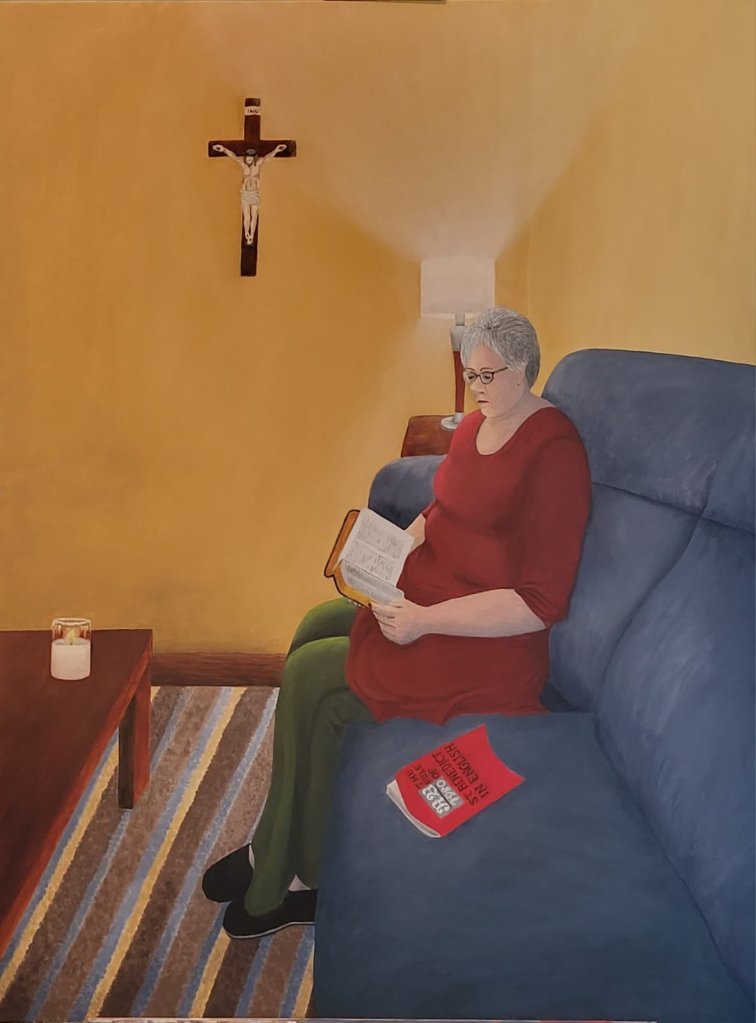
Visual Art SubmissionOil on Canvas by Linda Mingos, Oblate, Benedictine Sisters of Virginia, Bristow, Virginia
Poetry Submission—The Smiling Heart Serves by Mike Gurak, Benedictine Sisters of Virginia, Bristow, Virginia

© Jodi Blazek Gehr, Being Benedictine Blogger

July 11–My Birthday & The Feast of St. Benedict

St. Benedict is pretty special to me for a few reasons.

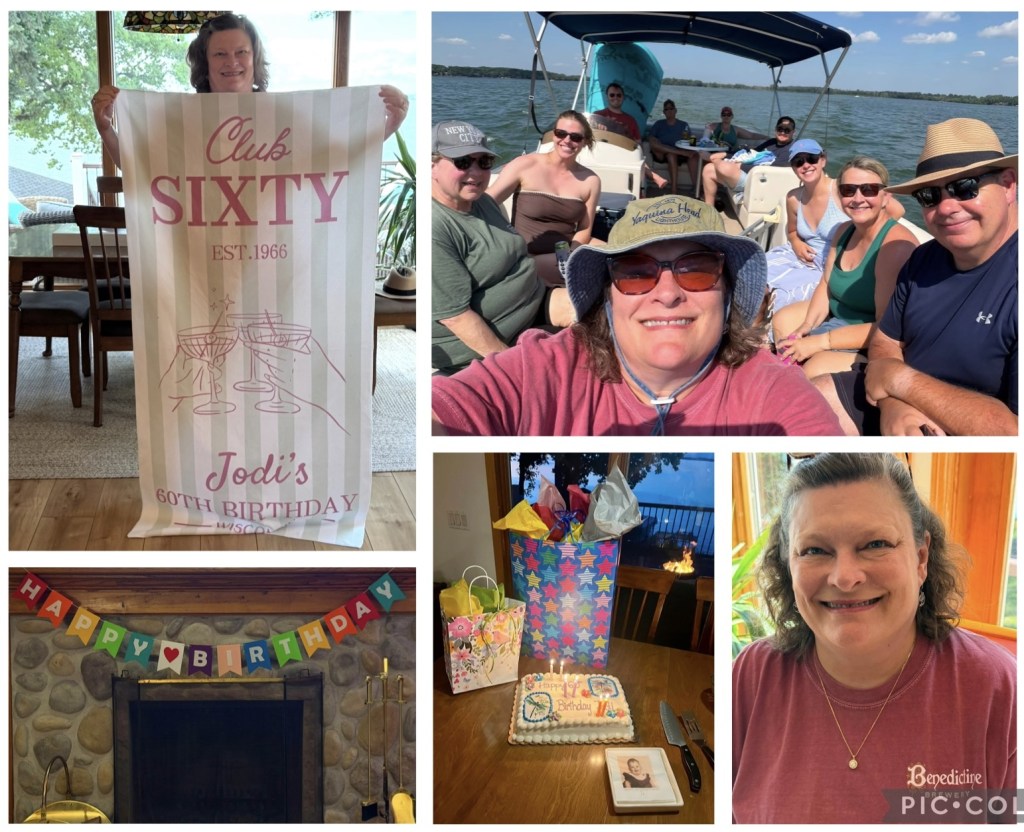
July 11, the Feast of St. Benedict, is also my birthday. (And oops, I was having so much fun celebrating my 60th birthday that I forgot to share this post.) Although I could not be more delighted to have St. Benedict as my patron saint, I must admit that I was pretty disappointed when I first discovered it.

I believe in birthday weeks, celebrations, having fun, and the Rule of St. Benedict!

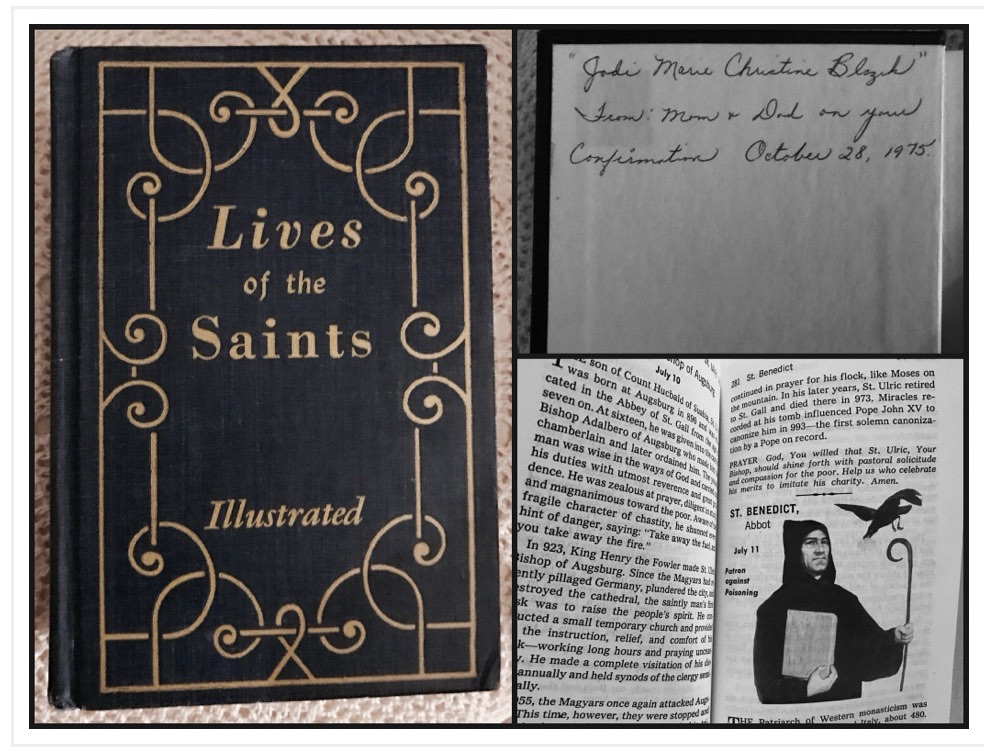
My parents had given me an illustrated book of the “Lives of the Saints” for my Confirmation. As any nine-year-old would do, I immediately looked to see who the saint was for July 11, my birthday. A lovely woman saint with a beautiful name, I had hoped. Perhaps Elizabeth or Mary, Theresa or Christine (my confirmation name) would be my special saint.

Instead, I saw an illustration of a man with a dark hood, a scary-looking bird, some sort of walking cane, and an unusual name that I had only associated with Benedict Arnold, a famous American traitor.

July 11, St. Benedict, Abbot, it said.

I had never heard of St. Benedict and surely did not know what an Abbot was. Through the years, I returned to these pages often, thinking that I should have some connection with this man, my patron saint.

Fast forward 26 years. Married, a mother of a seven-year-old daughter, a high school teacher, and a club sponsor, I had a full, busy, and satisfying life, yet also a longing for silence. An advertisement for a contemplative prayer retreat in our local newspaper caught my eye. It promised an “oasis of peace” at a retreat house in the cornfields of Nebraska called St. Benedict Center.

And then I remember St. Benedict. My saint.

Continue reading “July 11–My Birthday & The Feast of St. Benedict”

Ireland: I Had to Go Back

Vacation planning is a lot like lesson planning in the classroom and preparing for SoulFully You retreats and workshops I lead. I always over-plan. When my friend Sara invited me to go on a Celtic Christianity pilgrimage, I dove headfirst into researching all the possible places we could spend four days before the pilgrimage began. I found enough possibilities for a four-week vacation!

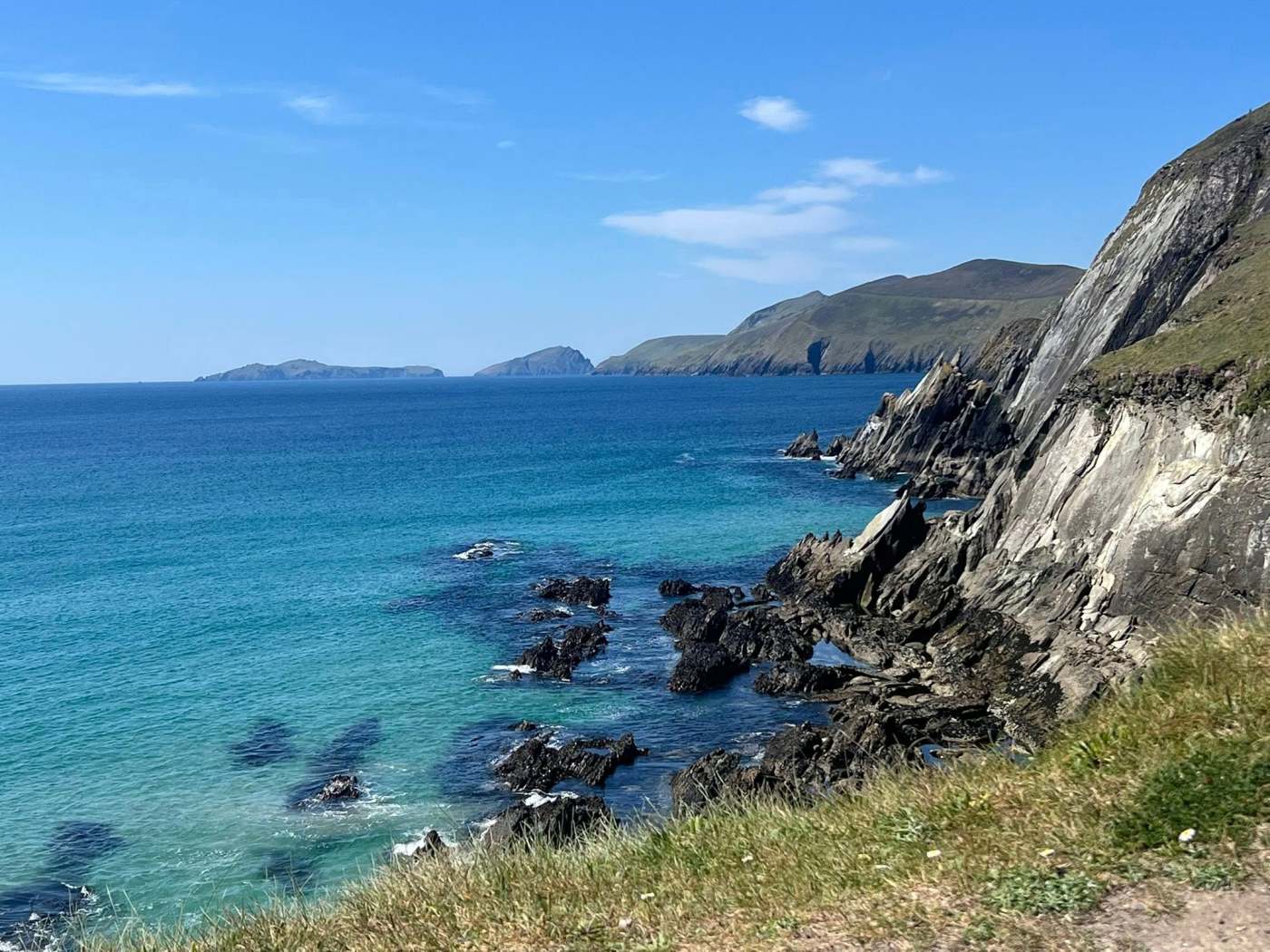
Visiting the monastic ruins of Glendalough, the holy wells of St. Brigid, and the High Crosses of Monasterboice, to name a few sacred sites on the pilgrimage, was all I had hoped for. But I hadn’t expected to be so enamored by the diversity and beauty of Ireland’s landscape, its rich culture and history, and the hospitality of locals and tourists.

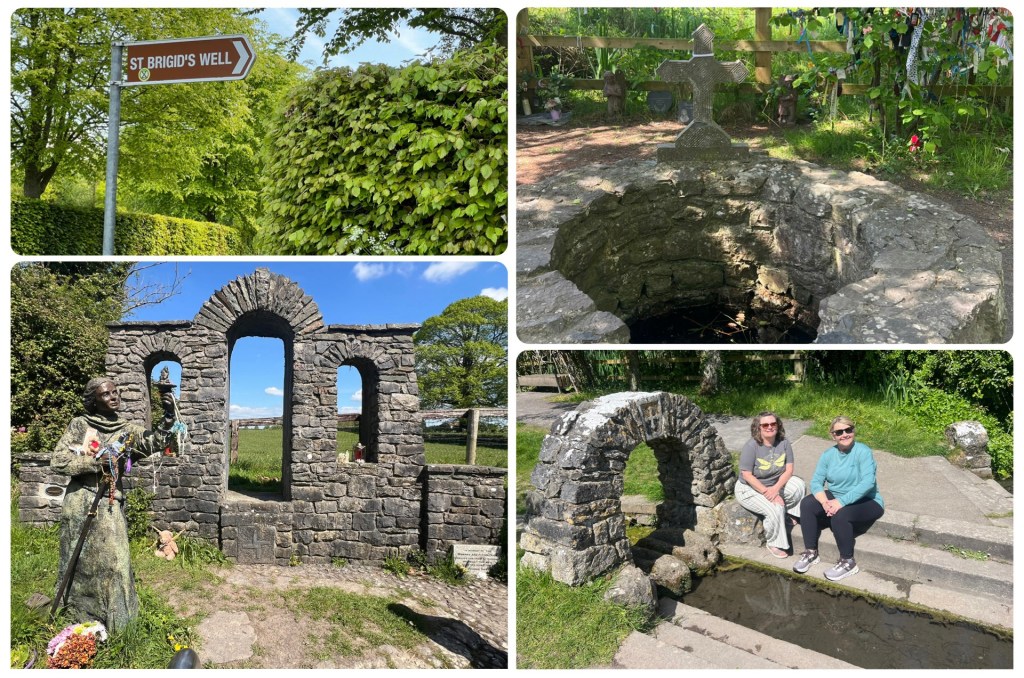
St. Brigid’s Holy Well in Kildare. I visited in Fall 2024 and again with Joe, Dave, and Kris (pictured with me.)

So often, I found myself saying, “Joe would love this.”  I knew I needed to come back with my husband, that he would enjoy the Irish pubs, beautiful scenery, and visiting with locals. And, of course, I was thinking about all the places I had learned about that I still wanted to see.

And so it happened, I asked my husband whether he would like to go in May or September the following year. (See how I did that?) We decided on May, the best time to see wildflowers blooming in the Burren. I pulled up my research spreadsheet and got to work planning a two-week vacation. Again, over planning is my gift, so we decided on a few days shy of three weeks. Our friends, Dave and Kristine, who we met when our daughters were five years old (that’s 26 years ago!) would join us for most of the trip, and to my delight they let me plan the itinerary!

When deciding where to go, I knew I had to return to Solas Bhride in Kildare, the “thin place” where one of our pilgrims, Mike, had a medical emergency and passed away. The Sisters of Solas Bhride Centre & Hermitages had been so compassionate and hospitable, offering a gathering place for prayer and reflection, serving tea and cookies, and welcoming us to experience the presence of Brigid throughout the center, in its garden, labyrinth, and sacred art.

I enjoyed visiting with Sr. Rita Minehan and when I purchased her book Rekindling the Flame: A Pilgrimage in the Footsteps of Brigid of Kildare, she eagerly signed it. I learned even more about the sacred sites of St. Brigid nearby, including the Cathedral, the parish church, a holy well, and the village itself.

With the help of Sr. Rita’s book, we planned a pilgrimage day to Kildare, returning to Solas Bhride, where Mike crossed life’s greatest threshold, from the here to the hereafter. Sr. Rita welcomed my husband and me, sharing local art and memorabilia from “St. Brigid: A Woman, A Life, A Legacy,” a celebration of the 1500th anniversary of the death of St. Brigid, and the first year that the Feast of St. Brigid was declared a national holiday in Ireland. More about St. Brigid here.

Continue reading “Ireland: I Had to Go Back”

A Controversial Commencement Address and Being Benedictine

The commencement address given by professional football player Harrison Butker at Benedictine College, a small liberal arts college in Kansas, has generated some big social media buzz. The narrow vision of Catholicism, the limited view of gender roles in the family, and the many backhanded as well as overt insults that thread their way through the message left me stunned. I am concerned the speech will be interpreted as a reflection of the Benedictine tradition and the incredible monks, sisters, and oblates I know.

Being Benedictine, as I have come to understand, is a spirituality that is inclusive, loving, and accepting of all. The speech seemed judgmental, hurtful, and exclusive. Not wanting to jump to conclusions with just a few quotes taken out of context, I read the entire script more than a few times, looking for something redeemable, and anything resembling a celebratory graduation message.

This was as close as I could come:

Ladies and gentlemen of the class of 2024, you are sitting at the edge of the rest of your lives. Each of you has the potential to leave a legacy that transcends yourselves and this era of human existence. In the small ways, by living out your vocation, you will ensure that God’s Church continues and the world is enlightened by your example.

Unfortunately, the “potential to leave a legacy” is very narrowly defined in Butker’s speech, one that restricts women’s roles in their families while limiting “God’s Church” to those Catholics who believe in precisely the way that Butker does. In an already contentious political and religious environment, the message prompted a statement in response from the Sisters of Mount St. Scholastica, a founding institution and sponsor of Benedictine College:

The commencement speech has fostered division rather than promoting unity using the foolproof methods of taking a superior tone, insulting those who believe differently, and claiming to possess the truth as others are surely lost souls. Being Benedictine, in my experience, is a genuine attempt to meet others in love and compassion, listening with the intent to understand, encouraging inclusiveness, and respecting diversity.  Yet, Butker claims, “The world around us says that we should keep our beliefs to ourselves whenever they go against the tyranny of diversity, equity, and inclusion.”

The tyranny? Diversity encourages learning, creativity, personal growth, social justice, and more. It is a blessing to share our faith and to have someone truly listen, especially those who might believe differently. How are we to learn or grow in compassion without diversity? Growing up in the Catholic Church, I was taught my religion was the “one, true faith” and, later, in a brief experience with fundamentalism, the assumed imminent rapture was used to convince others that they should urgently accept Jesus as their “personal Lord and Savior” so as not to be “left behind.” Neither of these religious messages was delivered in love. When one thinks they know for certain who God is, they feel entitled to judge that God is for them and not for others, or that their place in heaven is secured while others are surely burning in hell.  Being certain about something is likely the biggest sign of ignorance and self-righteousness; being open to hearing who God is to another brings possibility, understanding, and appreciation of diversity. Not all Catholics, Christians, or Benedictines agree with this limited view of the love of Christ, but, sadly, this is what Christianity has come to look like to many.

Continue reading “A Controversial Commencement Address and Being Benedictine”

Many Ways to Pray: Walking a Labyrinth

“There are hundreds of ways to kneel and kiss the ground.” –Rumi

There are many ways to pray—in song, spoken or written words, silence, creativity, nature and movement, just to mention a few. Paul recommends to “pray without ceasing” (1 Thessalonians 5:17), which is only possible if we are able to connect with our Creator in a variety of ways. We are meant to engage our senses, our whole bodies, in prayer.

I’ve come to appreciate this about the Catholic Mass, even if visitors might think there is a lot of up and down. We genuflect, sit, stand, kneel and bow. These gestures, postures or movement help to bring our whole being into prayerful expression—raising our hands when saying the “Our Father”, making the sign of the cross or receiving the Eucharist allows us to use our bodies in prayer.

lab signIn addition, walking the stations of the cross or a labyrinth, taking a nature hike, or practicing yoga or tai chi are prayerful forms of movement that engage our bodies while quieting our mind. Going away on retreat is an opportunity to explore and practice various forms of prayer.

St. Benedict Center is building a labyrinth modeled after the famous labyrinth in the Cathedral of Chartres, France.  “When the Holy Land was closed to pilgrims in the Middle Ages, labyrinths abounded in the churches of Europe.  They were used to symbolically represent the pilgrimage to the Holy Land.  Our life is a pilgrimage, a journey to our eternal home with God in heaven.” –Father Thomas Leitner The labyrinth will be completed in late summer or fall. 

DSC_0925a

This summer I had the opportunity to pray in many ways while attending an eight-day Ignatian retreat at the Creighton University Retreat Center. Each day, for about an hour, I met with a spiritual director to receive guidance and to share my faith journey; the remainder of the day was spent reflecting on these discussions and praying. One of the ways that I prayed was by walking a labyrinth.

“A labyrinth is not a maze. A maze is a symbol of life without meaning, it is an agent of confusion, deception with dead ends that lead you nowhere. But a labyrinth is a symbol of a life of deeper meaning, an on-going sacred journey leading us inward, outward and to greater wholeness.” –Carrie Newcomer Continue reading “Many Ways to Pray: Walking a Labyrinth”

Blog at WordPress.com.

Up ↑