Search

Being Benedictine

Living SoulFully as an Oblate of St. Benedict

Tag

inner monk

St. Benedict’s Life of Love and Freedom…And My Own Journey

St. Benedict lived in a cave in Subiaco, Italy, for three years, committing to detach from the world and be alone with God. The archetype of a monk is in each person, so we can look to St. Benedict as a spiritual role model.

As a Benedictine oblate, one strives to live as a monk in the world, in the everyday life of family, work, and community. Our longing to be alone with God requires time to listen to the voice of God in solitude—for prayer, silence, spiritual reading, contemplation, or retreat.

Every October, oblates of Christ the King Priory meet for an annual weekend retreat to renew their oblate promises, deepen their understanding of Benedictine spirituality, and enjoy each other’s company. This year our retreat leader was Abbot Mauritius Wilde, OSB PhD., former Prior of our monastery, Christ the King Priory. Abt. Mauritius is an author, lecturer, and spiritual director, and currently serves as abbot of Maria Laach Abbey in Glees, Germany. He guided our retreat based on his upcoming book, The Monk Within You, a perspective on the Life and Miracles of St. Benedict, Book II of the Dialogues written by Pope Gregory the Great.
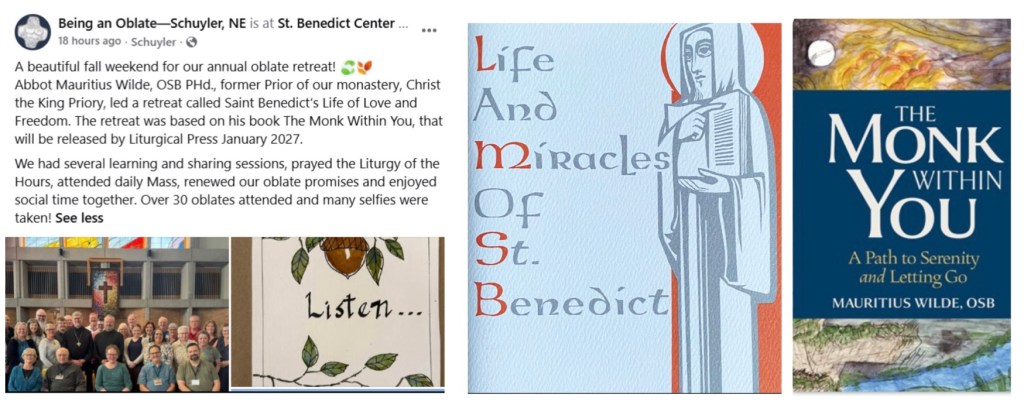
During the Middle Ages, according to Benedictine historian Gregorio Penco, OSB, Life and Miracles of St. Benedict was the most widely read book after the Bible. The Monk Within You, a commentary by Mauritius Wilde, OSB, will be released by Liturgical Press in January, 2027.

During our monthly oblate meetings we practice Lectio Divina by reading an excerpt from The Rule of St. Benedict or scripture. Lectio Divina, translated as divine reading, is a Benedictine practice of seeking deeper meaning in words and stories. It is listening to what lies beneath the words. During our retreat, we were able to read more deeply the life and miracles of St. Benedict, listening to what the stories may mean for us today.

Detachment from the world, including one’s father, mother, culture, sexuality, church, and desire for power, is critical to becoming oneself. Fuga mundi, or flight from the world, allows one to encounter all that is happening within us in solitude. The first stories of Benedict begin with his departure from his studies in Rome, relinquishing the wealth of his family, detaching from his father, mother and nurse, and performing miracles. We go to our cave, as Benedict did, to learn what our attachments are. Ultimately, we realize there is no escaping the world. We bring it with us in our minds.

The monastic way is about letting go, attaching to less and less, so in the end I know there is God and me. We take this spiritual journey to become more Christlike, to gain an inner understanding of the mysteries we celebrate as our truth. This lifelong journey of surrendering attachments that St. Benedict models for us can bring tranquility and peace.

Some questions we considered during our retreat:

Who are your spiritual role models?

What might you need to detach from—mother, family, culture, church, sexual desires or power? When I think of these areas of detachment, what am I thankful for, what makes me angry or sad, what am I missing?

What little deaths, or detachments, have you experienced?
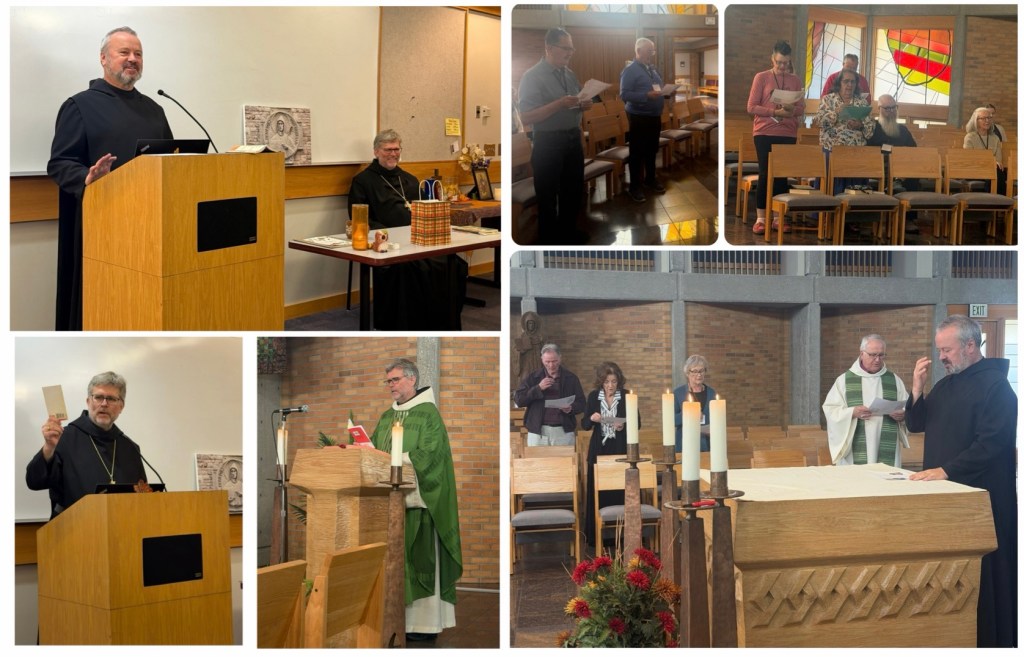
During retreat we had several sessions led by Abt. Mauritius, we prayed the Liturgy of the Hours, attended Mass, shared meals and discussions, had opportunity for confessions or spiritual direction, and renewed for oblate promises.

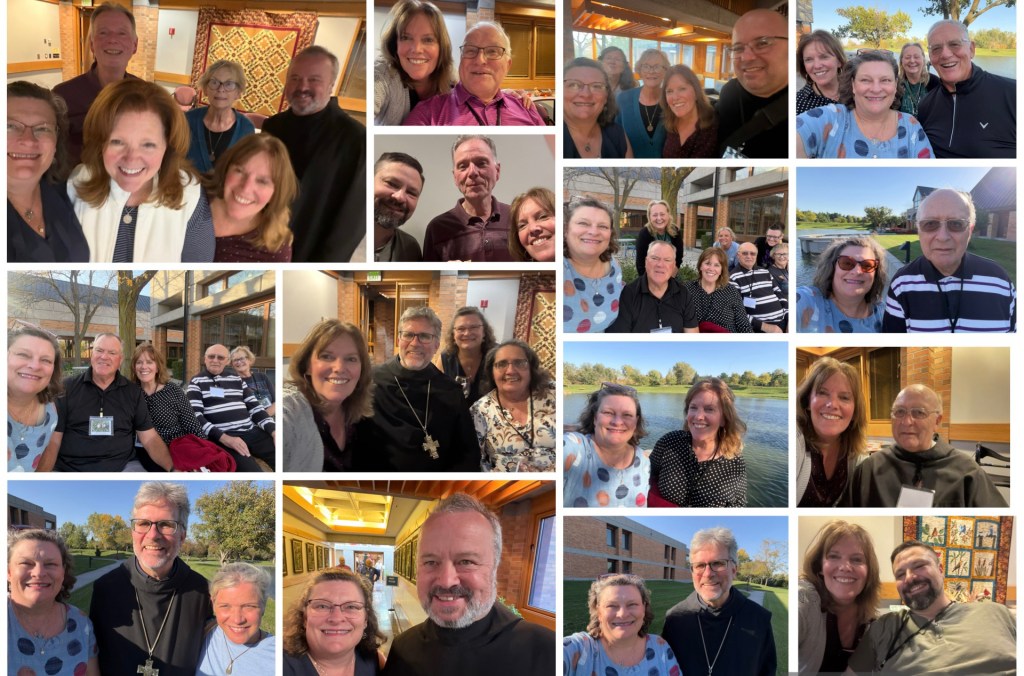
We had much joy and a lot of laughs taking selfies! I think selfies with others (is that an oxymoron?) capture joy, playfulness and community

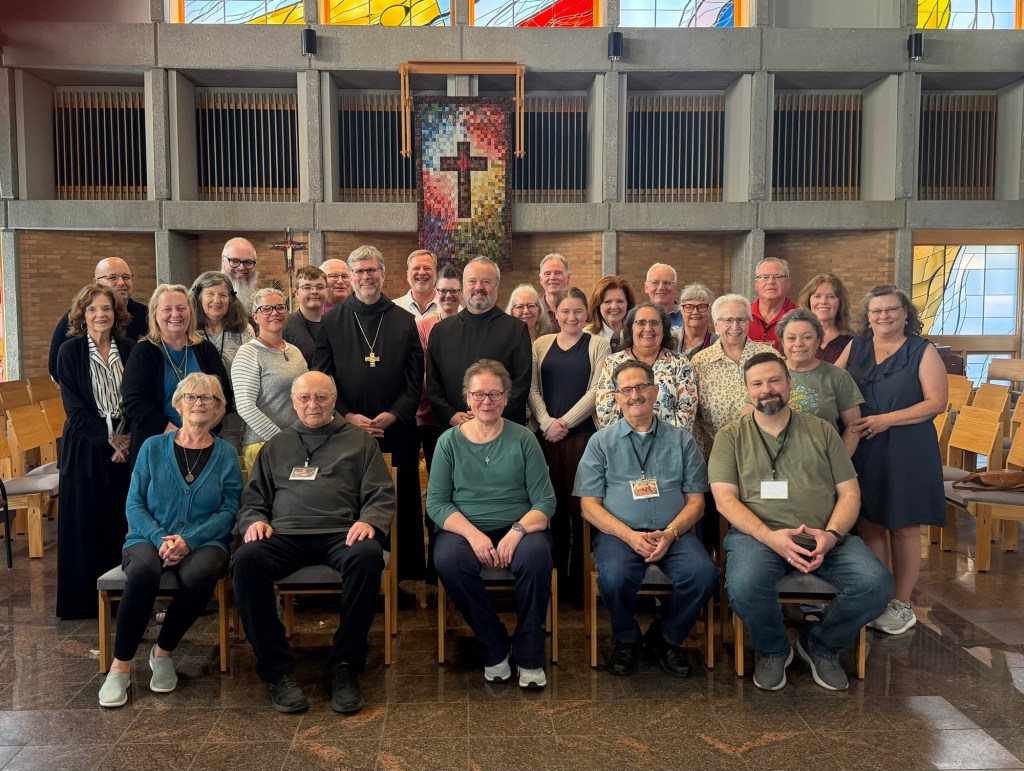
Our 2026 group of oblates attending the retreat. Pictured in the chapel at St. Benedict Center.

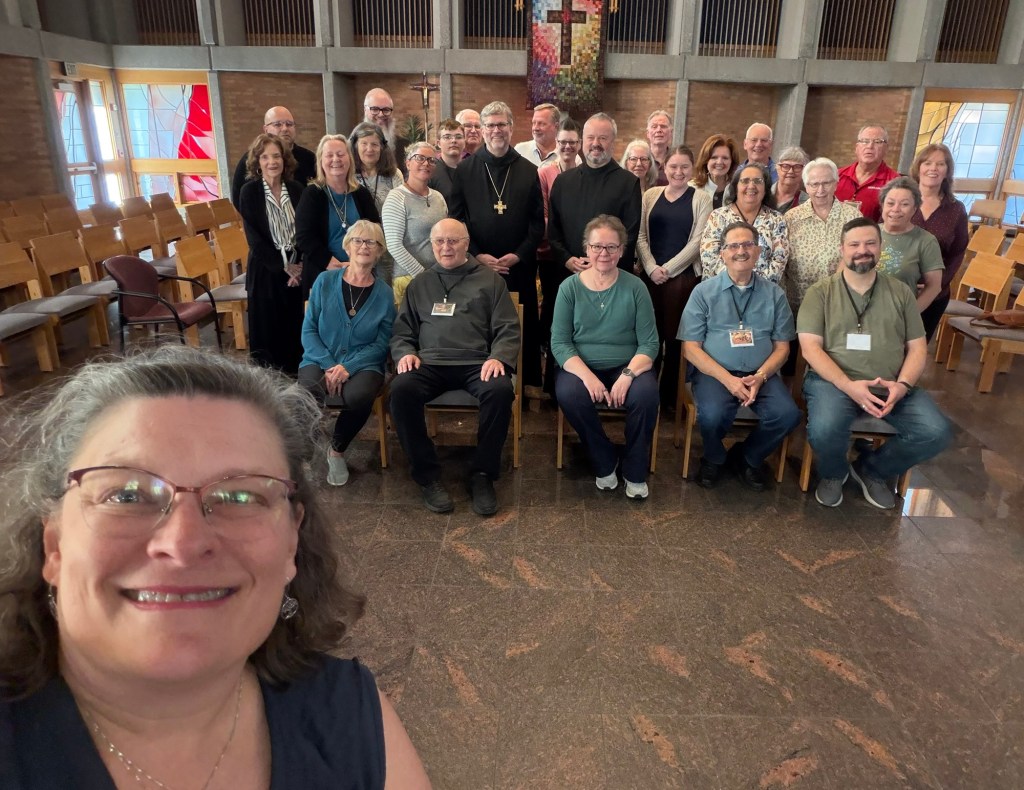
Why not? Another selfie with the group!
Continue reading “St. Benedict’s Life of Love and Freedom…And My Own Journey” →

To Love and Be Loved: The Monk and The Marriage

But now faith, hope, and love remain, these three; but the greatest of these is love. –1 Corinthians 13:13

This scripture verse is one of the most frequently read at wedding ceremonies, but it is meant for more than those getting married. We are created to love and be loved—all of us, no matter who we are or our chosen paths in life, whether monk or married.

Our deepest longing is to be loved. Love is the thread that runs through all the world’s religions. In Christianity, the Great Commandment is to “love the Lord your God with all your heart, and with all your soul, and with all your mind” and to “love your neighbor as yourself.” 

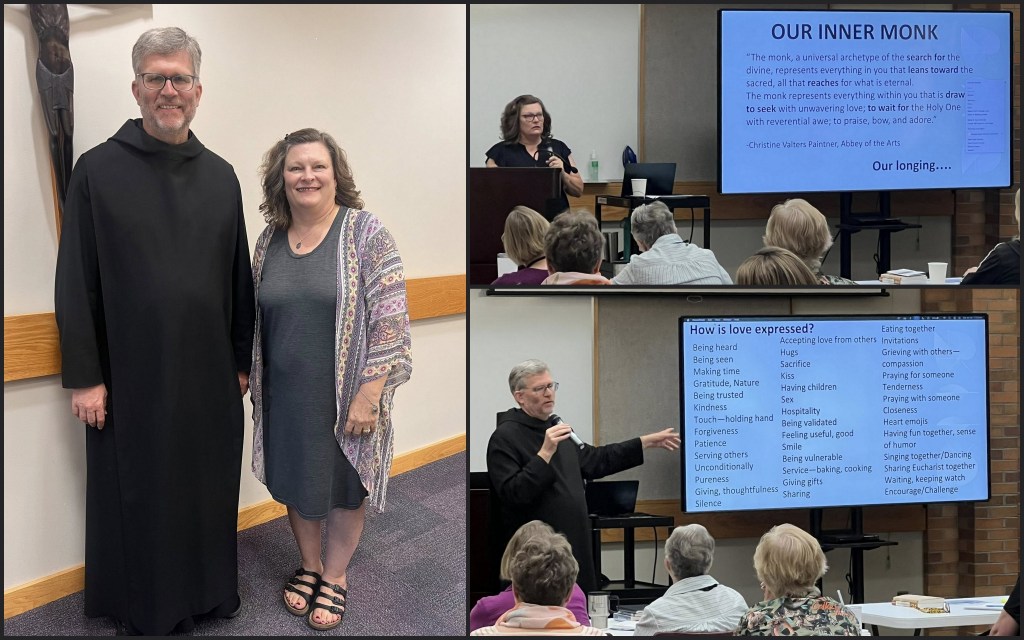
Several years ago, during spiritual direction with Benedictine monk, Fr. Mauritius Wilde, we discussed, despite our different vocations, how much we have in common. We each have a holy longing—to love God, to have a healthy love for ourselves, and to give and receive love. Practically speaking, we are the same age, we are both teachers and retreat leaders, have one brother, have the same middle name (Marie—seriously, what are the odds on that?), we share similar Enneagram personality traits, and each of us professed our marriage or monastic vows 40 years ago, a day apart. I was married on August 17, 1985, and Fr. Mauritius entered the monastery as a novice on August 18, 1985.

After one of many conversations where one of us would say, “That is exactly how it is for me!” or “Me, too!”, I half-seriously, half-jokingly suggested that we write a book about how, setting the whole monk vs. being married thing aside, we experience our love of God and others in many of the same ways. Nearly forgotten, this idea resurfaced a year or so ago, and we decided that leading a retreat together would be a good beginning. Our theme would be love, specifically how the Rule of St. Benedict can help us grow in love and to discover our “inner monk.”

“The monk, a universal archetype of the search for the divine, represents everything in you that leans toward the sacred, all that reaches for what is eternal. The monk represents everything within you that is drawn to seek with unwavering love; to wait for the Holy One with reverential awe; to praise, bow, and adore.” -Christine Valters Paintner

The Rule of St. Benedict shows us the path of love, of nurturing the monk within while living in community. During our retreat, held in July 2025, we shared how the monk’s promises—stability, obedience, and conversion of life—are the foundation for learning and growing in the “school for God’s service.” (RB Prologue 45) For the monk, this place of learning is the monastery. For me, it begins in my family as wife and mother. But each of us is more than our role as a monk or a married person. Each can be transformed by practicing love in our friendships, workplaces, community, and environment.

Continue reading “To Love and Be Loved: The Monk and The Marriage” →

The Colors of the Rainbow

“The artist speaks to that part of you which yearns for beauty and creativity.  The inner artist invites you to participate in the great work of healing the world by lifting out of your senses creative images, words, and actions that inspire others to live lives of wonder and surprise.”

–Macrina Wiederkehr (The Artist’s Rule: Nurturing your Creative Soul with Monastic Wisdom by Christine Valters Paintner)

Recently I led a retreat titled Becoming Ourselves: Exploring the Archetypes of Inner Monk & Artist. Our inner artist engages with the world through its senses, while our inner monk has a longing for connection with the Divine, seeing the sacred in the ordinary. We can be intentional about nurturing these energies within us, paying attention to the beauty around us, and bringing a sense of wonder and curiosity to our work. We can be intentional about nurturing these energies within us by seeing nature, people, and life circumstances in new ways, while creatively and prayerfully expressing ourselves through poetry, art, music, gardening, relationships, and more.

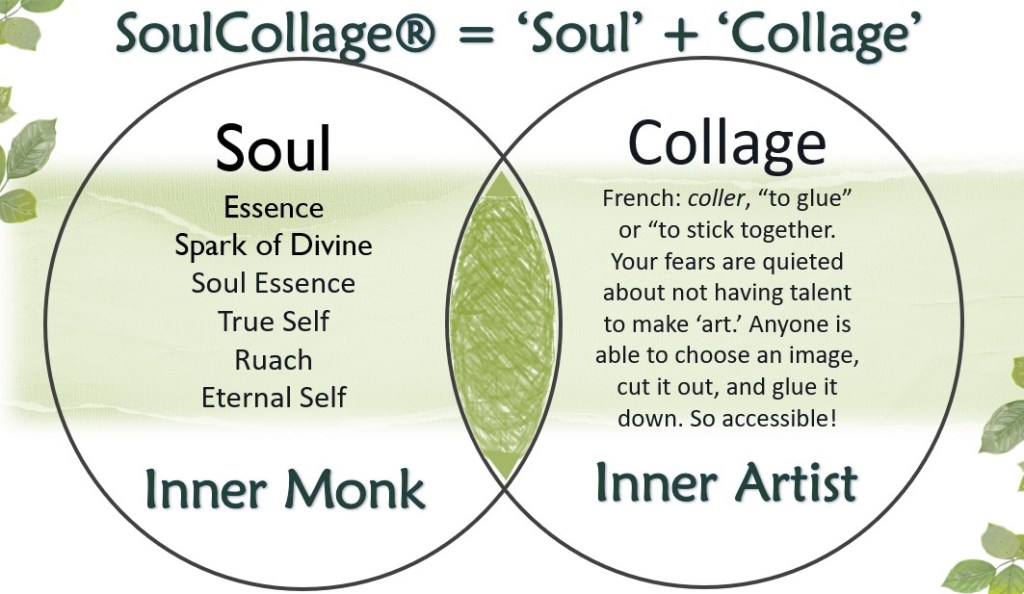
Practicing SoulCollage® is the perfect expression of the inner artist and monk archetypes. We creatively and prayerfully cut and paste images onto cards that eventually become a visual journal. It is a spiritual practice of seeking the Divine while learning about parts of yourself. With others, while “image bathing” and creating cards, there is a unique opportunity to share parts of our spiritual journey—why I love leading and participating in retreats!

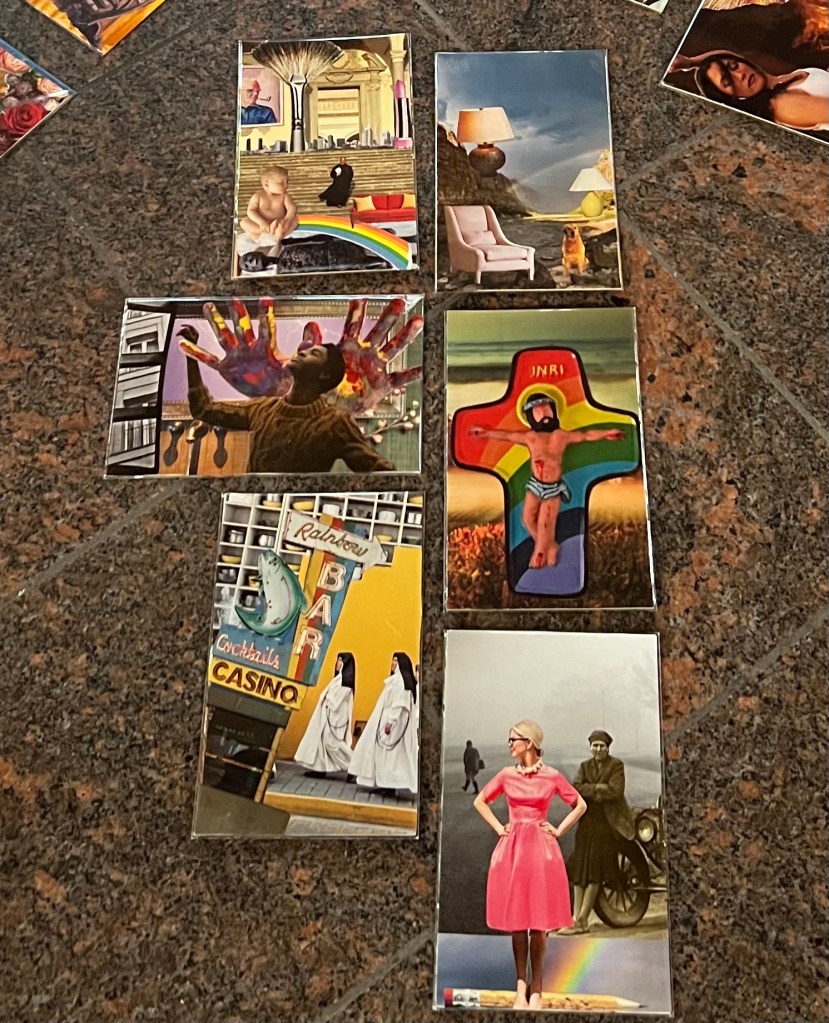
On retreat, spiritual playmate*, Jana West, was particularly drawn to images of rainbows—they kept popping up in the images she was collecting and intuitively finding their way onto her collage cards.

*Don’t you just love the idea of a spiritual playmate?! Jana coined the term, and it has quickly become part of my post-retreat reflection vernacular.

Rainbows in EVERY card! Can’t wait to hear more from Jana about what they have revealed to her since the retreat.

So now I am seeing rainbows and the spectrum of colors in all kinds of ways. I saw, and accepted, this fun challenge on Facebook: to find the colors of the rainbow in nature.

Continue reading “The Colors of the Rainbow” →

Blog at WordPress.com.

Up ↑