
November 2025 Oblate Reflections
“Do not grumble or think ill of others.” (Rule of St. Benedict Ch. 4:39)
What is the key to practicing gratitude rather than grumbling? How can we live a grateful life in the midst of pain and suffering, our own, that of others, and that of the world around us? Is it possible to be thankful for challenging experiences?
We use the Rule of St. Benedict and Scripture to address these questions at our November oblate meeting. We opened our meeting with the Welcome Prayer written by Fr. Thomas Keating).
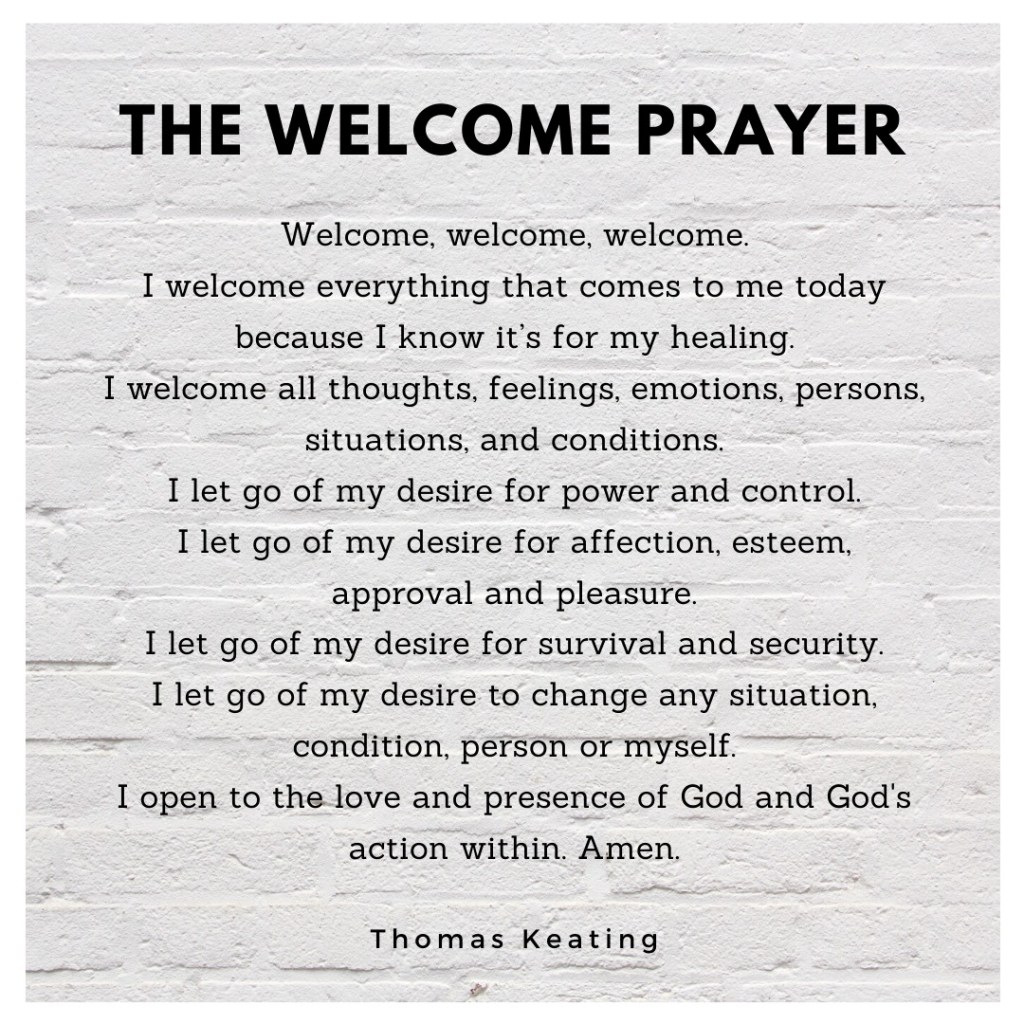
If we truly practice this prayer to welcome all of the above, we find that the benefit of grumbling is minimal. In fact, grumbling is self-sabotage. The benefit of welcoming everything is that through the moments of distress, unease, discomfort, or suffering, we learn that another way could be a blessing. What can be difficult about the Welcome Prayer is the “letting go” of our control—and oh my, how much we prefer when things go our way.
St. Benedict has a few things to say about grumbling, a form of letting go of our own gripes, opinions, and negativity for the greater good of the community and ultimately our own selves. He encourages his monks to cultivate humility, patience, and a joyful acceptance of their station in life. It requires a surrender of pride to be content even when it is challenging to be.
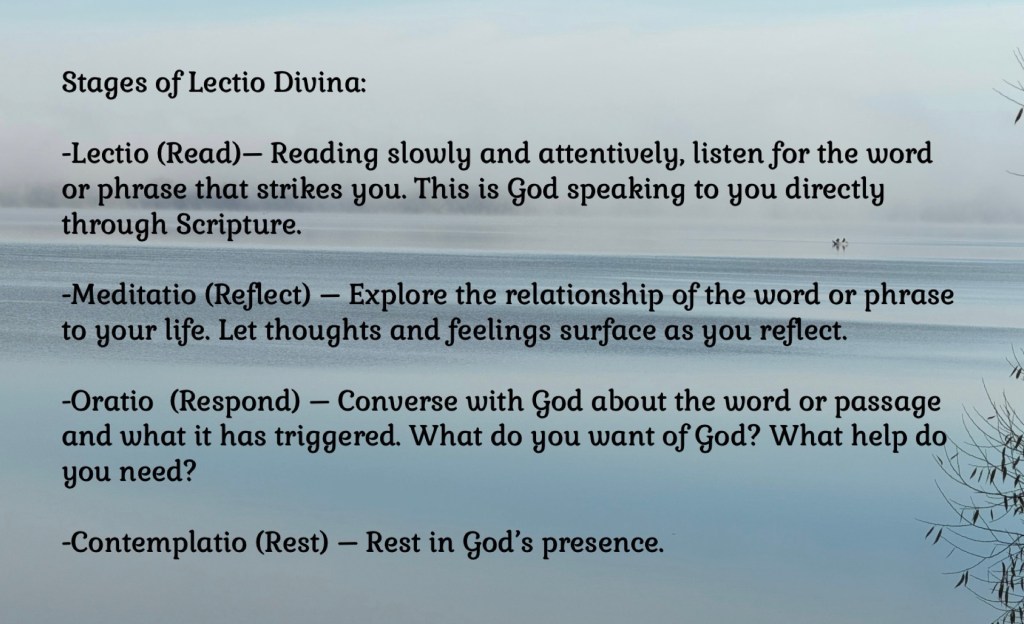
We read the following excerpts and practice Lectio Divina as a group, sharing the insights we gained.
Philippians 2:14-15
In everything you do, act without grumbling or arguing; Prove yourselves
innocent and straightforward, children of God beyond reproach in the midst
of a twisted and depraved generation - among whom you shine like the
stars in the sky.

The Rule of Saint Benedict Ch. 5:4 -19
This very obedience, however, will be acceptable to God and agreeable to
others only if compliance with what is commanded is not cringing,
hesitating, or halfhearted, but free from any grumbling or any reaction of
unwillingness. For the obedience shown to superiors is given to God, as he
himself said: “whoever listens to you listens to me’ (Luke 10:16).
Furthermore, the disciples’ obedience must be given gladly, “for God loves
a cheerful giver” 2 Corinthians 9:7). If a disciple obeys grudgingly and
grumbles, not only aloud but also in his heart, then, even though the
command is fulfilled, it will not be accepted with favor by God, who sees the
heart of the murmurer. There is no reward for service of this kind; rather
they will incur punishment for grumbling, unless they change for the better
and make amends.
Some key phrases and words that we discussed:
“Prove yourselves innocent and straightforward”—be honest, gracious, direct, pure, not intending to cause harm; this behavior reflects the state of our heart, our intention. Our reaction to things that might make us grumble matters.
“A twisted and depraved generation”—all of us fall short of this ideal, generation after generation. We are continually faced with an inner tug-of-war—I want what I want, and I should protect my own interests, versus listening to what others need and how we can be transformed through God and others. Much of our discontent stems from not listening to others and not feeling heard. We can do our part by the practice of obedience, listening.
“Shine like the stars in the sky”—We choose our intention, our reaction to life. To live with a grateful heart is to bring our light into the darkness. Similarly, we also rely on the brightness of others when we face dark days.
“Half-hearted but free from any grumbling or any reaction of unwillingness,”—you cannot give a wholehearted effort to anything that needs to be done if you are holding anger; it hurts yourself as much as others. Waiting, to pause, is a tool for making peace, to breathe into the space we live in, and be as supportive as best we can. It is a practice of checking in with your heart—to let go of anger and resentment. Whether we prefer it or not, we accept our life situation, as The Welcome Prayer implies. “The disciples’ obedience (attentiveness to listening) must be given gladly.” Our reaction affects ourselves and others.
“God, who sees the heart of the murmurer.” Yes, it matters how others see us—we can make a difference, but it matters more who we are in our hearts. It matters what God sees in my heart. “God loves a cheerful giver.” We live in a world of 24/7 news reports and a whole lot of grumbling. It is as if we and the world want to stew in its problems. Practically speaking, this is the foundation of capitalism. As a Marketing and Business educator, I shared with students that all good products solve a problem. What must marketers do to sell products effectively? Identify and/or create problems to solve. This pervasive problem identification can sabotage one’s efforts at contentment, being grateful for what they have (and it’s not just about material possessions).

In Chapters 5 and 6 of the Rule, Benedict instructs that even good words should be left unsaid out of esteem for silence. This practice becomes a discipline that allows for silence when words might really hurt. In a flood of words, it is impossible to avoid sin, hurting ourselves and others, and separating us from the peace of the Divine.
I invite you to practice Lectio Divina with the readings and insights. Return to the questions at the beginning and re-read The Welcome Prayer. Consider sharing your insights in the comment section.
Happy Thanksgiving to all, and many thanks to Gloria for creating our agenda and readings.
Further Reading:
Thanksgiving: A Ritual of Gratitude
More on gratitude HERE.


November 10, 2025 at 4:41 pm
I find I’m much happier when I don’t “grumble” about all that I think is wrong in the current direction of our country. Thank you for this reminder as we head toward Thanksgiving. You did a wonderful job of relating this to The Rule.
LikeLiked by 1 person
November 11, 2025 at 10:20 pm
We talked about this too! There is much too much to grumble about these days, but it is our reality. We must change that!!
LikeLike