Where does a Benedictine go on vacation?
To the world’s oldest Benedictine monastery, founded by St. Benedict himself!
When I had the opportunity to travel to Italy with Benedictine Footprints, a contemplative, cultural, culinary retreat to lesser-known sacred sites led by Judith Valente, Benedictine oblate and writer, I knew I had to add a few days to the trip to visit Subiaco, Italy, the birthplace of Benedictine spirituality in the sixth century.
I had previously traveled on pilgrimages to Benedictine monasteries in Germany, where I met Fr. Jim Secora, a Catholic priest from Iowa. I was inspired by his homilies when he celebrated Mass, and delighted when he joined our oblate group. Jim had recently been to Subiaco to visit the ancient pilgrimage site, Sacred Speco, the cave where St. Benedict lived for three years, and to the Monastery of St. Scholastica, the only monastery left of the twelve Benedict founded.
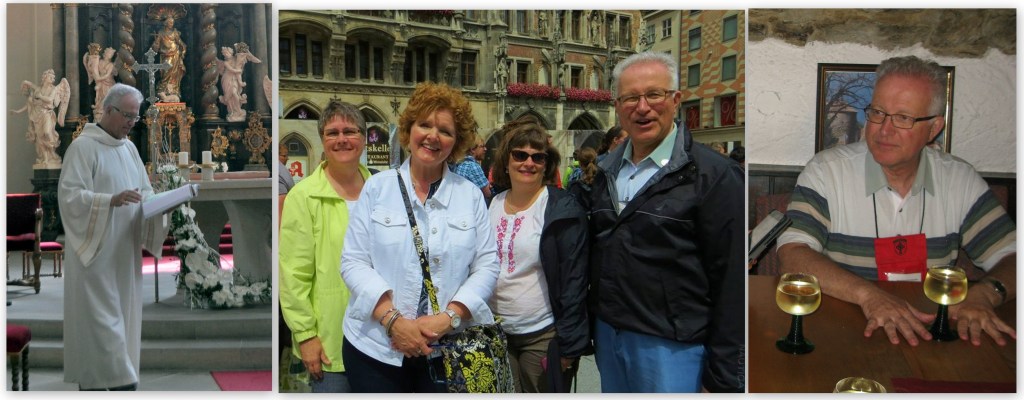
So, I asked Jim for his travel tips and advice. He replied by quoting the Rule of St. Benedict—
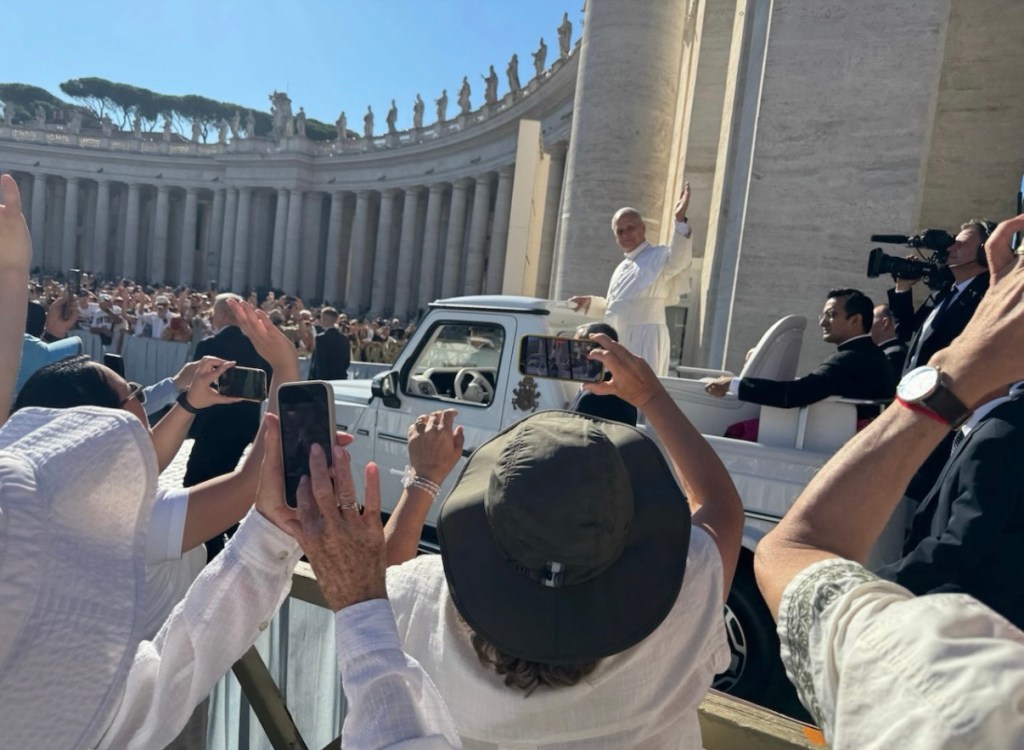
Jodi, You and Pope Leo visiting Subiaco in the same year!!!
As for any “tips”, I would simply go back to the first line of the Prologue—”Listen, my son and daughter to these words of someone who loves you and attend to them with the ear of the heart.”
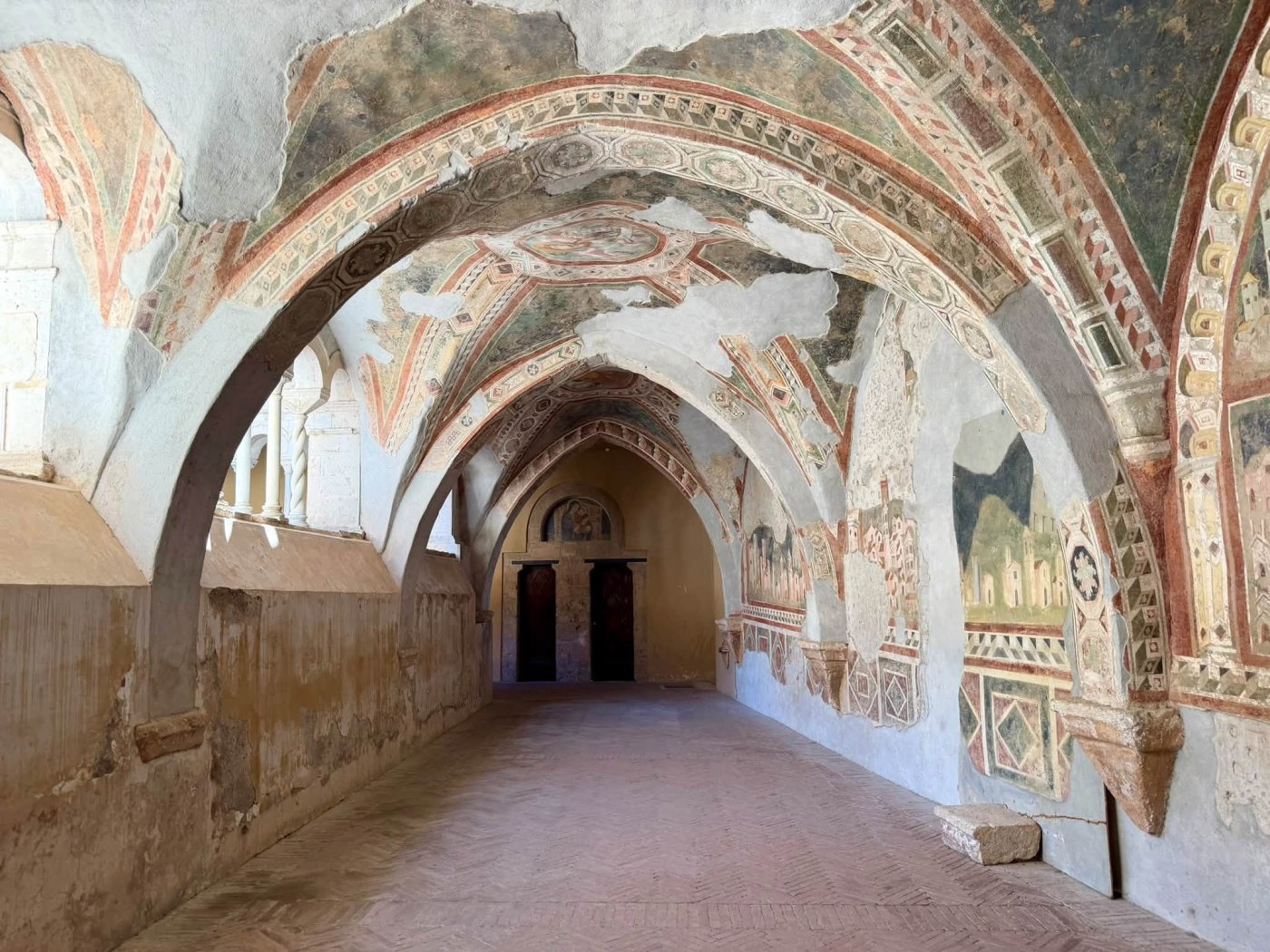
Practice good “visio divina”. Drink in the beauty of the mountains, their shapes, their colors. Listen to the stories of the frescoes. Pause in silence before the cave with the statue of St. Benedict, where he lived for three years. (Directly across the hall from the cave is the chapel where I celebrated Mass for our group.) Let all of this speak to you, imprint itself on your heart.
This is the best advice I can give. Well, don’t forget to stop at the gift shop and think of Bro. Andrew!!!! Peace, Jim
His advice was pure Benedictine, rules of the road so perfect that it brought a tear to my eye. It wasn’t about eating at a highly rated restaurant or ticking off sights on a packed itinerary. It was “Nothing harsh, nothing burdensome,” as Benedict wrote (Rule of St. Benedict, Prologue 46).
I promised I would be present and listen—the best advice for a Benedictine, for all of us, in all situations.
Many who visit Subiaco often make the 90-minute day trip from Rome, but Joanne, my travel companion, and I decided to stay in the village for two nights before we met up with the Benedictine Footprints group.
On our first day, we planned to explore the village on our own. This is where some tactical advice might have helped. Not one person spoke English, not even the lovely people who worked at Palazzo Moraschi, where we stayed. They tried so hard to communicate with us, getting a little louder and e-nun-ci-at-ing so carefully, and still, we could not speak Italian. And no matter how many times we repeated ourselves, they could not speak English.
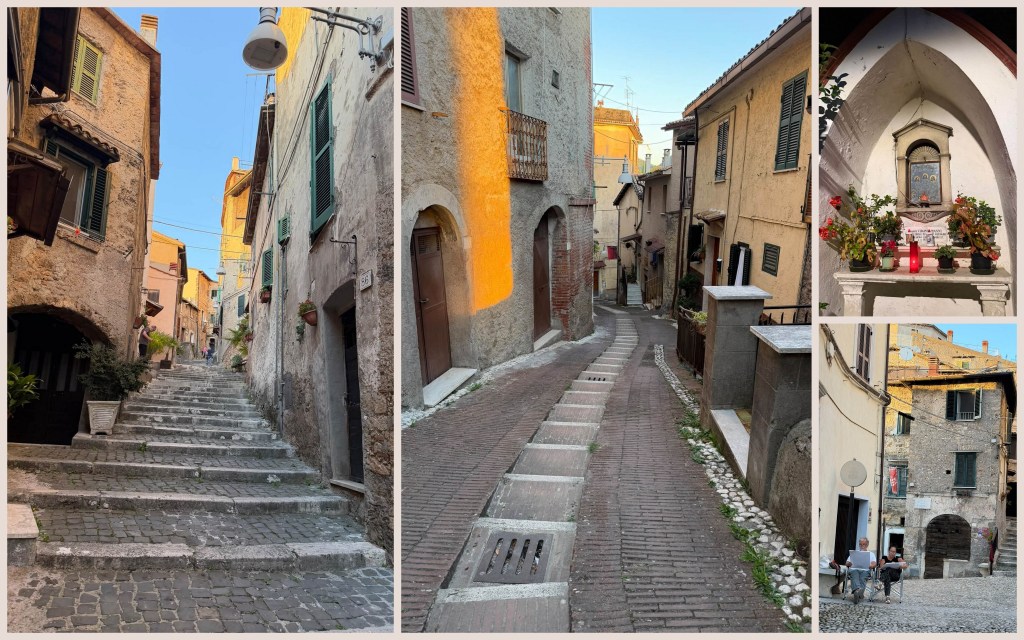
But with Google Maps as our guide, I thought we could find our way around. We enjoyed the quaintness of the winding, centuries-old cobblestone paths, noting the lovely flower boxes; terraces with doors wide open, welcoming the breeze; artists capturing the shadows of sunset; quaint neighborhood chapels. But after a wrong left turn, Google Maps sent us onto a high-traffic road with no sidewalk, and into a part of town we didn’t know existed. (Note: when recalculating routes, Maps may convert from “walk” mode to “drive.” Not ideal.)
As darkness descended and panic was just about to set in, a very kind woman named Benedetta (…the feminine name for Benedict, seriously!) asked if we needed help. She must have noticed the universal look of a lost face. No Italian needed for that. She was so generous with her time, walking with us to more familiar territory and even calling her daughter, who spoke English, to help translate. Their kindness was a blessing—and we were (absolutely) present for it. (Note: We had staked out a place to eat earlier and when it didn’t open at 7:00 as advertised, we went to find another. After our hour-long adventure, we arrived back at that very restaurant, open and serving diners. Apparently a 7:00 opening is just a possibility. It may open 10 or 30 minutes later, whenever the family running said restaurant is ready. This was helpful to know for dinner the next day.)
On our second day, we were grateful for our driver, Bruno, and Martina, our tour guide. Martina not only spoke English, which we were extremely grateful for, but she was also very knowledgeable about St. Benedict and Subiaco’s history, dating back to Emperor Nero.
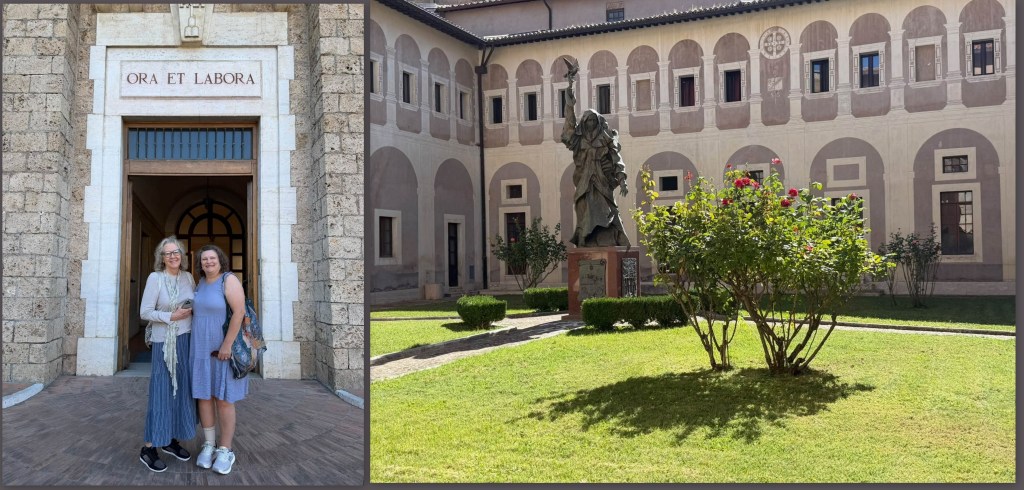
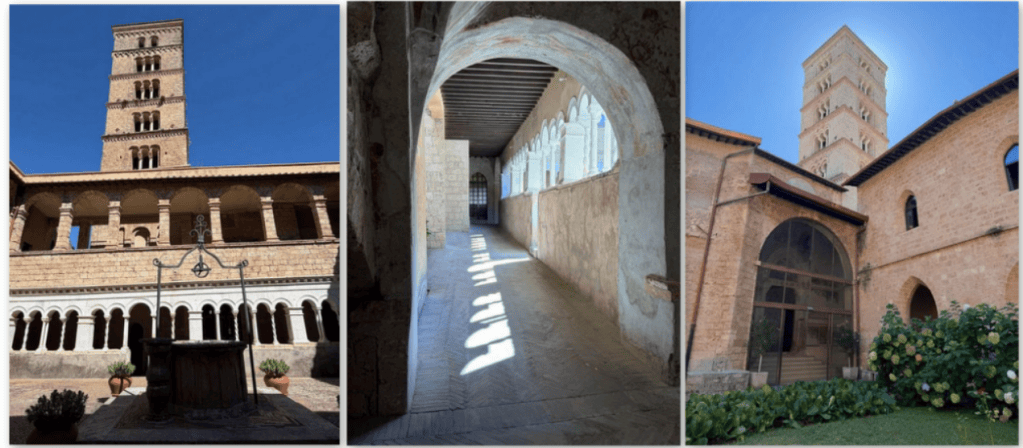
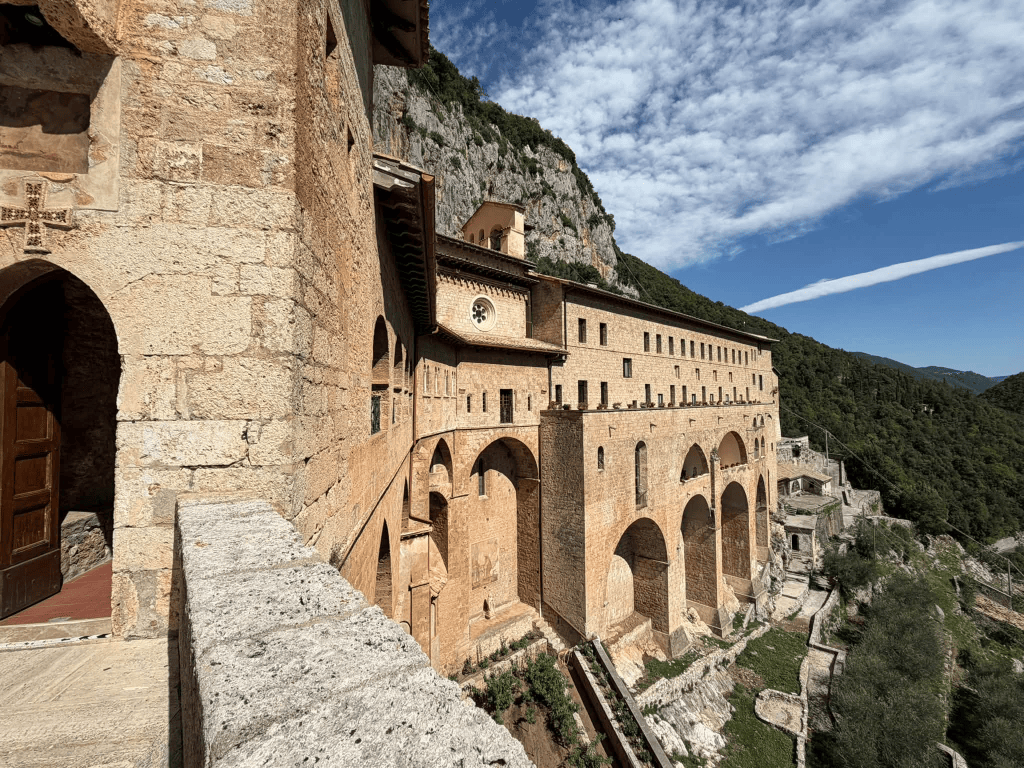
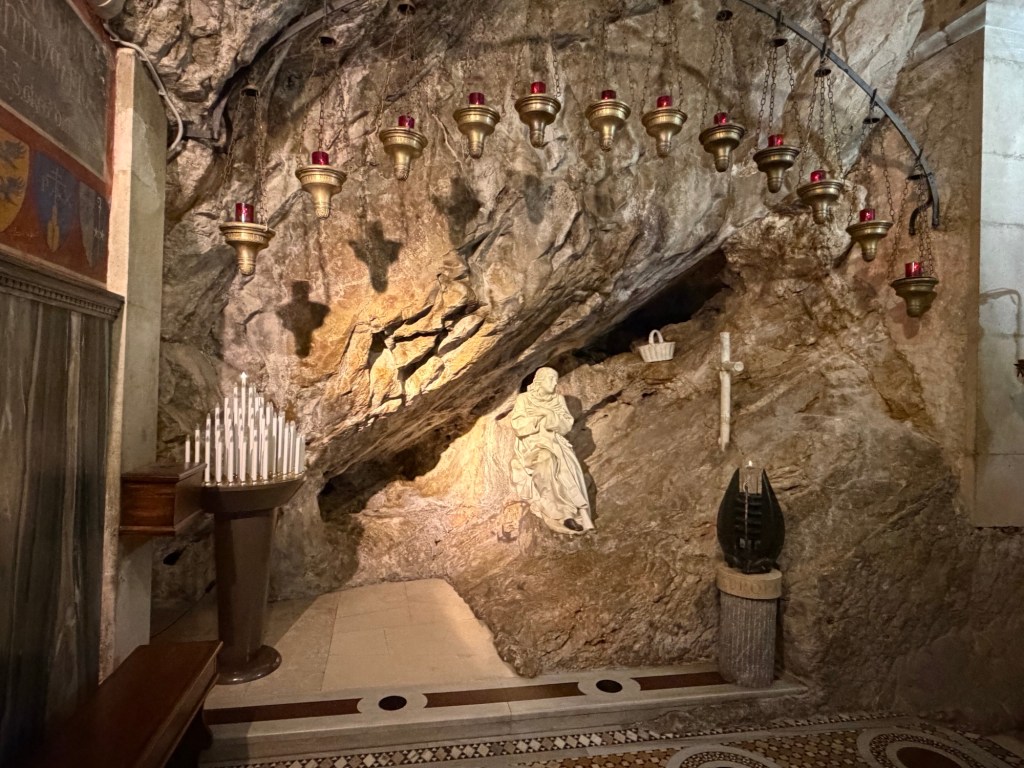
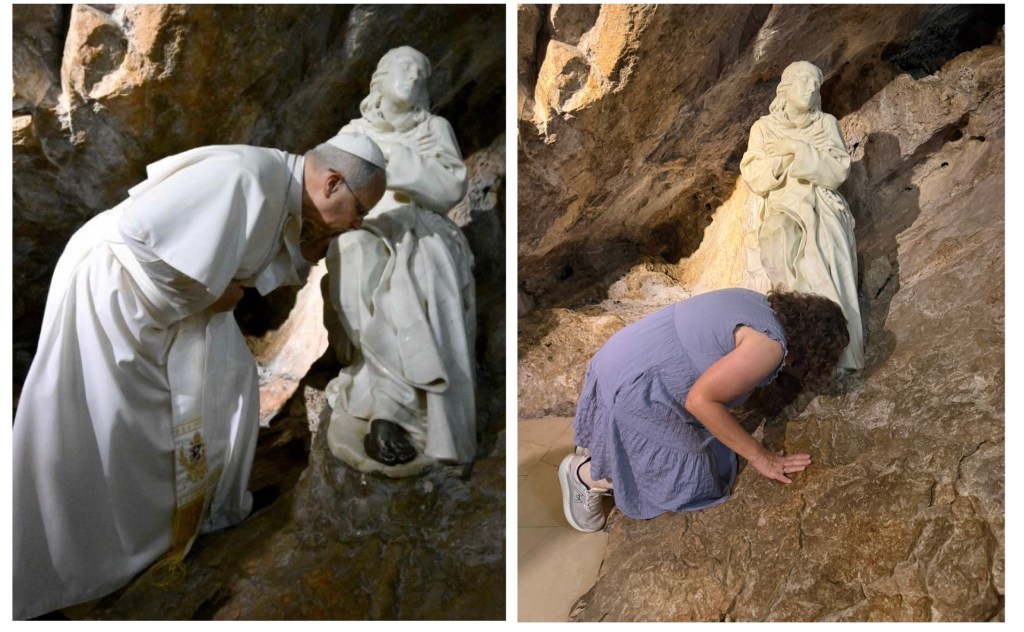
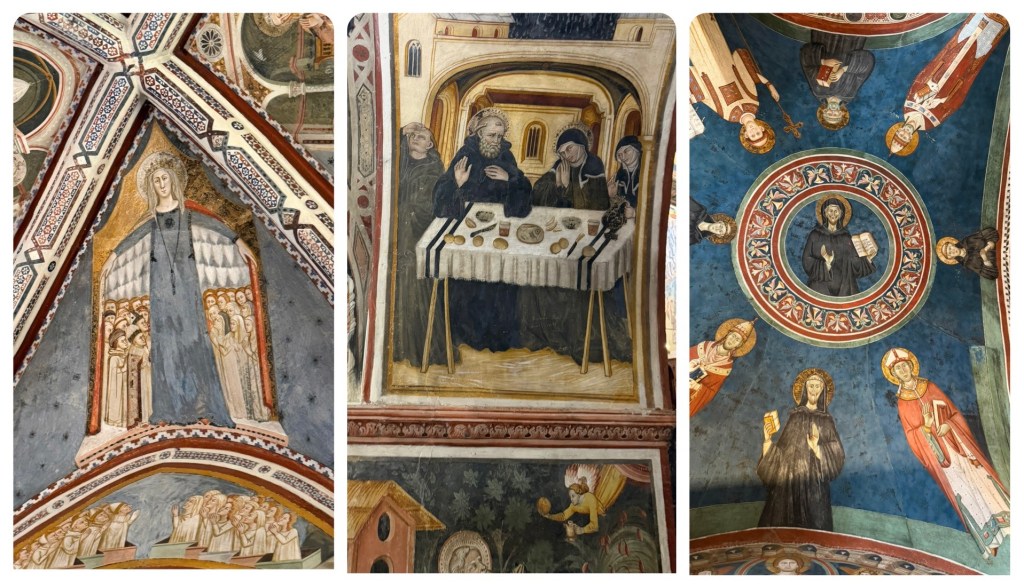
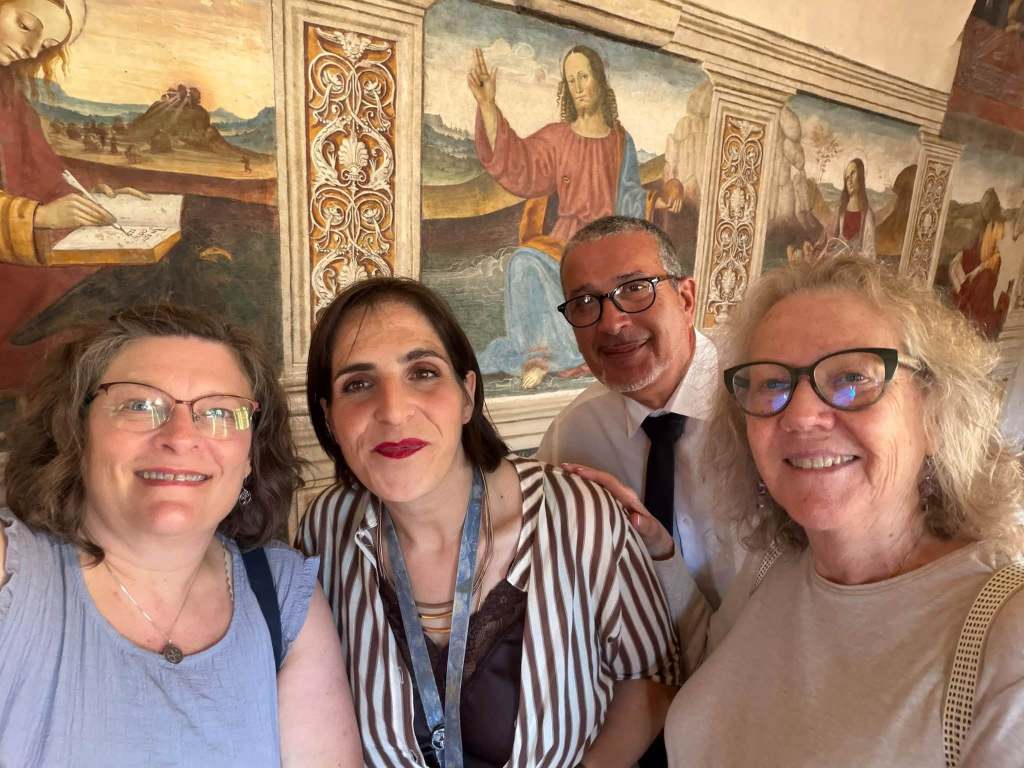
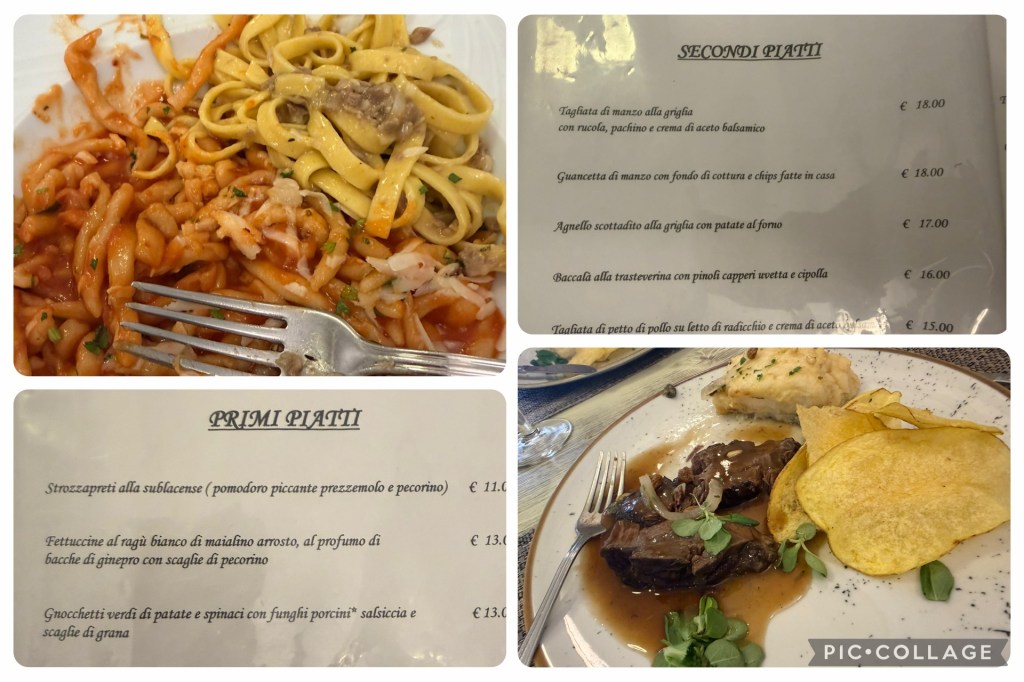
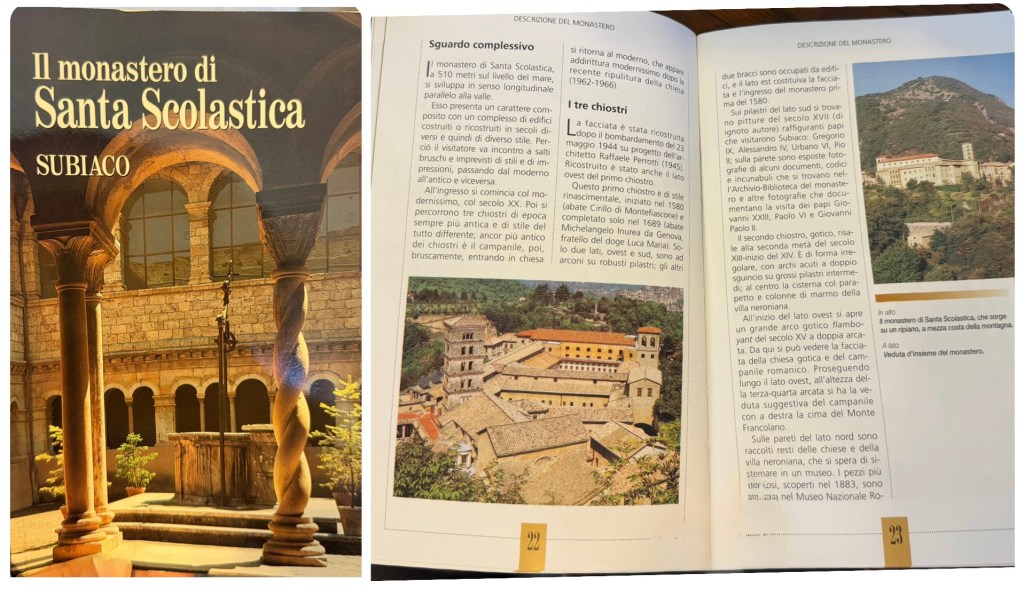
The hospitality of strangers, amazing food, magnificent frescoes, breathtaking vistas, and the sacredness of kneeling in the same cave that St. Benedict did 1500 years ago leave an imprint on my heart. Jim’s advice to listen prayerfully, practice visio divina, and be fully present is not just sound advice, but reminiscent of what St. Benedict wrote in the Rule he left to his monks. These “rules of the road” are the foundation for being Benedictine in daily life AND on vacation.
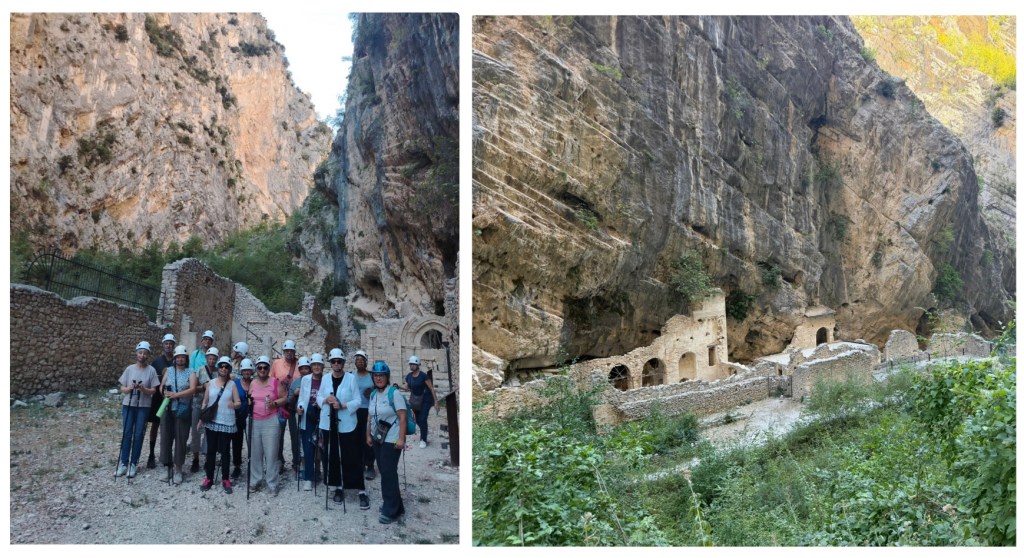
More Benedictine “rules of the road” to come as our group spends twelve nights in Guardiagrele and two nights in Rome. Some sneak peek pics below.


October 6, 2026 at 7:44 pm
Jodi,
Thanks for the “shout out”!
Jim
LikeLike